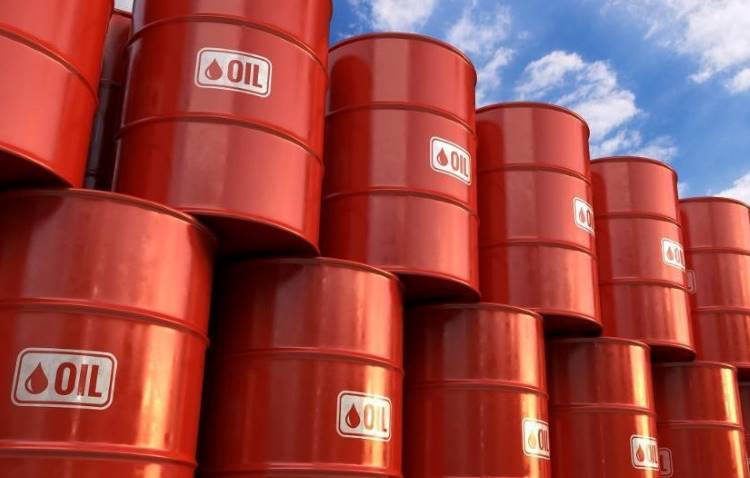
Nigeria’s crude oil export revenues dropped sharply by $5.31 billion in 2025, even as total oil production increased, according to the Central Bank of Nigeria (CBN).
The CBN’s balance of payments report shows crude oil export earnings fell from $36.85bn in 2024 to $31.54bn in 2025, a 14.41 per cent year-on-year decline.
The drop contributed to a moderation in the country’s current account surplus, which stood at $14.04bn, down from $19.03bn in 2024.
Findings showed that the contraction in crude oil earnings was one of the major factors behind the moderation in the current account surplus during the period under review.
“Provisional BOP statistics for 2025 shows a current account surplus of $14.04bn, which was lower than the $19.03bn in the previous year,” the report stated, attributing the decline partly to weaker crude oil receipts.
Despite producing 530.41 million barrels of crude oil in 2025—up from 408.68 million barrels in 2024—Nigeria struggled to meet its OPEC quota in nine months of the year and fell short of its national production target of 2.1 million barrels per day.
While crude oil earnings fell, gas exports rose by 21.36 per cent to $10.51bn, and refined petroleum product exports reached $6.13bn, boosted by operations at the Dangote Refinery.
Overall oil and gas exports increased slightly to $48.17bn, offsetting some of the crude oil shortfall.
Non-oil imports rose from $25.74bn to $29.24bn, while net outflows in the services and primary income accounts widened, adding pressure to the external sector.
“The goods account remained resilient, recording a surplus of $14.51bn in 2025, supported by higher gas exports and refined petroleum output,” the report added.
State governments have called for a forensic audit of crude oil-backed borrowing arrangements, warning that opaque crude-for-loan and swap deals may be undermining Federation Account inflows.
The communiqué noted that issues surrounding joint venture asset transfers, management fees, and production sharing contracts had weakened oversight and reduced revenue inflows.
The report underlined the importance of transparency, accountability, and stronger fiscal oversight to safeguard public finances.
Despite these challenges, Nigeria’s external reserves rose to $45.75bn at the end of 2025, reflecting improved reserve accumulation amid ongoing pressures in the sector.


