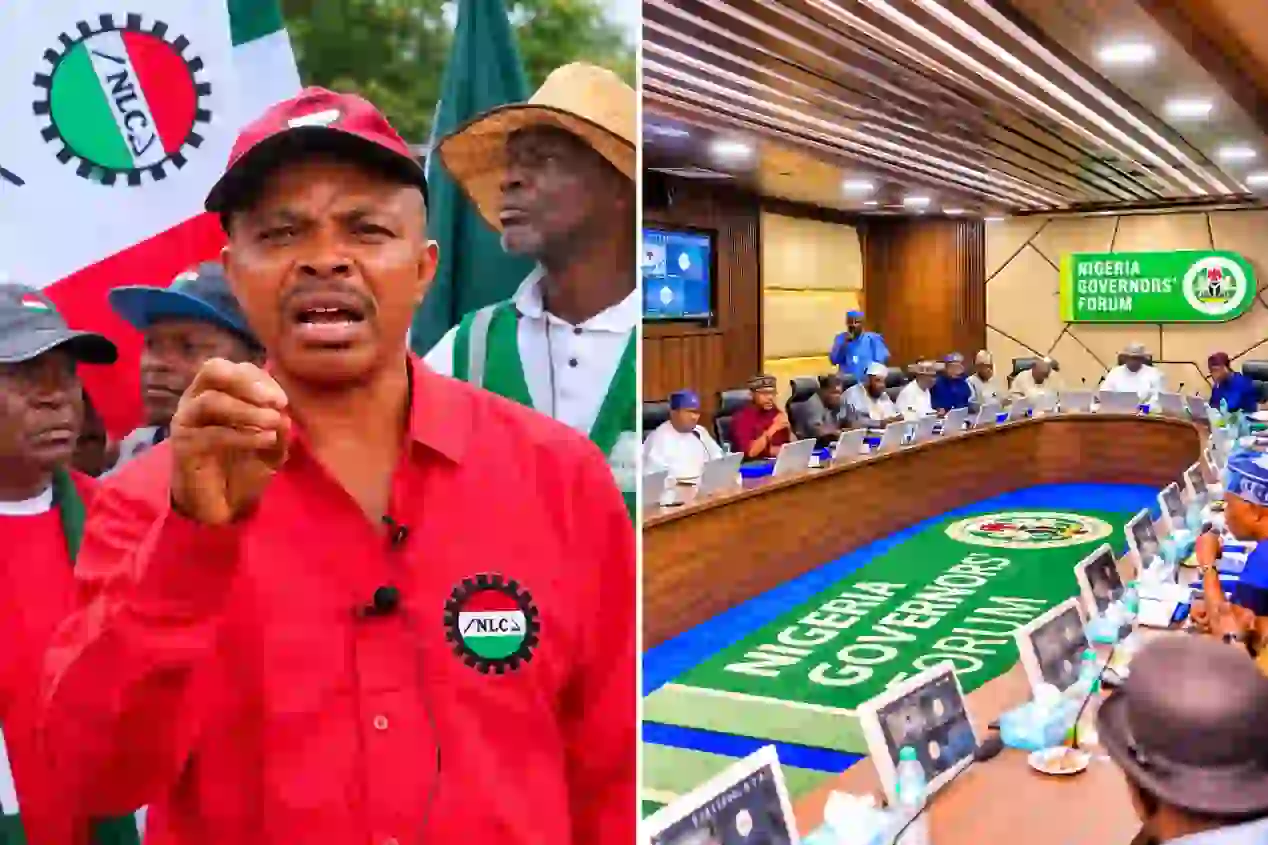
State governments across Nigeria are facing fresh demands to introduce the ₦70,000 monthly transport allowance approved by the Federal Government for public servants.
The allowance followed an October 27 agreement between the Federal Government and the Nigeria Labour Congress (NLC) to ease transport costs.
Federal workers are expected to receive ₦70,000 monthly for six months from November 2026. The total would amount to ₦420,000 per eligible worker if all six instalments are paid.
However, the agreement only urged state and local governments to introduce similar support. It did not automatically approve payments for every state worker.
Reports from several states show different stages of engagement, ranging from government preparations to union demands and discussions yet to begin.
Kebbi
Governor Nasir Idris has made one of the clearest commitments towards implementing the allowance for state workers.
Speaking in Abuja on November 3, Idris said he had established a committee under the Head of Service to examine arrangements for extending the intervention to Kebbi employees.
He expressed confidence that the state would act on the Federal Government’s decision. The governor’s position was reiterated in reports published on November 10.
The state NLC chairman, Murtala Usman, has also demanded at least ₦70,000, including coverage for teachers, health workers and local government employees. No confirmed disbursement date has been announced.
Ondo
The state Commissioner for Information and Orientation, Idowu Ajanaku, said the government would implement transport relief for workers in line with the federal agreement.
NLC chairman Ademola Olopade also indicated that labour would engage the government using the national agreement as its benchmark. An exact payment date or completed disbursement remains unconfirmed.
Lagos
Organised labour is pushing for an allowance higher than the federal figure. State NLC chairperson Agnes Sesi said workers would seek ₦100,000 monthly because of the cost of living and transportation in Lagos.
She maintained that the state should not offer less than ₦70,000. The demand does not mean Governor Babajide Sanwo-Olu has approved either amount.
Kaduna
NLC chairman Ayuba Magaji said the union was preparing to write Governor Uba Sani to begin discussions, with ₦70,000 as its minimum demand.
Labour could seek more if the government has sufficient resources. There is no verified approval or payment schedule for this allowance.
Benue
The state NLC chairman, Terungwa Igbe, said workers would insist on the ₦70,000 package.
However, Commissioner for Information Solomon Iorpev confirmed that specific discussions had not taken place. He indicated that Governor Hyacinth Alia supported measures to ease hardship, not that the allowance had been approved.
Bayelsa
NLC chairman Barnabas Simon said Bayelsa workers should benefit from the same relief being introduced for federal employees.
He argued that rising living costs affect workers nationwide. The demand remains separate from any confirmed decision by the state government.
Edo
NLC caretaker committee chairman Monday Igbafen said labour would approach the government to discuss adopting the federal transport package.
The union indicated that negotiations should come before any consideration of industrial action. No approval was established in reports reviewed.
Rivers
The NLC said it had written the state government requesting a meeting over the allowance.
However, Trade Union Congress (TUC) chairman Samuel Ogan preferred lasting salary improvements to a temporary six-month payment. Neither position establishes that Governor Siminalayi Fubara has approved the proposed relief.
Gombe
State NLC chairman Yusuf Bello said the union had received instructions from its national headquarters and planned to formally approach the government.
He said negotiations should not start below ₦70,000. Implementation has not been confirmed.
Niger
Labour representatives indicated plans to discuss the allowance with the government. NLC chairman Idris Lafene said negotiations had not started because the Head of Service was unavailable.
There was no verified decision announcing payment to workers.
Abia
NLC chairman Ogbonnaya Okoro said the union would demand ₦70,000 for six months without allowing the relief to replace minimum wage negotiations.
The governor’s spokesman, Ferdinand Ekeoma, said it was too early to comment without federal implementation details.
Sokoto
NLC chairman Abdullahi Jungle said the union was waiting for official guidance before approaching the government. No state approval was reported.
Kano
NLC chairman Kabiru Inuwa similarly said labour was awaiting instructions from its national headquarters. No approval by the governor was confirmed.
Osun
The TUC said it had been engaging Governor Ademola Adeleke on support for workers facing higher living costs.
However, those discussions did not amount to a confirmed commitment to the specific ₦70,000 federal transport allowance.
Ogun
The TUC said discussions on adopting the federal package had not begun. Instead, labour was seeking an extension of the state’s existing ₦10,000 transport support for public officers.
That separate support must not be mistaken for approval of the new ₦70,000 allowance.
Oyo
Governor Seyi Makinde renewed the state’s wage award for another three months in September and promised to continue transport subsidies.
Those measures predate the October federal agreement and are not evidence that Oyo has approved its separate ₦70,000 monthly package.
What workers should know
Kebbi has confirmed preparations, while Ondo has indicated willingness to implement relief. Other states mentioned above are at varying stages of labour engagement or operate separate support schemes.
Workers should wait for official state circulars stating eligibility, amount and payment dates. An NLC demand alone does not guarantee payment, and the federal agreement does not automatically cover state employees.