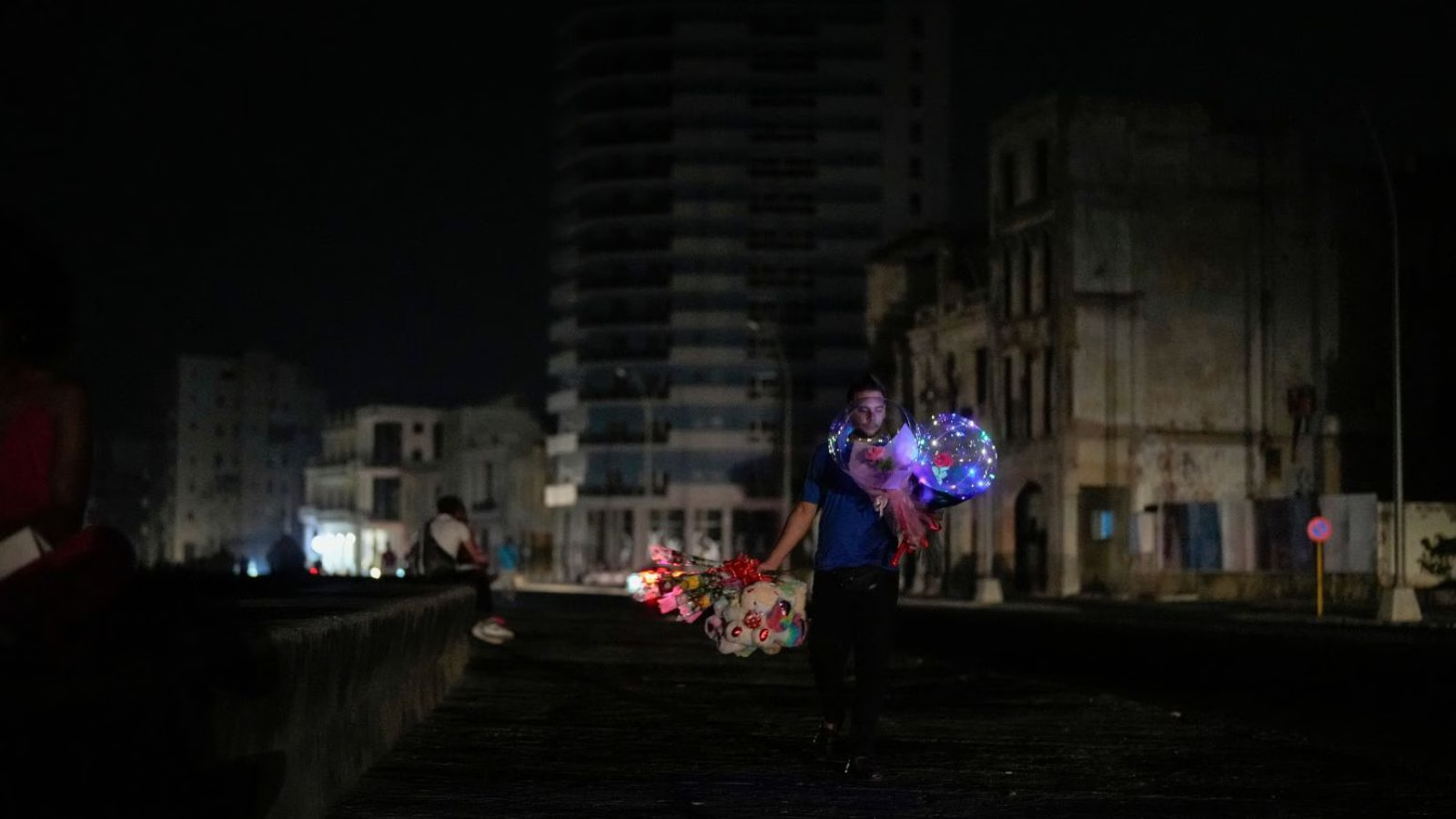
Cuba’s Ministry of Energy Saturday announced that the island has suffered a second power blackout in less than a week, leaving millions of people without electricity.
“A total disconnection of the National Electric System has occurred. Protocols for restoration are already beginning to be implemented, the ministry said in a post on X.
Se ha producido una desconexión total del Sistema Eléctrico Nacional. Ya comienzan a implementarse los protocolos para el restablecimiento.
— Ministerio de Energía y Minas Cuba 🇨🇺 (@EnergiaMinasCub) March 21, 2026
This marks the second time in a week that Cuba has reported a complete blackout, the first occurring on Monday, as Donald Trump continues to block critical oil shipments from Venezuela following the arrest of its then-president, Nicolás Maduro, earlier this year.
Just prior to Saturday’s blackout, the country’s state-owned electric company said on social media that it expected a power deficit of 1,704 megawatts during peak hours on Saturday night, CNN reported.
⚡ Actualización del Sistema Electroenergético Nacional para el 21 de marzo de 2026.
Leer más: https://t.co/6hVsTmTfaj#UnidosXCuba #UniónEléctrica #UNE #NotaInformativa pic.twitter.com/ZuVc6vsVBz
— Unión Eléctrica de Cuba (@OSDE_UNE) March 21, 2026
Trump has long expressed his wish about taking Cuba. On Monday while speaking to reporters in Oval Office, he said, “I do believe I’ll be having the honour of taking Cuba. Taking Cuba in some form,” adding, “Whether I free it, take it, I could do anything I want with it, you want to know the truth. They’re a very weakened nation right now.”
Earlier this week, Cuban President Miguel Díaz-Canel accused the United States of repeatedly threatening to overthrow Cuba’s constitutional order, citing what he described as decades of economic pressure and isolation imposed by Washington.
He argued that the United States plans to “seize the country” and its resources by weakening the very economy it wants to make surrender, adding that this is the only way to explain what he called a fierce economic war applied as collective punishment against the entire population.
#EEUU amenaza públicamente a #Cuba, casi a diario, con derrocar por la fuerza el orden constitucional. Y usa un indignante pretexto: las duras limitaciones de la debilitada economía que ellos han agredido y pretendido aislar hace más de seis décadas.
Pretenden y anuncian planes…
— Miguel Díaz-Canel Bermúdez (@DiazCanelB) March 18, 2026
“They intend and announce plans to seize the country, its resources, its properties, and even the very economy they seek to strangle to make us surrender.”
According to CNN, Díaz-Canel, in a speech to international activists bringing humanitarian aid to the island on Saturday, said he recognises that “there could be an attack on Cuba” and is preparing accordingly.
The president also confirmed that Cuba was holding talks with US government, while clarifying that it does not intend to negotiate over its political system.
Story continues below this ad
In a sharp response this week, the Cuban government rejected a request from the US Embassy in Havana to import diesel for its generators, calling the demand “shameless” in light of the Trump administration’s fuel restrictions on the island, according to diplomatic cables reviewed by The Washington Post.
The relationship between the United States and Cuba remains one of the most tense in the Western Hemisphere and has escalated further in recent months.
Since the arrest of Venezuelan leader Nicolás Maduro in January, Trump has halted all Venezuelan oil shipments to Cuba and threatened tariffs on any country that sells oil to the island nation.
Cuban officials said the country has not received any oil shipments for nearly three months, worsening an already severe fuel shortage. The crisis has had major consequences. Earlier this week, Cuba’s national power grid collapsed, leaving around 10 million people without electricity amid ongoing fuel shortages.