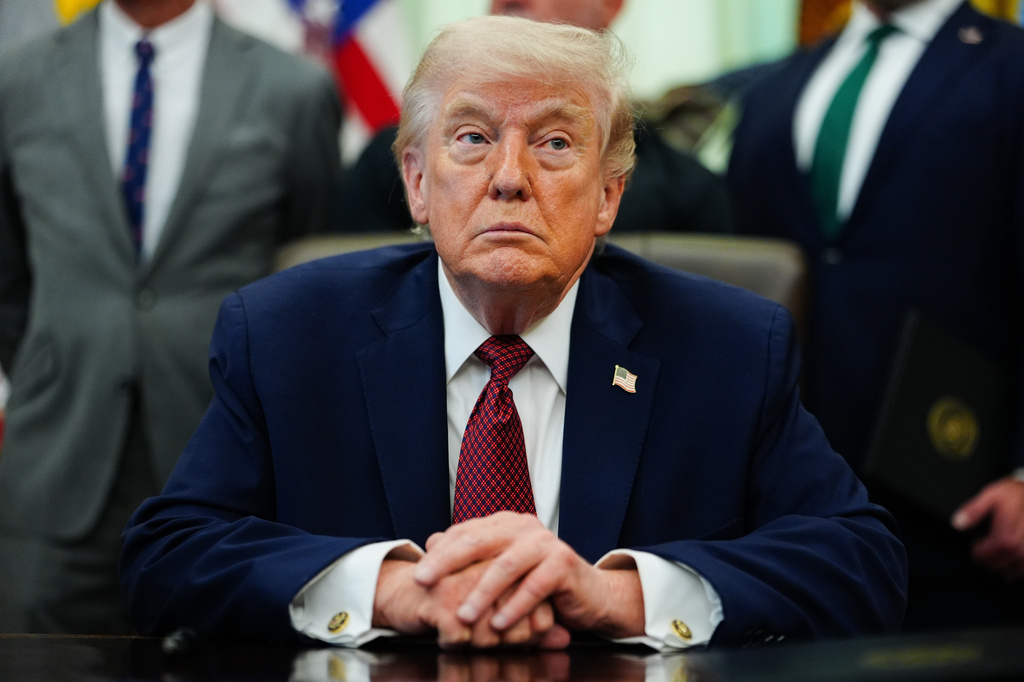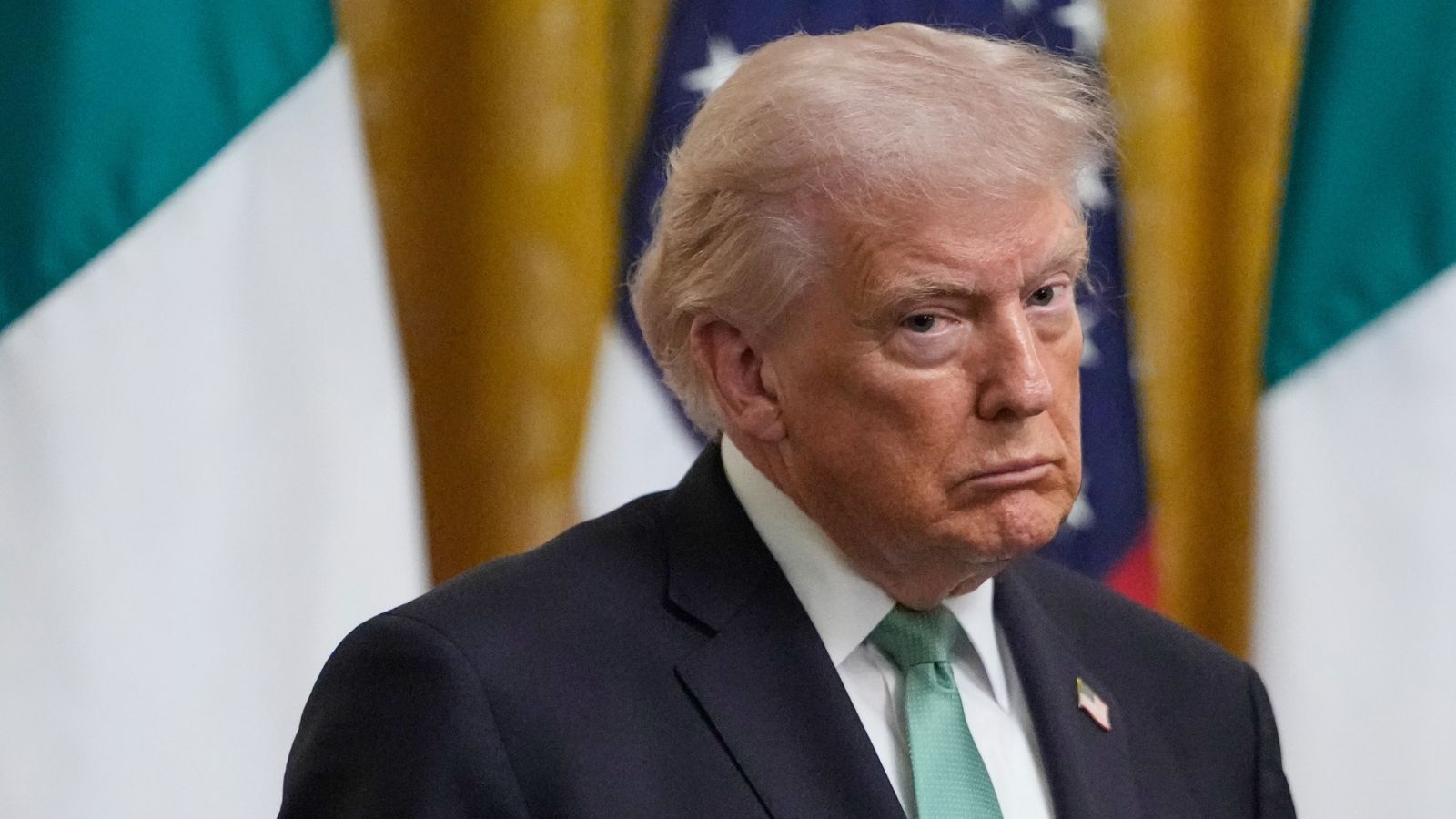
President Donald Trump has amped up his bid to rope in NATO allies to the Iran war. Amid the mounting tensions over the closure of the Strait of Hormuz, Trump has now threatened to “finish off” Iran before allowing countries that rely on the strait to take charge of securing it. The Strait of Hormuz is a vital global energy corridor, which facilitate the passage of 20% of the world’s oil transit.
In a series of posts on Truth Social, Trump suggested the United States could “finish off” Iran before allowing countries that rely on the strait to take charge of securing it. He argued that such a move would force what he called “non-responsive allies” to act quickly. “I wonder what would happen if we “finished off” what’s left of the Iranian Terror State, and let the Countries that use it, we don’t, be responsible for the so called “Strait?” That would get some of our non-responsive “Allies” in gear, and fast [sic],” he posted.
Earlier on March 17, Trump said: “The United States has been informed by most of our NATO ‘Allies’ that they don’t want to get involved with our military operation against the terrorist regime of Iran… This, despite the fact that almost every country strongly agreed with what we are doing.”
THE ATTACK
Iran strikes the heart of Qatar’s energy complex
On the night of March 18, 2026, Iran fired five ballistic missiles at the Ras Laffan Industrial City in northern Qatar — home to the world’s largest liquefied natural gas export facility. Four missiles were intercepted by Qatari and US air defences. One struck the complex, triggering extensive fires. A second wave of strikes followed in the early hours of March 19, causing further structural damage to the LNG processing trains and the adjacent Pearl GTL plant. QatarEnergy declared a state of emergency and invoked force majeure on contracted deliveries.
5
Ballistic missiles fired by Iran
1
Missile struck the facility
4
Intercepted by air defences
SEQUENCE OF EVENTS
MAR 2, 2026
An earlier Iranian drone strike damaged infrastructure at Ras Laffan. QatarEnergy halted LNG production and declared force majeure on deliveries.
MAR 18, 2026 — NIGHT
Iran fires five ballistic missiles at Ras Laffan. Four intercepted; one impacts the facility. Major fires reported in the LNG processing zone.
MAR 19, 2026 — EARLY HOURS
Second wave of strikes. QatarEnergy confirms “sizeable fires and extensive further damage” to LNG trains and Pearl GTL facility. Qatar expels Iran’s military and security attachés.
MAR 19, 2026 — ONGOING
Situation developing. International condemnations issued. Global gas and oil prices surge. Diplomatic contacts under way.
TRUMP’S STATEMENT
US President issues stark warning to Iran
On Truth Social, Donald Trump stated that Israel — not the US or Qatar — had struck Iran’s South Pars gas field in retaliation. He warned Iran directly against any further attacks on Qatar, threatening to “massively blow up the entirety of South Pars” if Qatar is struck again. He called on Iran to reach a nuclear deal and urged it to “stop the insanity.” Trump also stated the US had no involvement in the attack on Ras Laffan and was focused on protecting Qatar. (Source: Reuters, ABC News, CNN)
LOCATION
Where is Ras Laffan?
Ras Laffan Industrial City sits on the northeast coast of Qatar, approximately 80 km north of the capital Doha, on the shores of the Arabian Gulf. It was purpose-built as an industrial port city to serve Qatar’s vast offshore North Field — the world’s largest single natural gas reservoir, which Qatar shares with Iran (where it is called South Pars).
HISTORY
Built from scratch to power the world
Ras Laffan was established in 1996 by QatarEnergy (then Qatar Petroleum) to industrialise the country’s enormous gas reserves. Within three decades it grew into one of the largest industrial cities on earth — covering 295 sq km — and became the nerve centre of Qatar’s transformation from a small Gulf state into the world’s dominant LNG exporter. It hosts QatarEnergy’s LNG liquefaction plants, the Pearl GTL facility (the world’s largest gas-to-liquids plant), refineries, petrochemical complexes, and a major export port.
KEY NUMBERS
295
sq km — size of the industrial city
~20%
of global LNG supply originates here
77 MT
LNG export capacity per year (pre-attack)
80 km
north of Doha — distance from capital
WHAT IT PROCESSES
More than just LNG
Ras Laffan is not solely an LNG plant. It processes natural gas into LNG for export, operates the Pearl GTL plant which converts gas into diesel, naphtha, jet fuel, and lubricants, produces petrochemicals, and exports condensate. Qatar supplies LNG under long-term contracts to Japan, South Korea, China, India, Pakistan, and multiple European nations. Any disruption to its output creates immediate shortfall across Asia and Europe simultaneously.
THE DANGER
Why damage to Ras Laffan is a global emergency
LNG liquefaction trains are complex, precision infrastructure. Once damaged, they cannot simply be restarted — repairs take months to years. Qatar’s LNG was already halted since March 2 after the drone strike. The second ballistic missile attack deepens the damage to both the LNG trains and the Pearl GTL plant, making a rapid return to full production unlikely.
GLOBAL FALLOUT
E
European energy shock
Dutch and British wholesale gas prices surged approximately 50% following the March 2 halt. European nations which had switched from Russian pipeline gas to Qatari LNG now face acute winter supply risk.
A
Asia’s LNG deficit widens
Asian LNG spot prices rose approximately 39% after the initial halt. Japan, South Korea, and China are the world’s largest LNG importers and have long-term Qatari supply contracts. Spot alternatives are scarce and significantly more expensive.
S
Strait of Hormuz risk
Any escalation that draws the Strait of Hormuz into the conflict would choke off approximately 20% of global oil trade and nearly all Gulf LNG shipments, amplifying the crisis far beyond Qatar’s own exports.
P
Pearl GTL shutdown impact
The Pearl GTL plant produces diesel, jet fuel, and lubricants from gas. Its disruption adds a secondary pressure on refined product markets, compounding the crude oil price surge already under way.
I
India’s exposure
India imports LNG from Qatar under long-term agreements and also receives significant crude oil from Gulf suppliers. Rising Brent prices directly feed into India’s import bill, putting downstream pressure on petrol, diesel, LPG, and CNG prices.
INTERNATIONAL REACTIONS
Global condemnation — and calls for restraint
The attack drew swift international responses. The GCC called it a “blatant violation of international law and state sovereignty.” The EU called for the Strait of Hormuz to remain open for navigation. Saudi Arabia confirmed it had intercepted four ballistic missiles aimed at Riyadh, attributed to the same exchange. Tap each name below to read their statement.
TAP TO EXPAND STATEMENTS
Donald Trump
US President — via Truth Social, Mar 19, 2026
▼
“If Qatar is hit again, we will have no choice but to massively blow up the entirety of South Pars… Iran, make a deal, STOP THE INSANITY!” Trump also clarified that the US and Qatar were not involved in the strike on South Pars, attributing it to Israel. He warned Iran that the US would act decisively to protect Qatar. (Source: Reuters, CNN, ABC News)
Gulf Cooperation Council (GCC)
Regional bloc — Statement, Mar 19, 2026
▼
The GCC condemned the attack as a “blatant violation of international law and state sovereignty.” It called on Iran to immediately cease hostilities, respect the territorial integrity of Gulf states, and engage in dialogue. It also reaffirmed that the security of Ras Laffan was a matter of regional concern. (Source: Al Jazeera, Reuters)
Kaja Kallas — European Union
EU Foreign Policy Chief — Mar 19, 2026
▼
EU foreign policy chief Kaja Kallas spoke directly with Iranian Foreign Minister Abbas Araqchi and called for the Strait of Hormuz to remain open for safe passage of commercial vessels. She urged Iran to de-escalate and warned that further disruptions to energy shipping lanes would have severe consequences for European energy security. (Source: Reuters, BBC)
Saudi Arabia
Kingdom statement — Mar 19, 2026
▼
Saudi Arabia confirmed its air defence forces had intercepted four ballistic missiles fired toward Riyadh during the same exchange. Riyadh condemned Iran’s actions as a “dangerous escalation threatening regional security” and called on the international community to hold Iran accountable. (Source: Reuters, Al Jazeera, CNN)
United Arab Emirates
MoFA statement — Mar 19, 2026
▼
The UAE Ministry of Foreign Affairs condemned Iran’s “dangerous escalation” and its targeting of civilian energy infrastructure. It called the attack a violation of international humanitarian law and warned that destabilising critical energy facilities had consequences far beyond the immediate region. (Source: Reuters, Al Jazeera)
Brent Crude
$111.93
per barrel (USD)
▲ Surging
WTI Crude
$96.40
per barrel (USD)
▲ Surging
India Fuel Prices — Mar 19, 2026
CONTEXT
India’s domestic prices: stable for now, watch Brent
India’s petrol, diesel, LPG, and CNG retail prices are currently unchanged as state-run oil marketing companies have not revised prices. However, with Brent crude trading above $111/barrel — a level not seen in years — sustained high crude prices or further escalation in the Gulf could force a revision in domestic fuel pricing. India imports over 85% of its crude oil needs and is highly sensitive to Gulf supply disruptions.
Crude oil prices: oilprice.com, Goodreturns (Mar 19, 2026) · India fuel prices: Goodreturns (Mar 19, 2026) · CNG prices for Chennai, Bengaluru, Hyderabad, Kolkata are approximate — verify with city gas distribution companies before publication · Editorial sources: Al Jazeera, Reuters, BBC, CNN, ABC News, CBS News
CHECK HERE THE LATEST UPDATES ON THE SITUATION IN UAE AND DUBAI.
What US said about allies earlier
The remarks come days after several European and allied governments declined Washington’s call for a joint military effort to safeguard the narrow passage, which links the Persian Gulf with the Arabian Sea and carries a significant share of the world’s seaborne oil trade.
Trump maintained that the US itself does not depend on the route, but acknowledged that Iran’s blockade has sent global crude prices climbing. Brent crude surged past $112 on Thursday morning amid fears of prolonged disruption to energy supplies.
Story continues below this ad
Earlier, Trump threw his weight behind the rising oil prices, saying: “The United States is the largest oil producer in the world, by far, so when oil prices go up, we make a lot of money,”
Despite earlier appeals for international cooperation, Trump said this week that Washington does not “need anybody” to secure the waterway. Speaking at the Oval Office, he insisted the US could manage the situation alone, though he added that allies “should’ve been there.”
Allies push back
The standoff has deepened strains between Washington and its NATO partners. Several leaders rejected calls to deploy naval forces to escort tankers through the strait, urging restraint and diplomacy instead.
British Prime Minister Keir Starmer said the UK would not send ships to protect oil tankers, distancing London from direct military involvement. Trump responded sharply, saying he was “not happy” with the UK’s stance and describing the conflict as a test of the long-standing special relationship.
Story continues below this ad
French President Emmanuel Macron also ruled out sending France’s navy, with Paris rejecting US requests for operational support. Trump lashed out at Macron as well, predicting he would be “out of office very soon.”
JUST IN: 🇺🇸🇫🇷 President Trump says French President Macron will be out of office “very soon.” pic.twitter.com/DedSn1aO6i
— BRICS News (@BRICSinfo) March 17, 2026
The European Union urged de-escalation. EU foreign policy chief Kaja Kallas called for an end to hostilities, warning that wars are easier to start than to stop and often spiral beyond control. She said diplomatic efforts were underway with regional partners to help all sides step back without losing face.
EU’s Kaja Kallas on Iran:
This is not Europe’s war, but Europe’s interests are directly at stake. pic.twitter.com/bISLa8xhTq
— Clash Report (@clashreport) March 16, 2026
Kallas added that while European participation in securing maritime navigation was not entirely off the table, any role would most likely be tied to a political solution rather than a combat mission. She stressed that no country was willing to put personnel “in harm’s way” in the strait and warned of knock-on risks to food, fertilizer and energy supplies if disruption continued.
Germany echoed that position. Defence Minister Boris Pistorius dismissed calls for involvement, saying a handful of European vessels would add little alongside the US Navy’s capabilities. Chancellor Friedrich Merz said there had been no joint decision to intervene and ruled out German military participation, adding that military force alone was unlikely to resolve the crisis.
German Defense Minister Boris Pistorius rejected President Trump’s call for military support in the war against Iran. “It’s not our war, we didn’t start it,” he said. pic.twitter.com/ZpmuAoWkJs
— Benjamin Alvarez (@BenjAlvarez1) March 16, 2026
Elsewhere, Finland’s President Alexander Stubb said European nations faced their own security pressures closer to home and favored mediation over escalation.
Several other countries, including Italy, Greece and Australia, have also declined to join efforts to reopen the passage.
Trump accused NATO members of abandoning the US despite broadly supporting its stance on Iran. He described the alliance as a “one-way street”, saying Washington spends vast sums on collective defence while receiving little backing in return.
Pres. Trump said he believes NATO is making a “very foolish mistake” in not helping the U.S. in the war with Iran.
“I’ve long said that, I wonder whether or not NATO would ever be there for us. So, this was a great test. Because we don’t need them, but they should have been… pic.twitter.com/RaqKWq3XvA
— CBS News (@CBSNews) March 17, 2026
Why the strait matters
Iran on March 1 shut the Strait of Hormuz after US and Israeli air strikes began on February 28, warning it would target vessels crossing the channel that separates Iran from the Arabian Peninsula. Though a limited number of ships – mostly Iranian – have continued to pass, overall traffic has fallen sharply.
Story continues below this ad
The International Energy Agency estimates roughly a quarter of global seaborne oil trade moves through the corridor, much of it bound for Asian markets.
Market anxiety intensified after Iran said air strikes hit its South Pars gas field, the world’s largest natural gas reserve, which it shares with Qatar. Strikes also reportedly targeted oil infrastructure in the southern city of Assaluyeh.
ALSO READ | Qatar declares Iranian attaches ‘persona non grata’ after missile strike ‘significantly damages’ Ras Laffan
Qatar’s foreign ministry condemned the attack on the shared gas field, with spokesperson Majed Al Ansari warning it posed a threat to global energy security and regional stability. It remains unclear whether US or Israeli forces carried out the strikes.
Story continues below this ad
As oil prices remain volatile, the geopolitical impasse over the strait has become a flashpoint – exposing widening divisions between Washington and its allies over how to respond to the deepening crisis.