
The World Bank has said the conflict in the Middle East is affecting shipping routes as costs are mounting, and supply risks spreading from energy into fertilisers and other critical agricultural inputs.
In a statement on its website, the global bank said a number of countries have reached out as attacks intensify.
According to the Washington-based lender, it is working with governments, the private sector, regional partners, and other stakeholders to help them through a new set of challenges posed by the conflict.
“We are closely monitoring global market developments, and we are in direct contact with the most affected client countries to understand what they are facing on the ground.
“Crude oil prices increased by nearly 40 percent between February and March, the price of liquefied natural gas shipments to Asia rose by almost two-thirds, and the prices of nitrogen-based fertilizers increased by nearly 50 percent in March.
“The World Bank Group is moving quickly to help client countries to navigate this crisis. We are ready to respond at scale — combining immediate financial relief with policy expertise and private sector support for the recovery of jobs and growth. We will draw on the full range of instruments we have available to support governments, firms, and households. Our aim is to deliver immediate relief by leveraging our active portfolio, our crisis response toolkit, and pre-arranged financing facilities. We will transition progressively to fast-disbursing instruments anchored in sound policies to underpin recovery. Through our private sector arms, we will provide firms with essential liquidity, trade finance, and working capital.
“Clearly, this is an evolving situation and we cannot predict the full range of impacts. As everyone has said, the longer this lasts, and the more damage there is to critical infrastructure, the more challenging this will be for our clients. That said, we are determined to be helpful and do all we can to safeguard some of the hard-won economic progress that these countries are making,” it stated.
‘…U.S. plotting ground attack’
In a related development, the speaker of Iran’s parliament Sunday accused the United States of plotting a ground attack despite publicly pushing for a negotiated deal, after a US warship with around 3,500 military personnel arrived in the Middle East.
Mohammad Bagher Ghalibaf’s comments come after more than a month of aerial bombardments by Iran by US and Israeli forces, and as key regional players met to hold talks in Pakistan.
The war has escalated into a regional conflagration as Iran has retaliated with attacks on Gulf states, sending energy markets into a tailspin and threatening the world economy.
“The enemy publicly sends messages of negotiation and dialogue while secretly planning a ground attack,” Ghalibaf said in a statement carried by the official IRNA news agency.
“Our men are waiting for the arrival of the American soldiers on the ground to set them on fire and punish their regional allies once and for all,” he added.
The USS Tripoli, an amphibious assault ship carrying around 3,500 Marines and sailors, arrived in the Middle East on Friday.
The Washington Post reported the Pentagon was preparing plans for weeks of ground operations — potentially including raids on sites near the Strait of Hormuz — though US President Donald Trump has yet to approve any deployment.
Iran says it has effectively blocked the Strait of Hormuz, a vital shipping lane which previously accounted for a quarter of the world’s seaborne oil trade, to hostile shipping.
Trump has repeatedly spoken of diplomatic contacts with Iran, although these claims has been denied by Tehran.
Pakistan, acting as a go-between for Washington and Tehran, hosted foreign ministers from Saudi Arabia, Turkey and Egypt in Islamabad for talks on the crisis.
The four-way meeting between the top diplomats of the Muslim nations was slated to discuss “a range of issues, including efforts to de-escalate tensions in the region”, Pakistan’s foreign ministry has said.
‘All of Tehran was shaking’
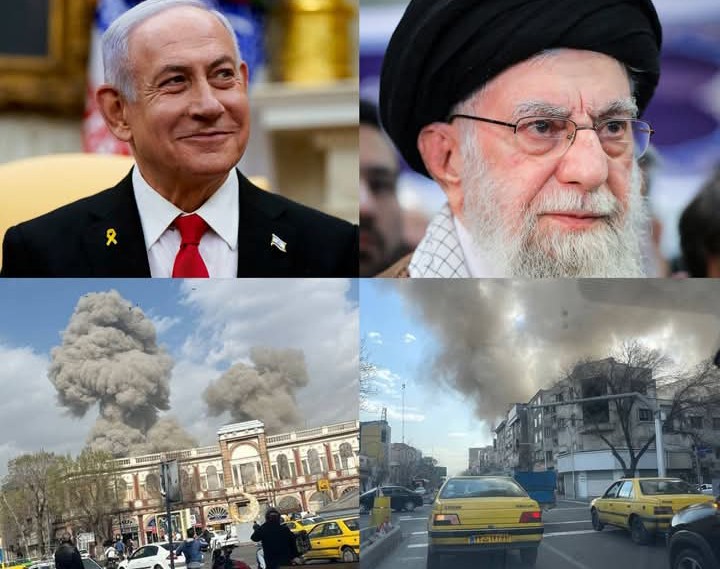
In Tehran, two blasts shook the city early Sunday, an AFP journalist said, although it was not clear what was targeted.
The Qatari news channel Al Araby said an Israeli missile hit the building housing its office in the city.
Footage from inside the office showed broken windows and shattered glass. Outside, images showed the streets covered in debris and damage to surrounding buildings.
The channel said in a statement to AFP that it “condemns this attack on a civilian commercial building and affirms that endangering journalists or considering them targets runs counter to international law”.
“I miss a peaceful night’s sleep,” an artist in Tehran told AFP, saying night-time strikes were “so intense it felt like all of Tehran was shaking”.
Farzaneh, a 62-year-old woman in Iran’s western city of Ahvaz contacted by AFP from Paris, said: “People wake up each day worried about an uncertain future.”
Ghalibaf on Sunday called for unity among Iranians, saying the country was in “a major global
“We are certain that we can punish the United States, make it regret attacking Iran, and firmly secure our legitimate rights,” he said. (With additional reports from AFP, The Guardian)