Argentina’s Javier Milei is doubling down on his bet that closer alignment with Israel — and, by extension, Washington — can redefine his country’s place on the global stage.
On a high-profile visit to Israel on Sunday, his third since taking office, the libertarian president stood alongside Prime Minister Benjamin Netanyahu to roll out a package of diplomatic, economic and security moves that signal a sharp geopolitical pivot: a new bilateral pact, plans for direct flights, and a renewed push to relocate Argentina’s embassy to Jerusalem.
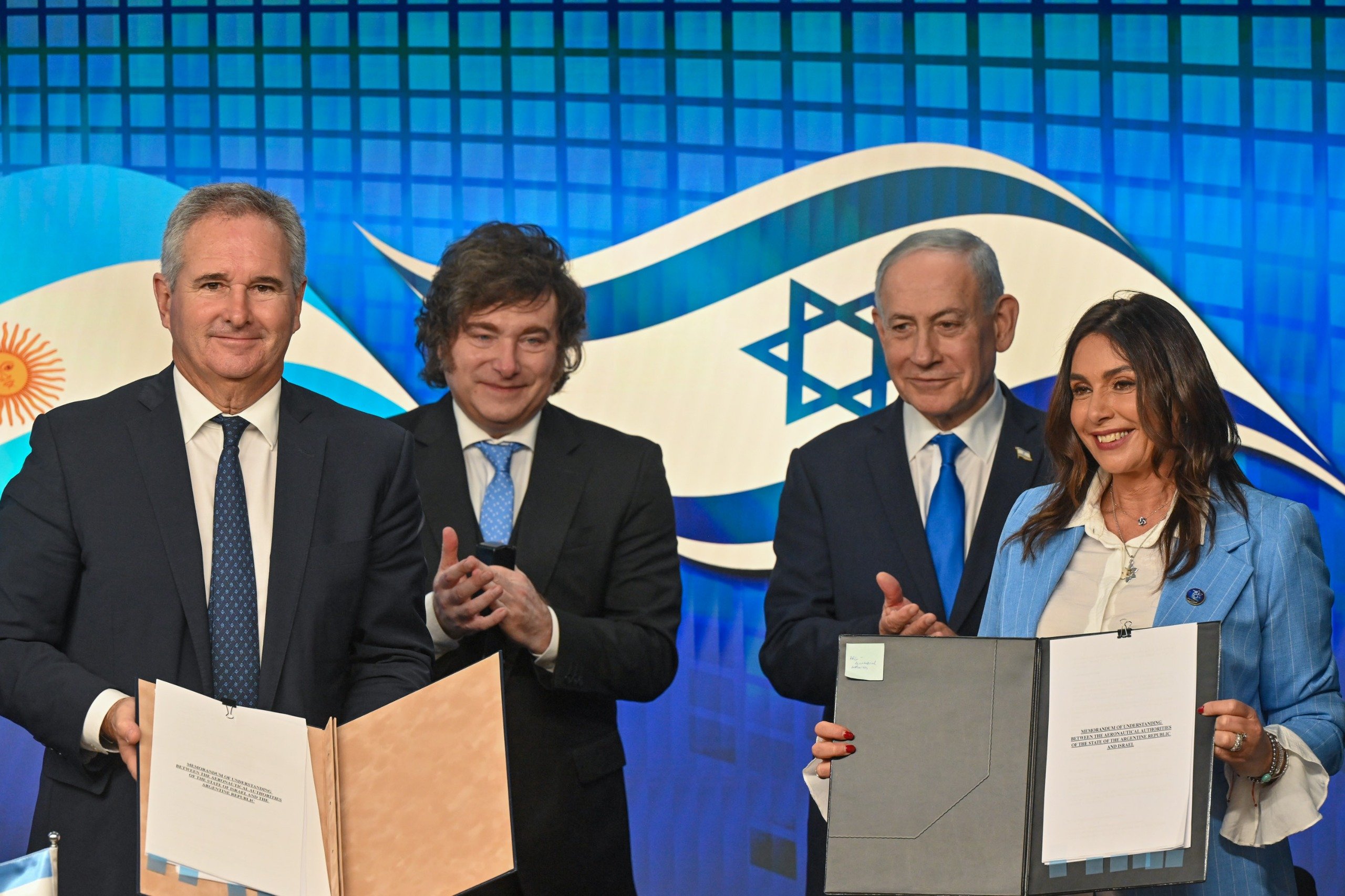
At the center of the visit is the signing of the so-called “Isaac Accords,” a framework agreement designed to expand cooperation on security, artificial intelligence and economic policy, while also positioning Argentina and Israel as anchors of what Netanyahu described as an emerging “alliance of freedom.” The branding is deliberate, echoing the Abraham Accords that reshaped Israel’s ties in the Arab world and now serve as a model for outreach beyond the region.
“This is a historic moment,” Milei said during the signing ceremony, casting the agreement as both a bilateral milestone and a broader ideological project aimed at linking Israel with Western Hemisphere allies around shared democratic and security priorities.
Behind the rhetoric is a more concrete agenda. According to a joint statement, the accords envision coordination against Iranian influence in Latin America, deeper alignment in international forums and expanded cooperation in technology and trade, including an ambitious push to position Argentina as a global hub for artificial intelligence.
“Israel is now a leading technological power, and Argentina has the human capital and regulatory freedom to become the world’s next AI center,” Milei said, outlining plans for joint development and training initiatives.
The visit also produced tangible deliverables. Officials confirmed that direct commercial flights between Tel Aviv and Buenos Aires are expected to launch by the end of the year, a move both sides framed as symbolic as well as practical. “You have brought our people closer. Now we’re bringing them even closer,” Netanyahu said.
Perhaps more politically charged is Milei’s renewed commitment to move Argentina’s embassy to Jerusalem, a step that would align Buenos Aires with a small group of countries, including the United States, that recognize the city as Israel’s capital. The pledge had appeared to stall earlier this year amid tensions tied to energy exploration disputes, but Milei’s remarks suggest the plan is back on track.
The Argentine leader’s embrace of Israel comes with broader geopolitical implications. Milei, a staunch ally of U.S. President Donald Trump, has positioned his foreign policy around a pro-Western, anti-Iran posture, including recently expelling Tehran’s envoy and intensifying rhetoric over Iran’s alleged role in past terror attacks on Argentine soil.
That history loomed over the visit. Milei invoked the 1992 bombing of Israel’s embassy in Buenos Aires and the 1994 attack on a Jewish community center — both widely attributed by Argentine authorities to Iran — as a shared point of trauma binding the two countries.
“Argentina and Israel are brothers in pain,” he said.
Netanyahu, for his part, leaned into the personal and political symbolism of the relationship, praising Milei as both a “great economic leader” and a close ally. In a rare gesture, the Israeli leader announced that Milei would be honored at Israel’s upcoming Independence Day ceremony — the first time a foreign leader has received that distinction.
(YWN World Headquarters – NYC)