The veteran journalists warned that the profession is increasingly losing depth and connection with the public.
Veterans in Nigeria’s media industry have called for a renewed focus on human-interest journalism, warning that the profession is increasingly losing depth and connection with the public.
They made this known on Thursday at a colloquium held to mark the 70th birthday celebration of veteran journalist and Chief Executive Officer of The Creat Online, Shola Oshunkeye in Lagos.
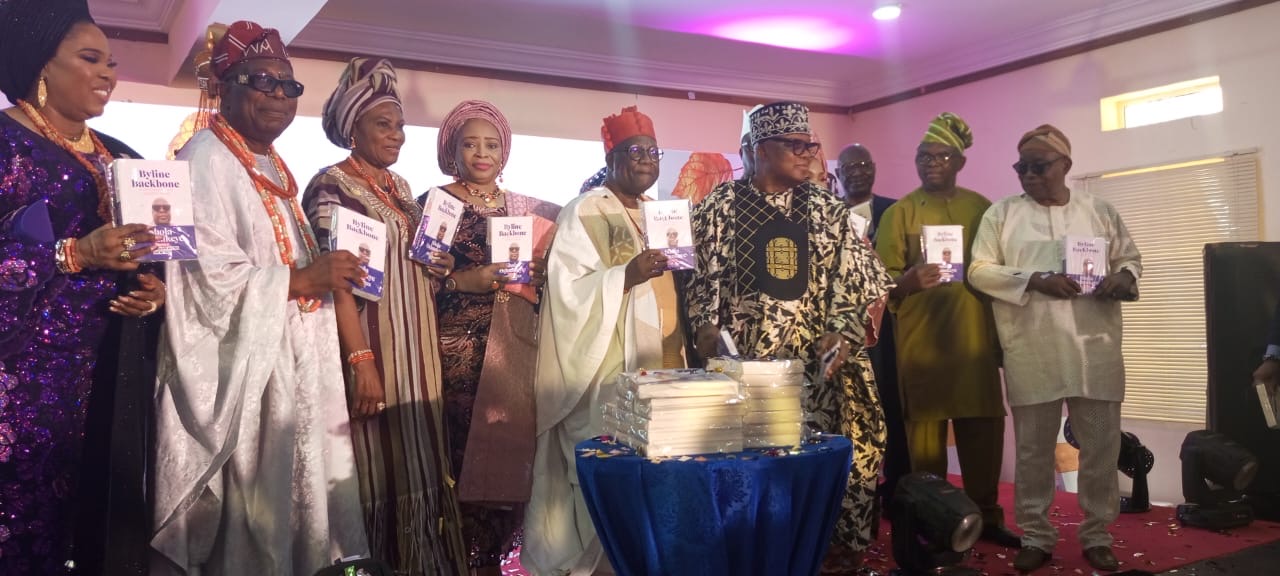
The event also featured the launch of Mr Oshunkeye’s latest book, ‘Byline & Backbone: A Lifetime of Big and Impactful Stories,’ a collection of his most notable works spanning decades in journalism.
The anthology brought together award-winning reports that document Nigeria’s evolving political and social landscape, offering a reflective account of the country’s recent history while interrogating present-day realities.
Foreworded by Nosa Igiebor, Mike Awoyinfa, and Dare Babarinsa, the book brings to the fore the enduring relevance of rigorous, people-centred reporting and highlights the role of journalism in shaping public understanding and national discourse.
The event, themed “The decline of human interest journalism in Nigeria,” featured prominent media figures including the Chairman, Ovation Media Group, Dele Momodu, former Governor of Ogun State, Olusegun Osoba, Journalist and former media adviser to Former President Muhammadu Buhari, Femi Adesina.
Other notable dignitaries at the event include the Aare Onakakanfo of Yorubaland and national leader of the Odua People’s Congress (OPC), Gani Adams, the Owa Obokun of Ijesaland, Oba Clement Haastrup, and the Òràngún of Oke-Ila, Oba Adedokun Abolarin.
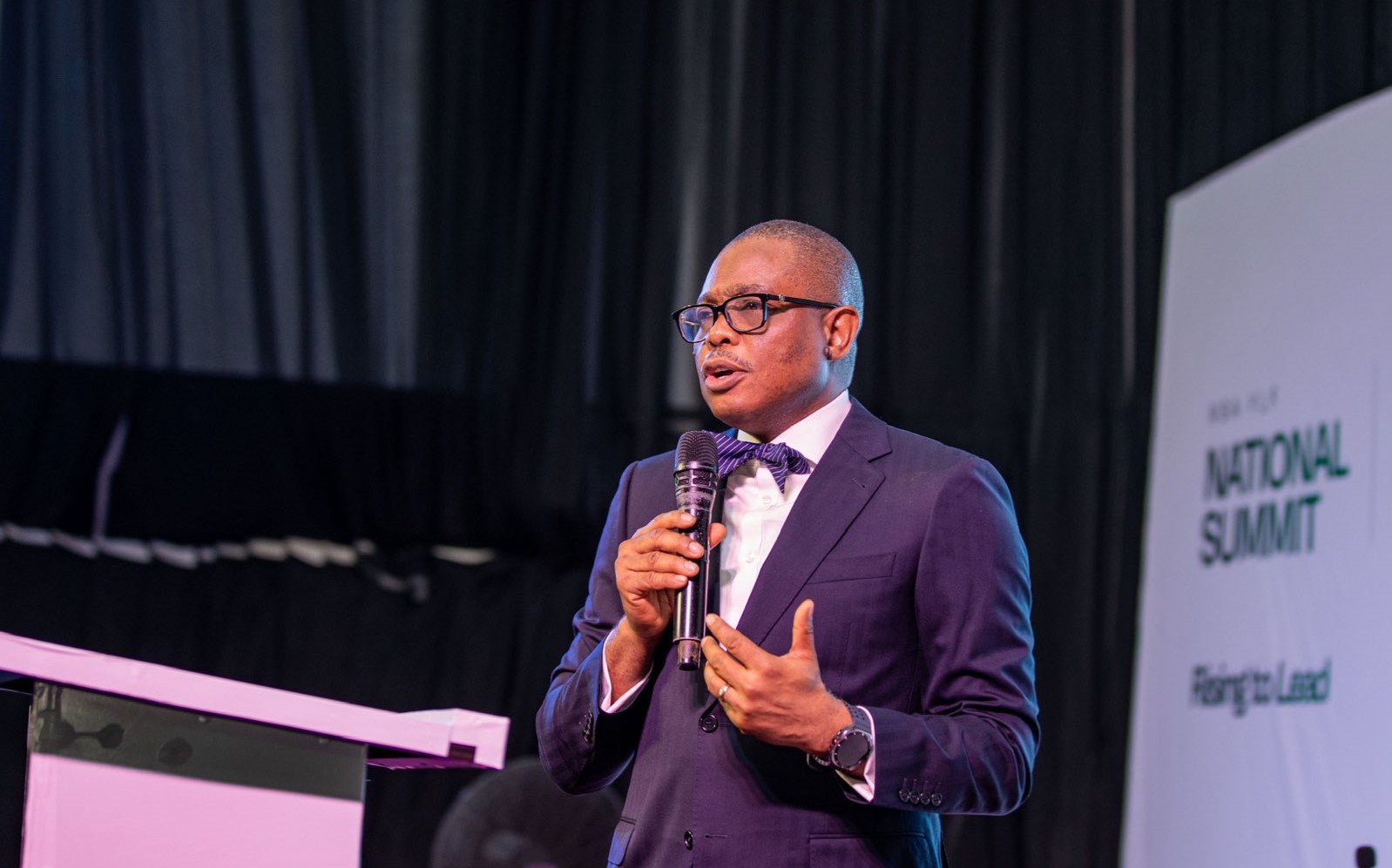
Giving the keynote address, Mr Momodu said the practice of journalism is undergoing a fundamental shift, driven by speed and the demands of a fast-paced digital environment.
He noted that while technology has expanded access to information, it has also altered editorial priorities, often at the expense of depth and thoughtful storytelling.
He added that the pressure to be first has, in many cases, replaced the responsibility to be thorough, with newsrooms increasingly prioritising virality over substance.
According to him, this shift is gradually eroding the human-centred approach that once defined journalism.
“Today, the landscape has changed dramatically. We live in an age defined by speed and immediacy. Information travels faster than ever before, but often at the expense of depth and reflection.
“The pressure to break news has in many cases replaced the commitment to understanding. The pursuit of virality has overshadowed the responsibility of accuracy and empathy. In this environment, human intervention has gradually been pushed to the margins,” he said.
Mr Momodu further warned that the consequences of this trend are evident in the kind of stories being produced, many of which, he said, lack context and emotional depth.
He called for a deliberate return to more rigorous and people-focused reporting, urging journalists and media organisations to invest in depth and narrative quality.
He said such efforts are necessary to rebuild trust and preserve the core values of the profession.
“In losing these voices, journalism risks losing its moral anchor. Human interest journalism remains the foundation of meaningful reporting. It is through such stories that we develop empathy, understand the complexities of our society, and preserve the lived experiences of our people.”
“Without it, journalism becomes mechanical and distant, stripped of the very essence that gives it relevance and purpose. There is an urgent need to reclaim the human dimension of journalism. This requires a conscious return to storytelling that is rich, nuanced, and deeply rooted in the realities of the people. It demands investment in depth, in research, and in narratives that go beyond the surface,” he added.
At the panel coordinated by Funke Egbemode, discussions centred on the place of human interest stories in a media space increasingly driven by politics and hard news.
Tony Onyima, the former Editor-in-Chief of The Sun Newspaper said the shift is evident in newsroom priorities, noting that more than 70 per cent of news content is about politics. He explained that the news ecosystem has been so politicised that human interest stories have taken a backseat.
Another panelist, Mayor Akinpelu, however, argued that the stories themselves have not disappeared but migrated to new platforms.
“I don’t really agree that there is a decline in human interest stories,the platform has changed,” he said.
Former Special Adviser to then-President Muhammadu Buhari on Media and Publicity, Femi Adesina, in a light-hearted remark, described the celebrant as “Baba Elabe,” a nickname to describe Mr Oshunkeye’s cheerful personality, who draws a crowd wherever he goes, adding that he still has much to offer the profession.
Former Ogun State governor, Mr Osoba, said the gathering reflected a growing culture of journalists honouring their own.
He praised Mr Oshunkeye’s contributions and noted that he attended despite a tight political schedule out of respect for the celebrant, expressing hope to celebrate him again at 80.
President Bola Tinubu has also congratulated Mr Oshunkeye in a statement issued on 20 April by his Special Adviser on Information and Strategy, Bayo Onanuga.
In the statement, the president rejoiced with him and praised his contributions to the struggle for the restoration of democracy and accountable governance in Nigeria, as well as to the development of journalism in the country.
He highlighted Mr Oshunkeye’s career across major newsrooms. A Fellow of the Nigerian Guild of Editors, Mr Oshunkeye has served as Editor of Weekend Concord, Senior Associate Editor at TELL Magazine, General Editor at The Sun Group, and later Managing Director/Editor-in-Chief of The Sun Publishing Ghana Limited. He is currently President/CEO of The Crest Online.
Mr Tinubu “happily notes Oshunkeye’s unrelenting pursuit of truth, not only in Nigeria but across Africa,” culminating in his 2006 CNN/MultiChoice African Journalist of the Year award for his investigative report, Niger’s Graveyard of the Living. He wished him many more years of fruitful service to Nigeria and humanity.
Visibly emotional, Mr Oshunkeye paused at intervals as he thanked his wife, family, friends and colleagues who gathered to celebrate with him, reflecting on the relationships that have sustained his career.