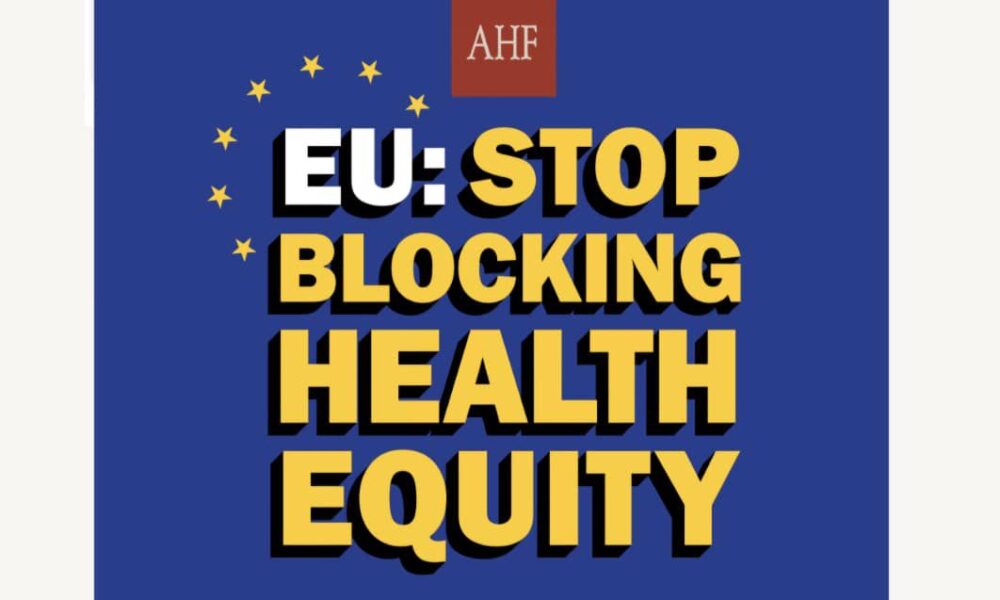

AIDS Healthcare Foundation (AHF) Nigeria and partners have urged WHO Member States to finalize a strong, binding Pathogen Access and Benefit-Sharing (PABS) Annex to the WHO Pandemic Agreement ahead of the resumed sixth meeting of the Intergovernmental Working Group (Part B) session in Geneva from April 27 to May 1.
AHF in a statement issued Thursday by Steve Aborisade, its Marketing and Communications Manager, said the Pandemic Agreement cannot move forward without a binding PABS Annex that guarantees enforceable benefit-sharing across all phases—pandemics, (PHEICs) and interpandemic periods.
“Clear, upfront obligations (e.g., not deferred to bilateral negotiations between WHO and manufacturers) must include set-aside percentages of vaccines, diagnostics, and treatments; pre-negotiated licenses and know-how/technology transfer; annual financial contributions; and public access to non-commercial outputs.
“To ensure user registration, traceability, accountability, and enforceability, key standard contract provisions must be negotiated upfront by countries, not left to bilateral negotiations between WHO and recipients.
“Countries must support mandatory user registration, traceability, and data access agreements to protect the system and ensure it cannot be exploited anonymously.”
The statement said any “hybrid” or dual track approach that separates access from benefit-sharing creates loopholes, weakens the system, and allows obligations to be bypassed.
The statement also harped on the need for Intellectual Property (IP) to be guided by public health needs, saying non-commercial use should not create IP monopolies over shared resources or outputs; “where IP arises from commercial use, licenses must be granted to WHO for sub-licensing, especially in developing countries; and no IP should restrict others from using shared materials.”
It said the WHO Pandemic Agreement which was adopted in May 2025, cannot advance without the PABS Annex, which governs how pathogen samples and genetic data are shared—and how resulting benefits, including vaccines, diagnostics, and treatments, are equitably returned.
“The upcoming negotiating session—the last scheduled opportunity to finalize the Annex before the World Health Assembly in May—comes at a critical moment, with key equity provisions still unresolved.
“Without a strong, enforceable agreement, the world risks repeating the failures of COVID-19, when inequitable access to lifesaving tools left many countries behind. The outcome of these negotiations will determine whether future pandemic responses, Public Health Emergencies of International Concern (PHEIC), and interpandemic periods (no widespread global outbreak, but public health systems remain alert, monitoring diseases, strengthening preparedness, and preventing potential future pandemics) are driven by equity and cooperation—or by delay, exclusion, and inequality.”