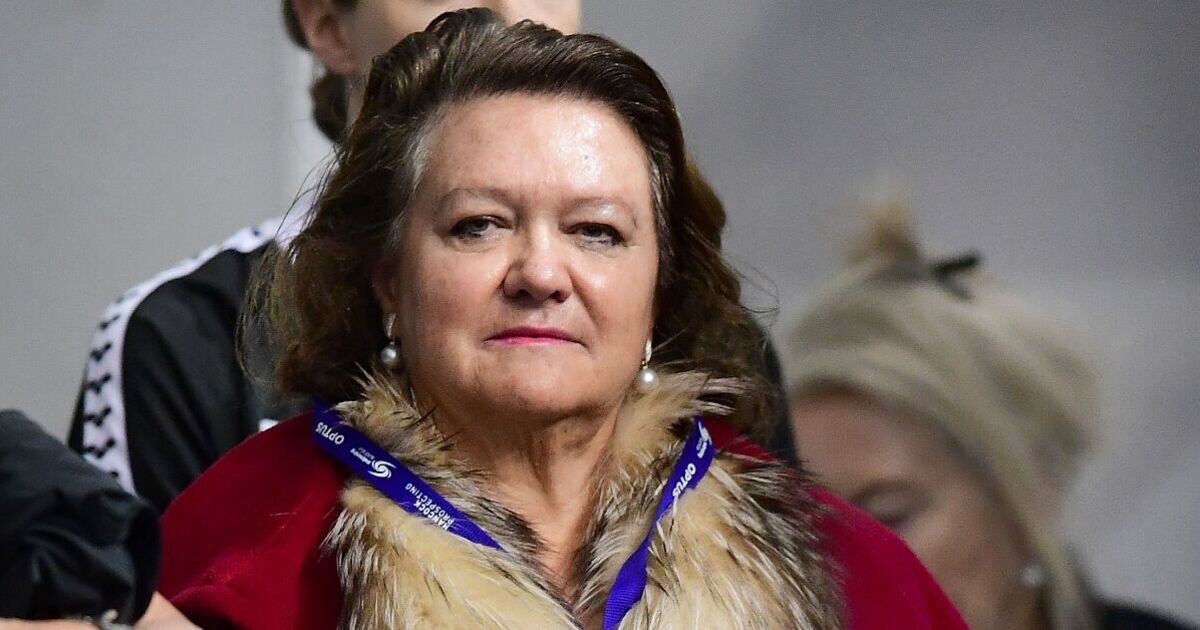
The richest woman in Australia has been told she must share some of her fortune by a court. Gina Rinehart is worth an estimated £20billion (Aus$38bn) and inherited a company founded by her father, Lang Hancock, in 1992.
She went on to amass an even bigger fortune by developing mines in Western Australia’s Pilbara region. But on Wednesday (April 15), a Supreme Court judge ruled she will have to pay past and future iron ore royalties worth hundreds of millions of dollars to the heirs of her late father’s business partners, including Peter Wright and Don Rhodes.
After 13 years of legal wrangling, the judge ruled rival family mining firms, Wright Prospecting and DFD Rhodes, succeeded in their case.
But Justice Jennifer Smith dismissed a claim from two of Ms Rinehart’s own children, who argued they were owed a greater share of the wealth amassed from Hope Downs mines.
A separate trial, to be heard at a later date, will determine exactly how much the two rival companies will be paid.
Jay Newby, Executive Director of Hancock Prospecting, said in a statement that the Supreme Court decision confirmed the company’s rightful ownership of Hope Downs and East Angelas mines.
He said the court had “firmly” rejected the “baseless” ownership claims of Wright Prospecting and Rinehart’s children, John and Bianca.
Mr Newby said Hancock Prospecting would consult its partner, the Anglo-Australian mining multinational Rio Tinto, over the payments due.
The executive said the company welcomed the court’s rejection of Wright Prospecting’s claim to a volume royalty, a fixed fee for a single product sold rather than a percentage of total revenue.
He said Hancock Prospecting also welcomes the Court’s rejection of the majority of Rhodes’ royalty claims.
Mr Newby said that the remaining claims amount to about $4million a year for DFD Rhodes and about $14 million per year for Wright Prospecting.
A Rio Tinto spokesperson told the Financial Times: “We acknowledge the decision of the court today and will now fully consider the judgment in detail.”
A Wright Prospecting spokesperson welcomed the decision, saying the company was pleased to finally receive a result in its favour, according to the BBC.