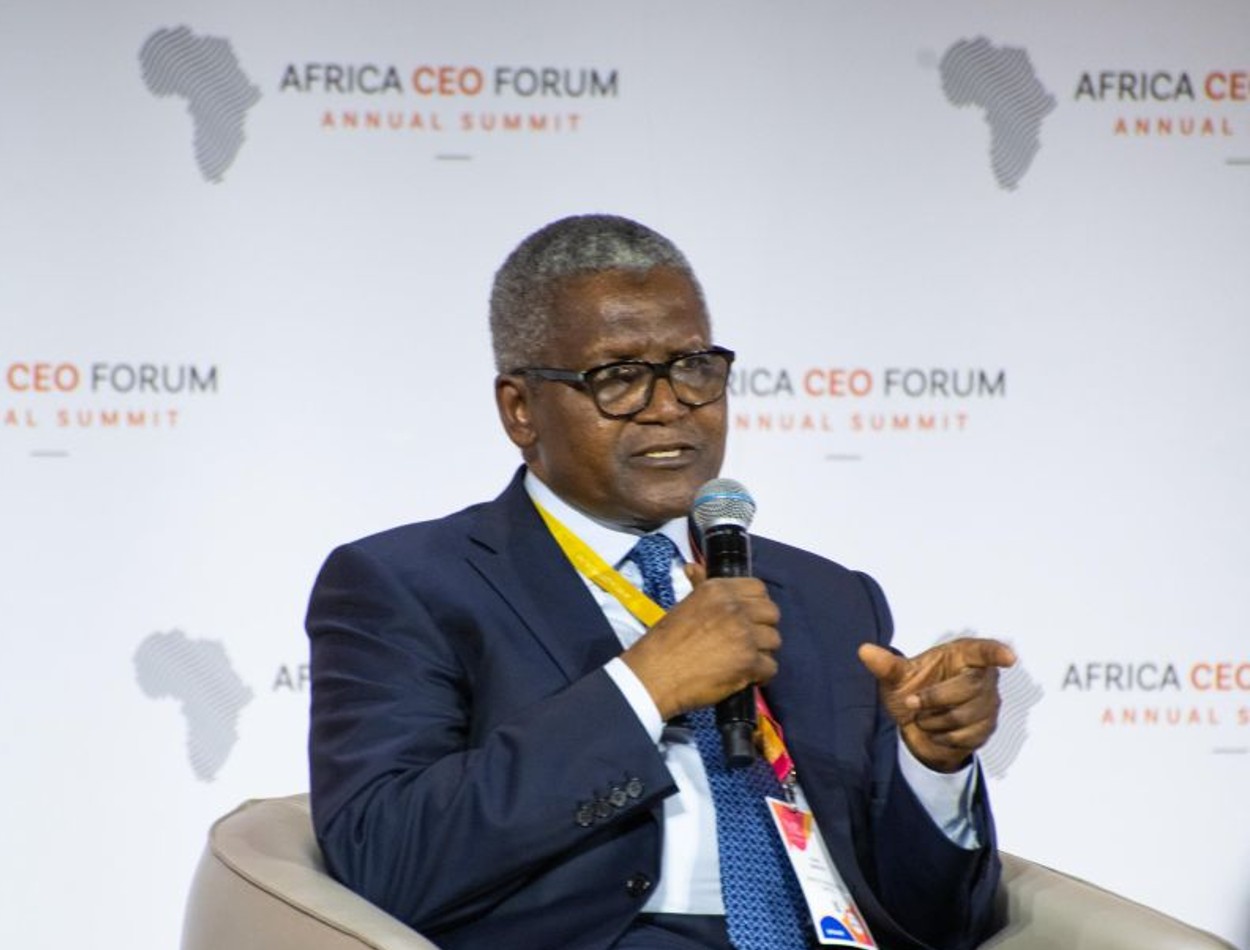
Industrialist Aliko Dangote and United States President Donald Trump have been named among TIME’s 100 Most Influential People of 2026, highlighting their significant impact on global markets, policy, and leadership discourse. As seen by TVC News, TIME published its 2026 list on April 15, recognising individuals whose growing influence is……
Industrialist Aliko Dangote and United States President Donald Trump have been named among TIME’s 100 Most Influential People of 2026, highlighting their significant impact on global markets, policy, and leadership discourse.
As seen by TVC News, TIME published its 2026 list on April 15, recognising individuals whose growing influence is shaping global discourse across business, technology, international politics, culture, and tourism.
According to the list, Dangote and Trump were named alongside international political figures and leaders, including Xi Jinping, Benjamin Netanyahu, Mark Carney and Pope Leo XIV.
TIME, also named international business and technology leaders, including Sundar Pichai and Neal Mohan. However, Elon Musk and Mark Zuckerberg were absent from the list despite their global influence through SpaceX and Meta Platforms, respectively.
Other Africans recognised on the list include Netumbo Nandi-Ndaitwah, Precious Matsoso, Anok Yai, Mamadou Amadou Ly, and Zabib Musa Loro, reflecting broader African representation across leadership, health, culture, education, and peacebuilding.
Dangote, who featured in the Titans category, is the only Nigerian on the 2026 list. His inclusion marks his second appearance on the TIME 100, having previously been recognised in 2014 for his impact on business and philanthropy.
As founder of Africa’s largest indigenous industrial conglomerate, Dangote has driven investments across cement manufacturing, sugar refining, fertiliser production, agriculture, and infrastructure, with a recent expansion into energy. These investments have significantly reduced reliance on imports while creating jobs and strengthening local production capacity across the continent.
In its citation, TIME highlighted Dangote’s long-term vision of building globally competitive industries using African resources, pointing to his large-scale investments in manufacturing and energy infrastructure as central to Africa’s economic transformation.
Other notable figures in the Titans category include Reid Wiseman, Commander of the Artemis II mission; Sundar Pichai; Neal Mohan; Michael and Susan Dell, founders of the Michael & Susan Dell Foundation; and Ralph Lauren, founder of the Ralph Lauren Corporation.
In the Pioneer category, Kiran Musunuru and Rebecca Ahrens-Nicklas were recognised for advances in genetic therapy, as well as Aaron Williams for contributions to heart transplant readiness.
In the global entertainment and culture, Ranbir Kapoor, Dakota Johnson, and Kate Hudson were recognised for their impact in film and broader cultural influence.
Beyond his business achievements, Dangote is widely regarded for his philanthropic leadership through the Aliko Dangote Foundation, one of Africa’s largest private foundations, which supports initiatives in healthcare, nutrition, education, disaster relief, and economic empowerment.
The 2026 recognition also comes as the Dangote Group advances its long-term growth strategy, Vision 2030, aimed at transforming the conglomerate from a $30bn regional player into a $100bn global enterprise. The roadmap is structured in phases, with the first phase spanning 2025 to 2028, focused on scaling existing businesses in cement, fertiliser, and energy, while optimising assets for global competitiveness.
The second phase, covering 2028 to 2030, is expected to drive expansion into new sectors and international markets, including planned investments in steel manufacturing, power generation, and deep-sea ports to address critical industrial gaps across Africa.
The latest TIME recognition reflects growing global acknowledgement of African leadership and enterprise, with Dangote standing out for industrial scale, while other African honourees highlight influence across governance, public health, education, culture, and peacebuilding.