A former Minister of Information and Culture, Lai Mohammed, has attributed the escalation of the 2020 #EndSARS protests to the spread of fake news and disinformation, rather than a failure of government communication.
Speaking at a high-level forum at the London School of Economics and Political Science, the former minister said the protests, which initially began as legitimate expressions of public anger against police brutality, were later hijacked and worsened by the rapid dissemination of misleading and unverified information.
According to him, the situation became more volatile when troops were deployed to the Lekki Toll Gate to disperse demonstrators, a development he said triggered a surge in misinformation across both traditional and digital media platforms.
“The problem we had was not the usual communication gap between the government and citizens. It was fake news and disinformation, coupled with unbridled violence,” Mohammed said.
He also criticised international media coverage of the protests, singling out CNN for what he described as reliance on unverified and, in some cases, manipulated content, which he argued contributed to shaping a global narrative that did not fully reflect events on the ground.
Describing the episode as a real-time demonstration of the dangers of information disorder, Mohammed stressed the need for stronger fact-checking systems, responsible journalism, and greater resilience against misinformation.
Beyond the EndSARS protests, the former minister highlighted the government’s communication strategy during the COVID-19 pandemic, noting that Nigeria had to develop its own approach in the absence of any established global template.
He explained that authorities adopted a coordinated communication framework built on transparency, consistency, and responsiveness. This included daily briefings, multi-platform messaging, and widespread dissemination of information in indigenous languages and pidgin.
According to him, the strategy helped counter misinformation, reduce public anxiety, and improve compliance with health protocols such as mask-wearing, social distancing, and vaccination.
Mohammed also pointed to communication efforts during the fight against insurgency in the North-East, particularly his media tour of territories previously occupied by Boko Haram.
He said the visit, which involved dozens of journalists, helped counter extremist propaganda and reshape both domestic and international perceptions by showing that many areas had been reclaimed and normalcy was gradually returning.
On public engagement, he highlighted the introduction of nationwide town hall meetings as a key innovation during his tenure. The sessions, he said, provided a platform for direct interaction between government officials and citizens across different regions and demographics, helping to improve understanding of policies and build trust.
Addressing the controversial suspension of Twitter in Nigeria, Mohammed maintained that the decision followed sustained but unsuccessful efforts to secure cooperation from social media platforms in curbing misinformation and harmful content.
He described the move as a necessary step taken in the interest of national cohesion and security.
Reflecting on his time in office, Mohammed said he inherited a system without a coherent communication framework and had to develop a comprehensive strategy that integrated both traditional and digital media while promoting two-way engagement with citizens.
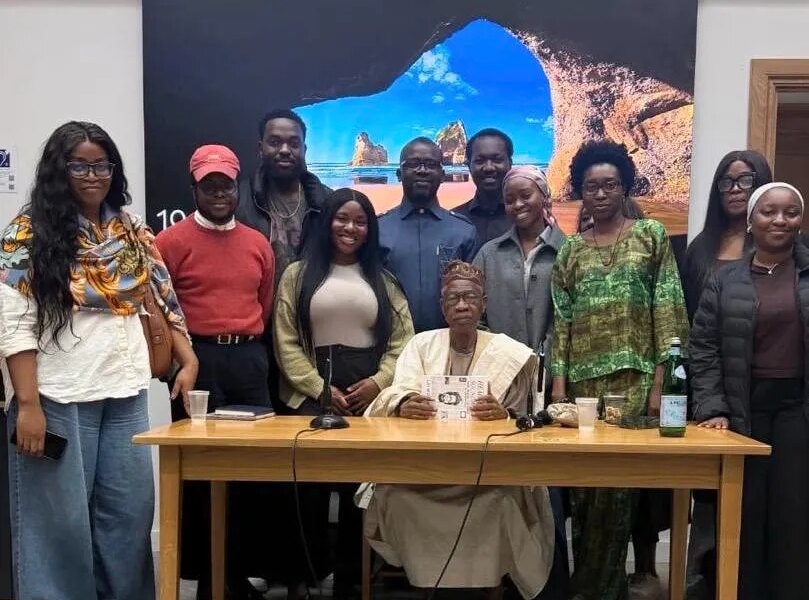
The event at LSE marked the conclusion of his three-day speaking tour of the United Kingdom, where he engaged audiences on governance, leadership, and public communication, drawing insights from his book, Headlines & Soundbites: Media Moments That Defined an Administration, which chronicles his years as Nigeria’s government spokesman from 2015 to 2023.