The clause, contained in the treaty that underpins the EU, obliges countries to come to the aid of a fellow member if it comes under attack. However, officials say there are currently no clear rules about how it should work in practice.
Concerns over Trump’s criticism of NATO for failing to back the United States’ war with Iran, along with his earlier threats this year to seize Greenland from ally Denmark, have added urgency to efforts to more clearly define the EU’s mutual assistance provisions.
“I think Greenland has shown it’s necessary to have that discussion,” said one EU diplomat.
Cyprus, which currently holds the rotating EU Council presidency, is pushing for the bloc to take the pact more seriously after a drone struck a British air base on the island last month during the Iran war.
At the gathering in Cyprus, EU foreign policy chief Kaja Kallas is expected to brief leaders on what kind of assistance can be provided under the clause, an EU official said.
Senior diplomats, meanwhile, are planning to hold scenario-based, table-top exercises in the coming weeks to better understand how the clause could work in practice, the diplomat added.
“What was missing was having some specific scenarios and options already prepared in case a situation arises where countries request assistance,” said Juraj Majcin, a policy analyst at the European Policy Centre, a Brussels-based think tank.
“There will be some thought put into what our union can facilitate, and how this can be streamlined,” he said.
Diverging views on mutual assistance
Article 42.7 of the Treaty on the European Union states that “if a Member State is the victim of armed aggression on its territory, the other Member States shall have towards it an obligation of aid and assistance by all means in their power.”
The treaty adds that this “shall not prejudice the specific character of the security and defence policy of certain Member States” and that any action must remain consistent with commitments to NATO.
Also read: Trump orders US Navy to ‘shoot and kill’ boats laying mines in Strait of Hormuz
The clause has been activated only once — by France after the 2015 Paris terrorist attacks — when member states contributed to EU and international military missions, allowing France to redeploy its forces.
Cyprus is particularly keen to develop Article 42.7 further, as it is not a member of NATO and therefore does not benefit from the alliance’s protection.
Some countries, however, are cautious about any move that could be seen as distancing the EU from NATO and its Article 5 mutual defence pact.
“We should avoid any interpretations suggesting this is a contingency if NATO collapses and the US withdraws,” said a second EU diplomat.
NATO still seen as Europe’s defence ‘cornerstone’
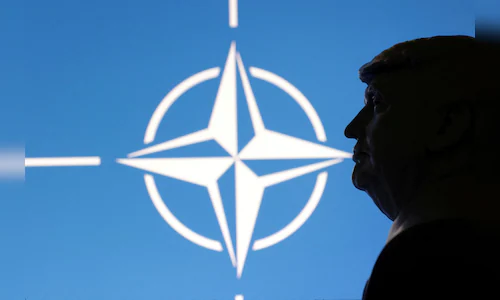
NATO’s Article 5 specifies that an attack on one of its members is considered an attack on all, obliging allies to take action they deem necessary to assist the affected country, including the potential use of military force.
It remains widely regarded as Europe’s ultimate security guarantee, supported by established military structures and the backing of the United States, a nuclear-armed superpower.
Latvia’s Foreign Minister Baiba Braze said in a statement to Reuters that her country “sees NATO as the cornerstone of collective defence”.
“The possible activation and further development of Article 42.7 should go hand in hand with NATO, seeking synergies, and should in no way be regarded as a sign of distrust in NATO or as weakening the alliance,” she said.
Latvia “believes that maximum flexibility must be preserved” when applying the article, she added, allowing the affected EU member to determine the type of assistance required in the event of armed aggression or hybrid threats.