Hungarians were waking up to a political earthquake after a landslide victory for the centre-right opposition reverberated everywhere from Washington to Kyiv, sending local markets surging and turning Budapest into a party zone.
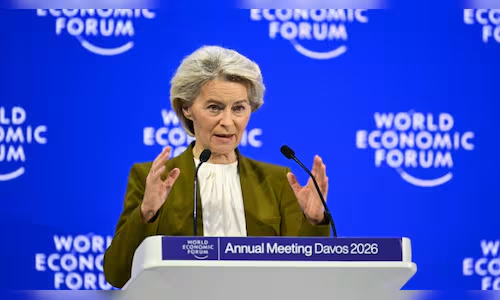
“I really want to say to the Hungarian people, you’ve done it again!” von der Leyen told reporters in Brussels on Monday.
“Again against all odds, like you did in 1956 when you courageously stood up, like you did in 1989 when you were the first to cut the barbed wire that was dividing our continent.”
Orban was Russian President Vladimir Putin’s main ally in the European Union, and regularly played an adversarial role in the bloc, frustrating its efforts to aid war-torn Ukraine.
Also Read: Venezuela hopes to lure back international miners, but it’s a risky business
His exit after 16 years as prime minister could move Hungary more towards the mainstream in the EU, analysts have said.
Hungary’s 1956 uprising against the Soviet Union was brutally crushed by the Red Army.
On the 50th anniversary of the revolt, Orban’s Fidesz party sought to align itself with the rebels’ anti-communist ideals, to the outrage of the left, liberals and some on the right.
Orban, a fiery anti-communist youth leader during the Cold War, was a patriotic hero to supporters, but critics at home and abroad accused him of taking Hungary on an authoritarian path.