Stakeholders in Nigeria’s agrifood sector have identified persistent structural and financing challenges hindering agribusiness growth, urging stronger alignment between policy frameworks and enterprise-level implementation.
Experts on Tuesday met in Abuja to chart a way forward on key challenges affecting agribusiness development in Nigeria, with a focus on implementing the Comprehensive Africa Agriculture Development Programme (CAADP) Strategy and Action Plan 2026–2035.
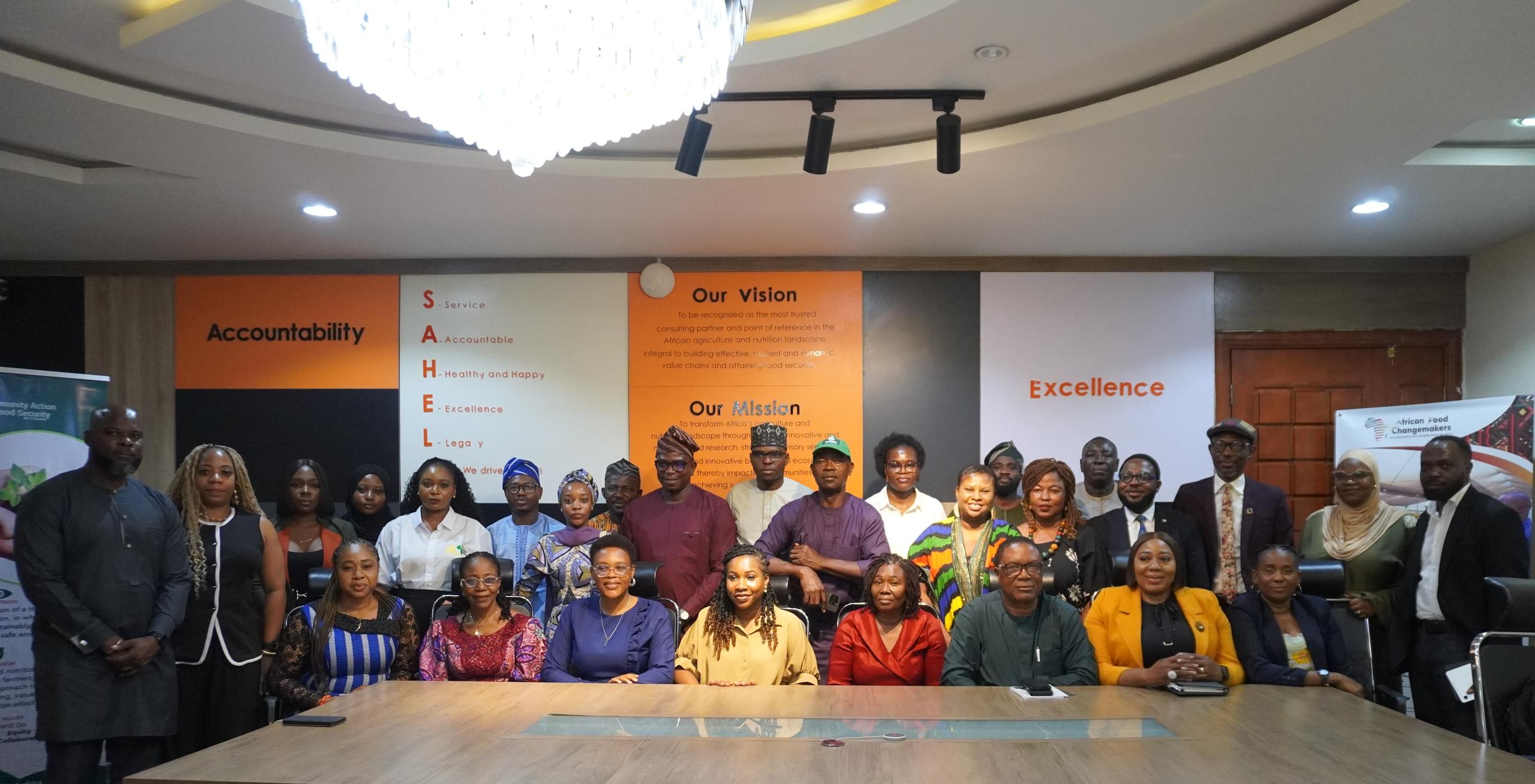
The dialogue was organised by African Food Changemakers (AFC) in partnership with Community Action for Food Security (CAFS), under the theme: “From Policy to Enterprise: Translating CAADP into Scalable Agribusiness Opportunities in Nigeria.”
The event brought together development partners, government officials, private-sector leaders, civil society actors, and agribusiness stakeholders to examine how to bridge the gap between policy frameworks and enterprise-level implementation across Africa’s agrifood systems.
According to the organisers, the dialogue was convened to align efforts and unlock practical pathways for agribusiness growth.
“Our goal is to align efforts, unlock practical pathways for agribusiness growth, and ensure that frameworks like CAADP translate into real, scalable impact for businesses,” the organisation said.
CAADP, an African Union initiative established in 2003, aims to drive agricultural growth, reduce poverty, and enhance food security across the continent.
Its 2026–2035 strategy, launched under the Kampala Declaration, targets transforming Africa’s agrifood systems through sustainable production, agro-industrialisation, and expanded trade.
The plan prioritises increased public investment—at least 10 per cent of national expenditure—alongside private-sector participation, aiming to mobilise over $100 billion by 2035.
Key focus areas include investments in soil health, fertiliser systems, seed development, and the blue economy. Implementation will be driven by National and Regional Agrifood Systems Investment Plans (NASIPs and RASIPs), alongside measures to improve sanitary standards and eradicate livestock diseases, such as peste des petits ruminants, by 2030.
Nigeria has consistently failed to meet the 2003 Maputo Declaration target of allocating 10 per cent of its annual budget to agriculture, despite being a signatory to the treaty designed to ensure food security.
Over the years, agriculture has remained a key driver of Nigeria’s economy after crude oil. The sector contributes significantly to the country’s development.
In recent years, though the Nigerian government has introduced a number of agricultural revival and poverty alleviation policies, it has consistently underfunded the sector, leaving the country at risk of food insufficiency and slow economic growth.
In 2020, PREMIUM TIMES reported how different administrations in Nigeria failed to invest substantially in the sector.
Analysis reveals that inadequate funding, rather than a lack of policies, hampers the sector, resulting in low growth, widespread hunger, and continued reliance on food imports.
In her remarks, AFC Programs Manager Kachi Nwachukwu said that over $300 billion has been invested in CAADP-related implementation between 2003 and 2023, yet nearly 280 million Africans still face hunger.
“As we look toward CAADP 2026–2035, there is a huge opportunity to rethink and transform Africa’s food systems,” she said.
However, she explained that experience has shown that policies alone do not automatically translate into real growth or financing opportunities for agribusinesses, particularly for youth and women-led enterprises.
“This dialogue was therefore convened to help us do things differently, especially in Nigeria, by ensuring that CAADP priorities are translated into practical, scalable opportunities for agribusiness and enterprise development, with a strong focus on investment, market access, and youth-led growth,” she said.
On his part, Azeez Salawu, Executive Director of CAFS, said CAADP was designed as a call to action rather than a standalone policy framework.
“As we move from Maputo to Malabo and now into the Kampala phase, the real opportunity lies in translating these commitments into scalable, investment-ready agribusiness solutions that can drive jobs, reduce hunger, and unlock Africa’s economic potential,” he said.
He added that the roundtable aimed to connect policy to enterprise and partnerships to measurable impact.
In his remarks, Olumide Thompson of the Mastercard Foundation emphasised the need for tailored financing models.
“There is a need to adopt blended finance models that combine domestic, private, public, and international capital to better support agribusinesses at different stages of growth,” he said.
He also highlighted the effectiveness of cluster-based models in helping small and medium enterprises (SMEs) present stronger investment propositions.
Discussions at the event highlighted structural constraints facing agribusinesses, including limited access to finance, fragmented markets, weak value chain integration, and climate-related risks.
Participants noted that while frameworks like CAADP provide strong policy direction, translating them into tangible economic outcomes remains a major gap.
The dialogue identified four priority areas: financing, market access, scaling SMEs and youth-led enterprises, and governance. Stakeholders called for blended finance approaches, stronger collaboration between financial institutions and agribusinesses, and inclusive funding models tailored to women and rural entrepreneurs.
On market access, participants emphasised the importance of clustering, aggregation models, and improved value chain coordination to help businesses transition from subsistence to commercial scale.
They also called for increased investment in infrastructure, compliance systems, and market linkages to enhance competitiveness and unlock trade opportunities.
AFC highlighted its ongoing support for agribusinesses through structured acceleration programmes focused on export readiness, enterprise development, and market access.


