
The federal government has firmly refuted claims that Nigeria is on the brink of collapse, stating that the country remains stable, resilient and on a clear path to recovery and growth.
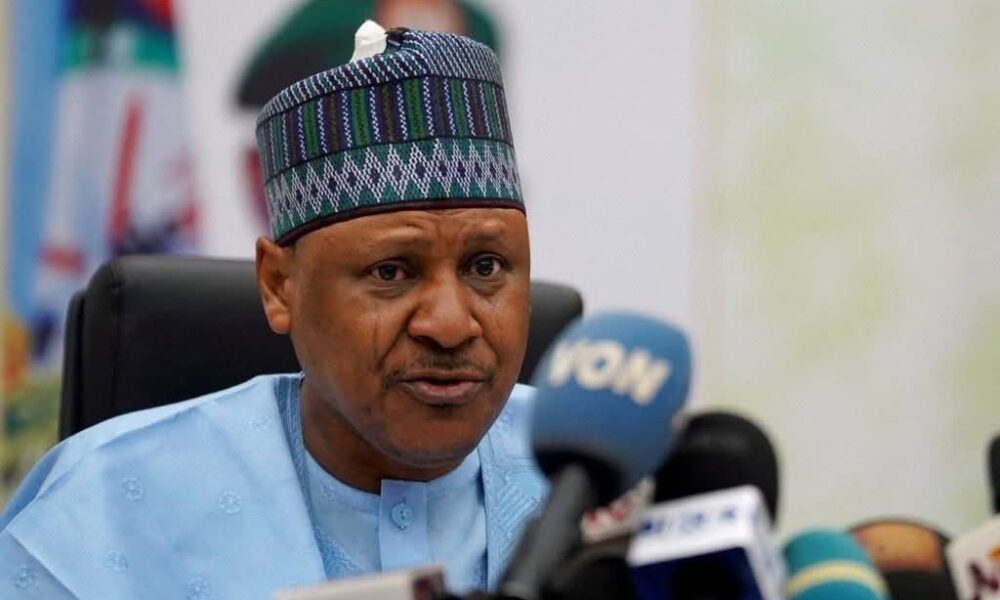
Minister of Information and National Orientation, Mohammed Idris, made this known Wednesday while declaring open the 81st General Assembly and 23rd Annual General Meeting of the Broadcasting Organisations of Nigeria (BON), held at the Hawthorn Hotel and Suites Abuja.
A coalition of civil society organisations had, Tuesday, warned that Nigeria was facing deepening challenges driven by insecurity, economic hardship and governance concerns, urging the federal government to take urgent action across key sectors.
The groups said the country is “on the brink of collapse” amid rising insecurity, widening inequality and declining public confidence in public institutions.
…FG replies
Countering the position in a statement by his special assistant on media, Rabiu Ibrahim, Idris said Nigeria had shown resilience in tackling its security and economic challenges.
“I want to unequivocally refute the insinuation that Nigeria is on the brink. On the contrary, we are daily exhibiting resilience and tackling our security and economic challenges more decisively,” the minister said.
Speaking on security, Idris assured Nigerians that the federal government was making steady progress through sustained military operations and improved intelligence coordination.
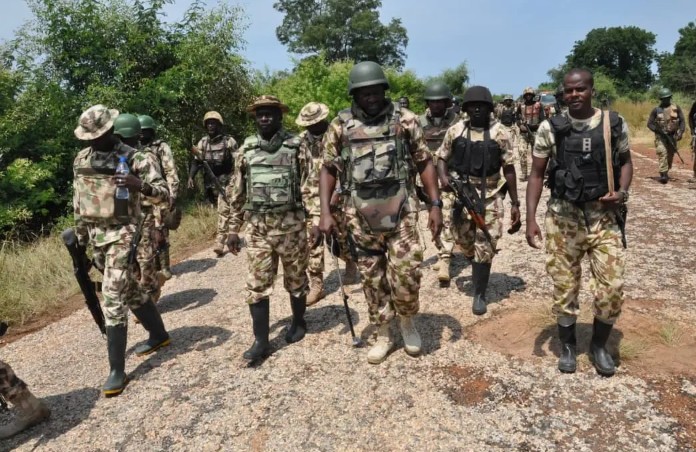
He cited recent successful operations in Zamfara and Niger states where security forces neutralised bandits and disrupted planned attacks within a short period.
“Coordinated operations by the Armed Forces and other security agencies have led to sustained gains in several parts of the country. Incidents of large-scale insurgent control have significantly decreased, and we are strengthening intelligence and rapid response systems to protect lives and property,” he stated.
On the economy, the minister said current indicators pointed to recovery and renewed investor confidence, stressing that ongoing reforms are already yielding results.
“Nigeria’s foreign reserves are strengthening, investor confidence is improving, and reforms in both the oil and non-oil sectors are expanding revenue streams. These decisions, though difficult, are stabilising public finances and creating a more transparent economic environment,” he said.
He further highlighted Nigeria’s recent return to Frontier Market status, as recently announced by FTSE Russell, a global financial index, as a strong signal of global confidence in the country’s economy.
According to him, “the reclassification reflects improved foreign-exchange liquidity, greater market transparency, and greater ease of capital repatriation.”
“This development confirms that Nigeria is once again a viable destination for global investment, with international funds expected to increase participation in our capital market,” Idris noted.
Addressing the media, the minister called for responsible and accurate reporting, especially as the country approaches another election cycle.
Underscoring the role of broadcasters as critical in shaping public perception and maintaining national unity, he said: “The airwaves are a public trust. Broadcasting must continue to inform, educate, and unite our people, while upholding the highest standards of professionalism, fairness, and accuracy.”
Idris also reaffirmed the federal government’s commitment to supporting a free, responsible, and forward-looking media environment.
While stressing the need for stronger collaboration between government and media institutions to address misinformation and promote national cohesion, Idris said: “Difficult moments like this require stronger faith in our country and a deep sense of patriotism, not narratives that create fear or division.”
The minister commended the BON for its role in strengthening professionalism in the industry and encouraged stakeholders to continue working together to build a media landscape that supports democracy, development, and national unity.
He reaffirmed that the federal government will continue to engage openly with Nigerians as it implements reforms to build a more secure, resilient, and prosperous nation.
…Budget Office DG
In a similar position, the Director General of the Budget Office of the Federation, Dr Tanimu Yakubu, said the nation is only going through a difficult adjustment process aimed at correcting long-standing structural problems in the economy, and not collapsing.
In a statement Wednesday in Abuja, he said: “The current hardship, though undeniable, reflects a deliberate process of correcting structural imbalances that have persisted for years,” noting that “distress is evident, but it must not be mistaken for systemic failure.”
“Countries in true economic collapse do not unify exchange rates, rebuild external reserves, regain access to international capital markets, or improve fiscal performance. Nigeria, despite significant pressures, is making measurable progress across these indicators.
“For years, Nigeria operated under an economic framework that projected stability while masking deep inefficiencies. Artificially suppressed fuel prices, multiple exchange rate windows, and expansionary fiscal practices incentivised arbitrage over productivity.
“These distortions disproportionately benefited a narrow segment of the population while imposing hidden costs on the broader economy.
“Their removal has revealed the true cost structure of the system. While this transition has triggered inflationary pressures, it has also restored policy transparency and enhanced the credibility of economic management.
“Recent fiscal data indicates a strengthening foundation. Distributable revenues to the Federation Account have risen by over 40 percent following subsidy removal, reflecting improved remittance discipline and reduced leakages.
“Nigeria’s public debt remains below 30 per cent of GDP, a relatively moderate level compared to peer emerging markets, according to the International Monetary Fund. Meanwhile, external reserves have surpassed $40 billion, based on figures from the Central Bank of Nigeria,” he explained.
At the subnational level, Yakubu pointed out that increased fiscal inflows were enabling more consistent salary payments, with some states introducing inflation adjustments, an indication of gradually expanding fiscal space.
…We‘re committed to infrastructure – Tinubu
Meanwhile, President Bola Ahmed Tinubu has assured Nigerians of his administration’s commitment to investing in infrastructure, strengthening governance and expanding opportunities for all.
He spoke Wednesday in Lagos during a state visit after commissioning the projects executed by the administration of Governor Babajide Sanwo-Olu.
The projects are the Opebi link bridge to Ojota, a multi-agency building named after the president and the Electronic Geographical Information System E-GIS office in Alausa.
The president, who was represented by Senate President Godswill Akpabio, said those projects aligned with his administration’s national vision.
“A Nigeria that is modern, digitally enabled and economically strong. This is the standard we must replicate across the country from Governor Sanwo-Olu and his administration.”
Present at the event were Governors Dapo Abiodun, Douye Diri, Hope Uzodinma, and Babagana Zulum of Ogun, Bayelsa, Imo and Borno states respectively.
The president noted that the Multi-Agency Building in Alausa would strengthen inter-agency collaboration and improve public service delivery, while the Lagos State Electronic Geographic Information Service (E-GIS) facility would modernise land administration and geospatial data management in the state.
Tinubu said a modern land administration system is not optional but essential and It reduces uncertainty, strengthens planning. and unlocks all economic values, saying “this is how serious societies grow.”
Tinubu stated that the 5.04-kilometre Ojota-Opebi Link Bridge is expected to significantly ease traffic congestion, reduce travel time for commuters within the Ikeja axis, and enhance economic productivity.
“I want to commend Governor Sanwo-Olu the Governor of Lagos, and his team for their focus and discipline in financial management. You have shown that governance must be about service delivery,” Tinubu said.
…Sanwo-Olu speaks
Speaking earlier, Governor Sanwo-Olu said with fewer days left for his administration in office, it is better to leave the state better than it met it.
“We have just a little over 400 days left – 416 to be precise – before we hand over the baton of governance, out of the 2,922 days that the good people of Lagos entrusted to us. For the past 2,500 days we have worked and toiled for Lagos State, to leave it better than we met it – and have done so by looking up to the excellent model and legacy of a leader who discharged a similar responsibility long before us, and set defining standards that have stood the test of time,” he said.
On the naming of the multi-agency office complex after Tinubu, the governor said: “It reflects our recognition of your enduring contributions to the growth and institutional development of Lagos State, and your role in laying the foundation for the progress we continue to build on, even today.”