More than 100 CSOs including groups such as Yiaga Africa, ActionAid Nigeria, CLEEN Foundation, Media Rights Agenda, and Accountability Lab Nigeria, had earlier petitioned both the Nigerian government and the United Nations, calling for a review of Mr Ibrahim’s appointment.
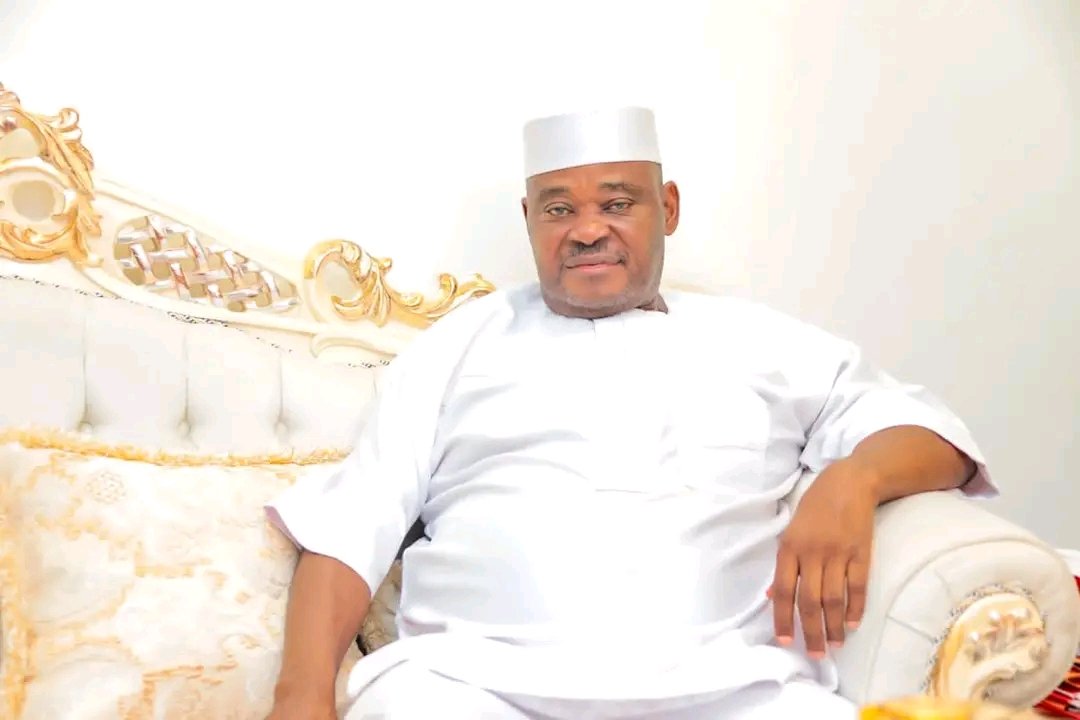
A coalition of civil society organisations has endorsed the appointment of the senator representing Ondo South, Jimoh Ibrahim as Nigeria’s Permanent Representative to the United Nations, describing it as strategic and reflective of competence.
The groups, working in collaboration with the National Good Governance Advocacy Network (NGGAN) and over 360 other organisations, made their position known at a world press conference on Monday in Abuja, where they expressed confidence in the senator’s capacity to deliver in the diplomatic role.
Among the organisations are the People and Culture Protection Initiative (PCPI), Centre For Social Justice Equity and Transparency (CESJET), Save Humanity Advocacy Centre (SHAC), Advocates of Social Justice for All (ASJA), Concerned Nigerians for Transparency and Justice (CNTJ), amongst others.
Addressing journalists, the coalition’s convener, Emmanuel Agabi, said the gathering was convened to affirm trust in Mr Ibrahim’s competence and readiness for the assignment.
“This is not a rebuttal driven by sentiment, but a statement grounded in facts, perspective, and national interest,” Mr Agabi said, adding that the office of Permanent Representative requires more than ceremonial presence.
President Bola Tinubu, in March, appointed Mr Ibrahim as Nigeria’s Permanent Representative to the United Nations. The appointment was announced in a statement issued by the President’s Special Adviser on Information and Strategy, Bayo Onanuga.
According to the statement, Mr Ibrahim’s posting forms part of a broader deployment of 65 ambassadors approved by the president for various diplomatic missions worldwide.
The list comprises 31 career diplomats and 34 non-career ambassadors whose nominations were earlier confirmed by the Nigerian Senate in December.
With the appointment, Mr Ibrahim is expected to represent Nigeria at the United Nations, advancing the country’s diplomatic interests and participating in global deliberations at the multilateral body.
Backing the appointment, the coalition described Mr Ibrahim as a “true Nigerian and global citizen” well-suited for the demands of the position.
The groups said his selection reflects Nigeria’s aspiration for stronger global engagement and effective representation on the international stage.
Mr Agabi stressed that Mr Ibrahim embodies intellect, experience, negotiation skills, and a deep understanding of global systems, through his experience in business, academia, and public service.
He highlighted Mr Ibrahim’s track record as a businessman, noting that he has built institutions across various sectors, contributing to economic development and job creation.
It also pointed to his legislative experience as senator representing Ondo South Senatorial District, where he served on several key committees, including Appropriations, Finance, Gas, Education, Niger Delta Development Commission (NDDC), Capital Market, Diaspora and NGOs, Trade and Investment, Housing, and Niger Delta.
Beyond the National Assembly, the coalition said Mr Ibrahim has gained international exposure through his roles in regional and continental bodies. He served as Nigeria’s representative in the Economic Community of West African States (ECOWAS) Parliament and as an executive member of the Pan-African Parliament, experiences the group said provided him with firsthand knowledge of multilateral diplomacy and policy coordination.
The organisations further cited his academic pursuits and intellectual contributions, describing him as a leader who combines practical experience with critical thinking.
According to the coalition, such a background equips him to navigate the complex environment of the United Nations, where diplomacy depends heavily on negotiation, consensus building, and strategic engagement.
The groups said Mr Tinubu’s decision underscores a commitment to appointing individuals based on competence and strategic value, particularly at a time when Nigeria seeks to reposition itself globally.
“Leadership is defined not only by policies but by the quality of individuals entrusted with responsibility,” Mr Agabi said, adding that the appointment reflects a clear understanding of the demands of global representation.
The coalition urged Nigerians to avoid premature conclusions that could undermine institutional processes and called for a balanced national discourse anchored on fairness, scrutiny, and merit.
It stressed that while democratic systems encourage criticism, they must also protect objectivity and support decisions that advance long-term national interests.
Reaffirming its confidence in Mr Ibrahim, the coalition said his experience and exposure position him to make meaningful contributions in his new role.
It also called on stakeholders to support decisions that strengthen Nigeria’s voice in the international community and urged citizens to remain focused on unity, progress, and collective national development.
However, the appointment has also drawn criticism from another bloc of civil society organisations, highlighting a growing divide within Nigeria’s civic space over the decision.
More than 100 CSOs including groups such as Yiaga Africa, ActionAid Nigeria, CLEEN Foundation, Media Rights Agenda, and Accountability Lab Nigeria, have petitioned both the Nigerian government and the United Nations, calling for a review of Mr Ibrahim’s appointment.
The groups raised concerns over what they described as unresolved legal and financial issues, including court judgments, debt claims, and ongoing litigation, which they argued could affect Nigeria’s credibility on the global stage.
In their petition, the organisations stressed that Nigeria’s Permanent Representative serves as the country’s voice in the multilateral system and must meet high standards of integrity and public accountability.
They referenced the dispute involving former employees of the defunct NICON Airways, alleging that he failed to settle outstanding entitlements including leave allowances and pension funds reportedly exceeding N850 million despite a court ruling.
The airline, formerly EAS Airlines, was acquired by Mr Ibrahim from former Kogi State governor Idris Wada but ceased operations in 2007 following operational challenges, leaving workers stranded.
The affected staff approached the National Industrial Court, Ikoyi, on 30 November 2011, seeking payment of accrued salaries and benefits. However, the CSOs alleged that Mr Ibrahim has yet to fully comply with the judgment and has continued to challenge aspects of the ruling.