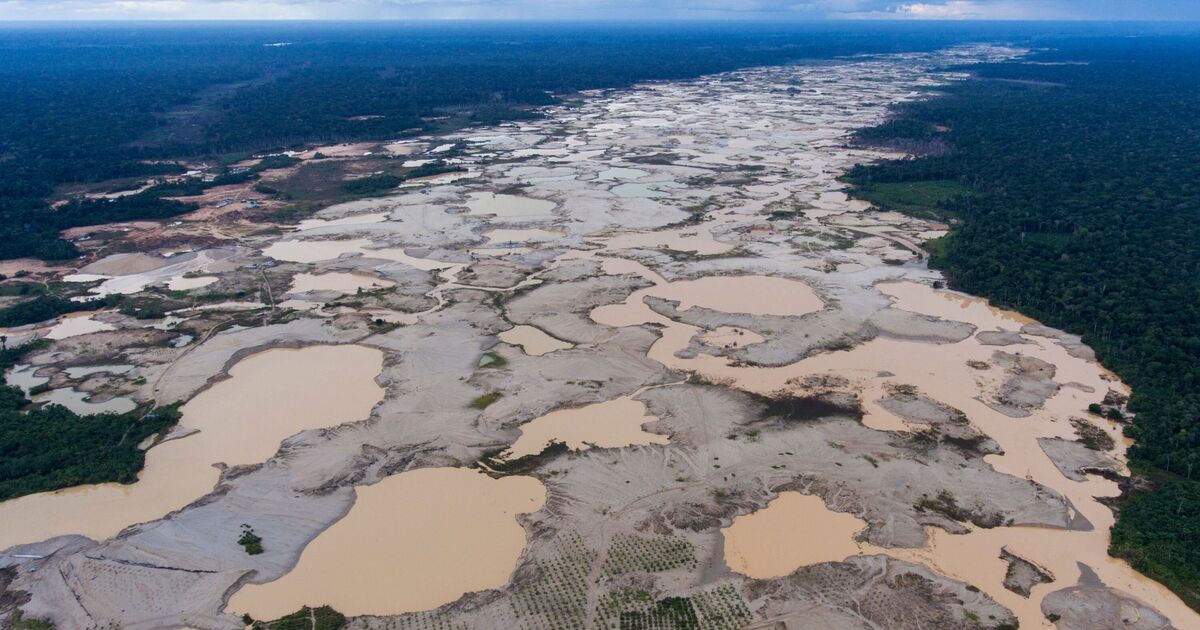
Heartbreaking deforestation in the South American rainforests (Image: AP)
UK scientists claim the world’s appetite for beef is driving Amazon deforestation, one of the many suggested causes for global warming. A major international study involving researchers from The University of Manchester found that rising global demand for red meat is responsible for 80 percent of deforestation in South America.
It suggests beef consumer demand is directly linked to land clearing in Brazil – and current efforts to curb damage to the rainforests are struggling to keep pace with global demand. The study focuses on the Brazilian Amazon, where beef cattle farming has been a leading cause of deforestation.

Cattle grazing on land that was once rainforest near Porto Velho, Brazil. (Image: Adam Gerrard / Daily Mirror)
Read more: Angela Hartnett’s roast beef is juicy with extra step before cooking
Read more: Steak is tastier and can be cut with a butter knife if you cover it with 1 thing
It shows that decisions made by farmers are shaped by a powerful mix of global market demand, land prices and government policies.
The University of Manchester said: “In many cases, clearing forest actually increases land value, creating a cycle where deforestation leads to profit – and to more deforestation.
“At the same time, environmental rules and sustainability initiatives often fail to fully reach the people making land-use decisions on the ground.
“Although the Amazon may feel far away, the study highlights how everyday consumption is connected to environmental change.
“Beef sold around the world in supermarkets and restaurants can be linked back to land-use decisions in the rainforest.
“The consequences are global. The Amazon plays a vital role in storing carbon and regulating the climate. As forests are cleared, this contributes to climate change, biodiversity loss and more extreme weather patterns worldwide.”
The study said that environmental damage is not just an unintended side effect, it is built into how global production systems operate – and governments, companies, and environmental organisations often work separately, and fail to coordinate their efforts to stop the crisis.
For example, large meat companies may enforce sustainability rules for direct suppliers, but indirect suppliers — where much deforestation occurs — can slip through the cracks.
At the same time, smaller farmers often lack access to credit or technical support, making it harder for them to adopt more sustainable practices.

A view of a burnt area of the Amazonia rainforest in Apui, Brazil (Image: AFP via Getty Images)
Instead the study suggested a range of ways to reduce deforestation such as strengthening enforcement of environmental laws; improving traceability across supply chains; supporting farmers and rewarding conservation through financial incentives.
The study was conducted by an international team of researchers from The University of Manchester and Brazil’s Fundação Getulio Vargas São Paulo School of Business Administration, and is published in Competition & Change.
Lead author John Loomis, at the University of Manchester’s Global Development Institute, said: “Our study shows that deforestation isn’t just a local issue – it’s driven by the interaction between global supply chains and local environmental systems.
“By bringing together economic governance and ecological feedback, we can better pinpoint where action will have the greatest impact in making global production more sustainable.”