▪️Olusegun Osoba, Mike Awoyinfa, Dele Momodu, Femi Adesina, Dr. Tony Onyima, Mayor Akinpelu, Richard Akinola, Funke Egbemode, Dotun Oladipo, Maureen Chigbo; what professionals said about dying culture of human interest journalism in Nigerian newsroom
Stakeholders in Nigeria’s media industry have raised alarm over the steady decline of human interest journalism, warning that the trend could erode the emotional depth and social connection traditionally fostered by the press.
NOP NIGERIA reports that they made this known at a colloquium and book launch organised to mark Shola Oshunkeye’s 70th birthday.
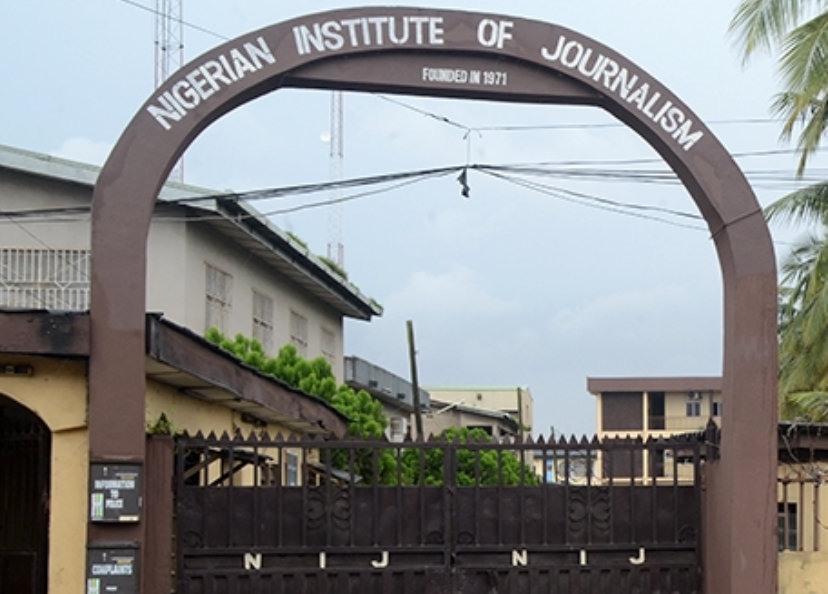
The event themed, “The Decline of Human Interest Journalism in Nigeria”, and held at the Sir Kessington Adebutu Media Resource Centre of the Nigerian Institute of Journalism, Ogba, Lagos, was attended by crème de la crème of journalism in Nigeria including Aremo Olusegun Osoba, Mr. Mike Awoyinfa, Bashorun Dele Momodu, Chief Femi Adesina, Dr. Tony Onyima, Mr. Mayor Akinpelu, Richard Akinola, Funke Egbemode, Dotun Oladipo, Dr. Maureen Chigbo, and Dr. Adeola Yusuf, among others.
At the panel moderated by Osun state’s former Commissioner for information, Funke Egbemode, discussions focused on the role of human interest stories in a media speace that is increasingly dominated by politics and hard news.
Former MD of The Sun newspapers, Dr. Tony Onyima, called for a renewed focus on human interest journalism, warning that Nigerian newspapers have become overly dominated by politics and hard news.
Speaking on the state of the media, he said: “If you do a content analysis of newspapers in Nigeria today, you will see that 75 % of newspapers have their main focus on politics and hard news. There has been over politicisation of newspapers content in Nigeria.”
He continued; “I started one of the best human interests newspapers in Nigeria today, The SUN, and you will agree with me that the economic survival is a threat to humans interest journalism.
“Someone told me that the rise of celebrity journalism has also affected human interest journalism. In all, we must all go back to human interest journalism because there is human interest in every story.
Shola Oshunkeye: Seven Things You Didn’t Know About Journalist Who Cried At 70 — With A Reason
Inside Story That Made Veteran Journalist, Shola Oshunkeye, Cry At 70th Birthday
Military Inaugurates Court-Martial For Alleged 36 Coup Plotters
“We must get back to it,” reiterated, adding; “There is also a need to change the business model of traditional media based on the advent of digital media. There is no traditional newspapers that can survive with a staff strength of 100 or above 50. It has to be below 50 if it has to succeed.”
Human Rights Lawyer and Human Interest Journalist, Chief Richard Akinola, also called on media practitioners to deliberately return to human interest storytelling, noting that the drift toward hard news and politics has been largely unintentional.
“There has been unconscious shift to hard news and politics, but there must be a conscious shift back,” he said.
Recounting a personal experience, Akinola illustrated the power of the human angle in reporting. “I was covering a Court case in which Chief Rotimi Williams was a counsel. On one of the days the Court sat on the case, Chief Williams came to Court with a Westminster Dictionary to define a word, and that act was where I anchored my story. It became the major headline and since then, that human angle approach has been the focus of my story.”
He continued: “The experience on twitter (X), Facebook and other social media has shown that updates with human interest have more engagements compared to the ones that have hard news approach.”
“I believe that the media will get more engagements when focus is more on human interest.”
Former Chairman, Guild of Corporate Online Publishers (GOCOP), Dr. Maureen Chigbo, underscores the influence of media organisations’ priorities on the level of attention given to human interest journalism, noting that editorial focus plays a critical role in shaping content direction.
“It is important to note that the primary focus of a media organisation have a major role to play in this level exposure given to human interest. With the level human interest journalism has been reduced to these days, we are losing and we are gaining as publishers,” she said.
Publisher of Eagle Online, Mr. Dotun Oladipo, emphasised the need for a strategic return to human interest journalism as a means of reviving hard copy newspaper sales.
“The only way out to sell hard copies again is by putting human interest stories on the front page of newspapers,” he said.
He also challenged prevailing fears within newsrooms about prioritising such stories, noting that even influential audiences are drawn to them, adding, “The politicians and those you are scared of losing by publishing human interest stories are the ones who read human interest stories more.
Tinubu Grants 30% Debt Relief To Airlines
EFCC Picks Up Ex-SkyeBank MD, Tunde Ayeni, Over ‘$37Bn Fraud, Polaris Bank Loan Racket’
Ghana Summons South African High Envoy Over Xenophobic Attacks
Publisher of Global Excellence, Mayor Akinpelu, said that celebrity journalism remains a form of human interest reporting, stressing that the real shift lies in how such stories are delivered rather than their substance.
“It is key to know that celebrity journalism is human interest journalism. Human interest journalism was rewarding at the beginning. Things however began to nosedive when it was no longer rewarding,” he said.
He maintained that the essence of human interest storytelling has not changed, but the platforms used to tell those stories have evolved.
Also speaking at the event, the Publisher of Ovation Magazine, Bashorun Dele Momodu, raised concerns over the changing dynamics of modern journalism, warning that the quest for speed and immediacy is undermining depth and thoughtful reporting.
“Today, the landscape has changed dramatically. We live in an age defined by speed and immediacy. Information travels faster than ever before, but often at the expense of depth and reflection,” he said.
Momodu, who doubles as the guest speaker, further noted that the race to break news is gradually replacing careful understanding, while the drive for online attention is weakening core journalistic values.
The dignitaries at the event are former Governor of Ogun State, Chief Aremo Olusegun Osoba, Publisher of Ovation Magazine, Bashorun Dele Momodu, Former Preidential spokesman, Femi Adesina, Pioneer editor of weekend concord newspaper, Mike Awoyinfa.
Other notable dignitaries at the event include the Aare Onakakanfo of Yorubaland and national leader of the Odua People’s Congress (OPC), Gani Adams, the Owa Obokun of Ijesaland, Oba Clement Haastrup, and the Òràngún of Oke-Ila, Oba Adedokun Abolarin.
NOP NIGERIA