PAUL REES (Image: -)
Libyan dictator Colonel Muammar Gaddafi, dressed in brown Bedouin-style robes, was ranting on the TV screen in our hotel about a man he said was “British special forces, working for NATO and helping the revolution”. It was April 2011, and Libya was split by a bloody civil war with rebels fighting to topple the man who had ruled the North African nation with an iron fist since the 1960s. “$100,000 on his head!” shrieked Gaddafi as he ripped up the photograph of the alleged rebel sympathiser and tossed it over his head.
The man in the photo was me, and I’d just had a bounty put on my head by a ruthless madman who was intent on crushing the revolution by every violent means possible. “I’m a Welshman, not British”, I thought, “and I’m worth more than that”.
I was watching Gaddafi put a price on my head in the Uzu Hotel in Benghazi, a city that was a revolutionary stronghold in the rebel-held east of Libya. Rebel, or fighter, in Libya is Thuwar, and unbeknownst to Colonel Gaddafi, he had just given me the nickname that has stuck with me to this day. “We can get $100,000 for you, Thuwar,” laughed the revolutionaries, sharing the lobby of the hotel where I was staying as security and safety advisor for Al-Jazeera journalists covering the war.
Read more: ‘New Gaddafi’ fears as Libya on the brink of civil war

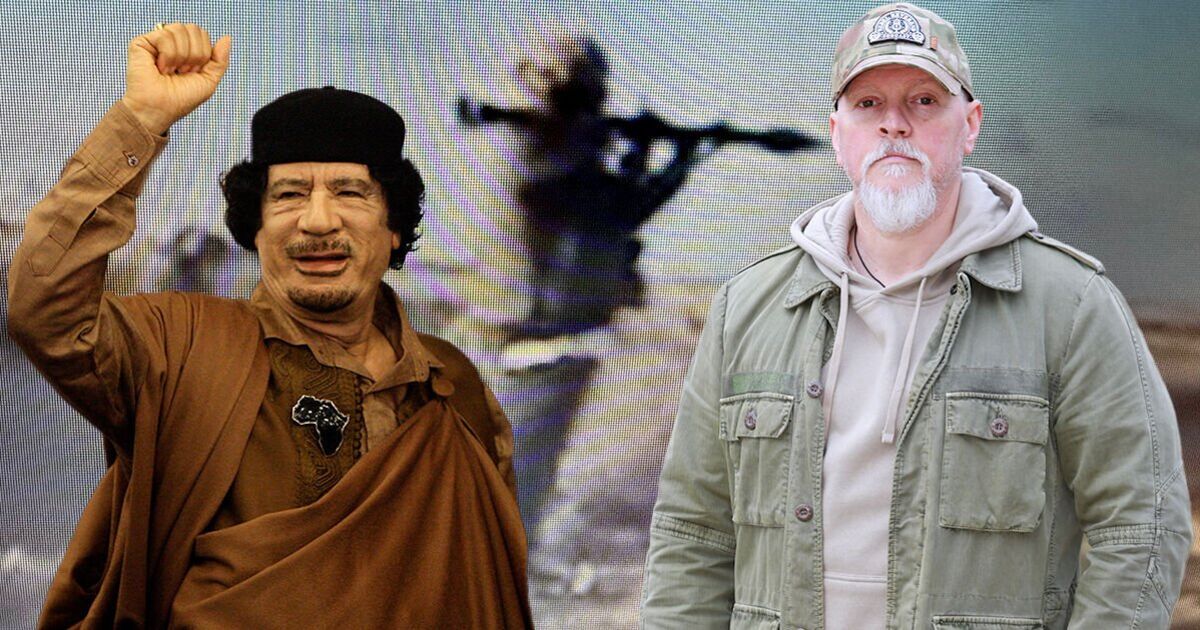
Stills of Paul Rees (L) from video footage captured during a Libyan government ambush of the rebels in 2011 (Image: SUPPLIED)
Close protection contracts were my bread and butter in Libya, and after nine years in the 1st The Queen’s Dragoon Guards regiment, seeing the things I had seen in Bosnia, Kosovo, and the second Gulf War, I knew a thing or two about how to defend myself and others. The reason Colonel Gaddafi was ranting and waving a picture of me was that just 24 hours earlier, we had been almost blown to smithereens in the desert, and it had all been caught on camera.
We were filming at the port in Benghazi. I was with the senior correspondent Abdul Adim, a cameraman from Lebanon called Issam, and our driver Hamid. We were heading for the front line again near Brega when I noticed something strange on the horizon, a convoy of black SUVs coming straight for us at speed. I moved the group off the road to some “dead ground” as soldiers call it, which is an area sheltered from any direct fire should it happen.
Once the black SUVs had roared to a halt, General Abdul Fatah Younis, the head of the rebel forces at the time and who had defected from Gaddafi’s regime, emerged from the car. Our cameraman and correspondent got set up ready for the interview, and I sat there with my driver, Hamid, in our van. Hamid said the general was from the same tribe as him, the Obeidi tribe, and asked me if he could go and say hello, even though the drivers were meant to stay in the vehicle. I agreed. He left his AK-47 in the footwell next to me.
At that moment, I heard a voice in my head telling me to get out. I grabbed the AK-47, took two steps from the van and an RPG (rocket-propelled grenade) came in from the front, went straight through the seat I had been sitting in and detonated at the rear of the vehicle. I didn’t have time to drop to the ground.
Mortar shells started raining down, and small arms fire erupted in what was clearly a government ambush of the rebels. Everyone was dashing for their vehicles. Running forward, I grabbed the correspondent, and we ran about 600 metres from the van before I pushed him down into the sand.
Hamid was injured by shrapnel, and I ran back and dragged him to safety next to the correspondent. When I looked up again there was Issam the cameraman still filming, but behind him I saw a head pop up behind a small hump in the sand. It was one of the attackers firing at us, so I cocked my weapon and sent him a few messages.

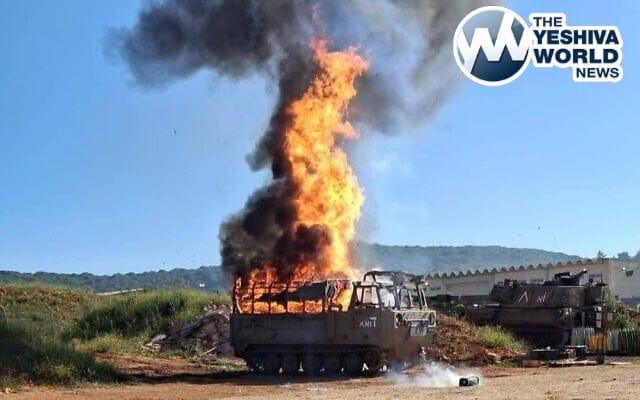
Paul Rees left this van just moments before a missile struck (Image: Supplied)
I managed to guide us to safety following the desert pylons back to the coast before we got picked up by friendly forces.
I was back in the hotel again in Benghazi when the place erupted with shouts of “Allahu Akbar”, meaning God is great, and I looked up and there was the footage Issam had filmed showing me running to get Abdul Adim. Just a few minutes later, Gaddafi was on TV calling for my head.
This is where my new name, Rebel Rees, stuck, my yellow Labrador is called Rebel, and for my work as a pastor, I am known as the Rebel Reverend.
There was elation in our group in the hotel at this point, but little did I know I was about to experience the darkest chapter in my life. I had been set to head out with a new group and wait for the incoming reporter in a couple of days but we were driving through Benghazi in the van when suddenly two cars cut us off, front and rear.
Everyone was ordered out by armed men and bundled into vans with hoods put over our heads. It felt like we were driving around for six or seven hours, and I was worried we might be heading to the Islamist extremist city of Derna. Al-Qaeda was running rampant in North Africa and the Middle East.
Finally, we stopped, and I was pulled out of the van. There was an engineer with our group whom I had met in the hotel that morning. He’d only been in Libya for a week or two.
They pulled his shirt off and cut his throat in front of me.
I just thought “this is al-Qaeda, and they’re going to kill me”, but I was taken into a building and shoved into a small room like a store cupboard, nothing in it, dirt on the floor, with a tiny window about the size of a mobile phone.
The door slammed, and I don’t know how long it was, but when it opened again, they piled in, kicking and punching me till I was knocked unconscious.

Former soldier Paul Rees special forces man found god after returning to civilian life and is now a pastor (Image: Callum Moffatt/Daily Express/Reach Plc)
These constant beatings continued for days. I would get dry rice or couscous, maybe once or twice a day, and a cup of water they would spit or urinate in. They would also urinate on me. Sometimes they would take me out of the room with a hood over my head and a rope around my neck and make me stand on a stool with my hands tied behind my back and start nudging me. This could happen seven or eight times a day,
If I fell asleep, they kicked me in the face, and I suffered a broken eye socket. I had all my fingernails pulled out and at one point they even tried to burn off my tattoos.
One day, they tied me down to two benches; it looked like a little carpenter’s bench with a gap in the middle. They pulled my left arm across it, and one of my captors jumped on it, tearing my rotator cuff, and something called a scalene muscle, which holds up your neck – I still struggle with the pain to this day.
After he jumped on my arm, he raped me.
I’ve only recently told anyone about this for the first time in the past few weeks during a podcast for the Veterans for Veterans group, which helps former servicemen and women. My wife knew when it came out during a counselling session many years later. But until this year, I had told no one else.
Even now, saying it here on this page, I don’t feel ashamed anymore. When it happened, I was obviously in turmoil trying to process what had been done to me: “Did that make me gay? What does it mean?” It sounds odd in a way to think amidst that horror, my mind was trying to compartmentalise something so traumatic, but it was how I survived at the time, putting things in a box, although that can’t last forever.
After the rape, the beatings continued, and then, suddenly, after two weeks, they stopped. The food stopped too, and I knew I wasn’t going to be kept alive much longer. I had been expecting someone to find me, or even for Gaddafi to turn up with his ransom, but now I knew no one else would get me out.

Colonel Gaddafi placed a bounty on the head of British security officer Paul Rees (Image: Supplied)
One day, the youngest lad came into the room. He had his AK under his arm, and he was distracted, talking on his mobile to someone. I grabbed him, put him in a sleeper hold and squeezed until I knew he was never going to get back up. I took his gun and made it outside. I remember clambering over a wall. My arm was still smashed to pieces, my eye socket was broken, I must have looked like Quasimodo.
Squinting into the sunlight, I was stunned to see I was in the same street in Benghazi we had been snatched from and just feet from a coffee shop where I had breakfast every morning. I was staggering over laughing and sobbing. Fousi, the owner, ran over to me. After completely disappearing for weeks, he came up to me and kissed me on the forehead, a deep sign of respect in Libyan culture.
They called the local press bureau, and some of the rebels came to the café. It was at this moment that my military training kicked into action and we walked back across the road and straight up to the front door of the building that had been my personal hell for the past, what felt like, countless weeks.
When I walked into the makeshift office, the man who had done one of the worst things ever done to me, was there. I can still remember the look of horror on his face when he saw me, it was like the blood drained completely out of him and he turned white.
His AK was on the desk in front of him, he reached for his and I pulled the trigger on mine. I didn’t stop until all you could hear was the ‘click, click’ of the empty action after all 30 rounds had gone. Fousi had to wrestle the gun from my hand. Two days later I woke up in Cairo.
Returning to civilian life, I began to explore the idea of faith. Then last April, my wife and I decided to attend a church service. The minister there is an archetypal Scottish grandmother; she’s about 4’9″ with a wicked sense of humour. Over time in conversation, I told her I’d been involved in Libya for 14 years, and she revealed she had delivered two of Gaddafi’s grandchildren while working as a midwife in Libya in the 70s and 80s.
I decided that day, after speaking with the reverend, to become a pastor myself. Now I use my faith to help veterans, and I pray every single day.

Paul Rees served nine years in the 1st The Queen’s Dragoon Guards regiment in Bosnia, Kosovo and the second Gulf War (Image: Supplied)