The former INEC official emphasised the integrity of polling units, describing them as the decisive battleground of elections.
A former Resident Electoral Commissioner of the Independent National Electoral Commission (INEC), Mike Igini, has urged opposition political parties to immediately demand amendments to controversial provisions of the Electoral Act 2026 ahead of the 2027 general elections.
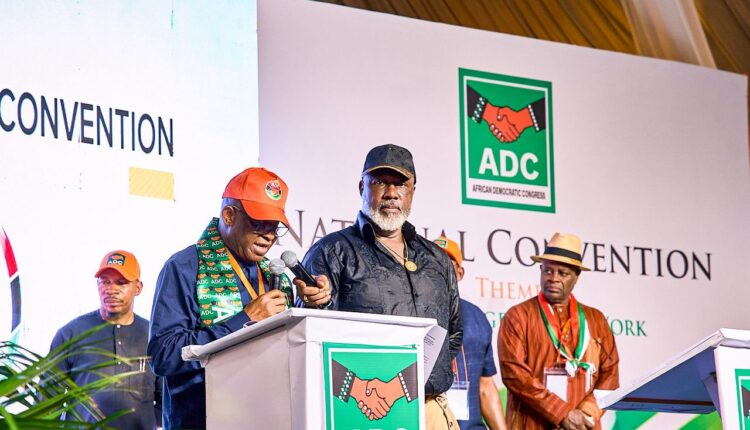
Mr Igini made the call in a speech delivered at an opposition party’s convention held in Ibadan, Oyo State, on 25 April.
A copy of his remarks was sent to PREMIUM TIMES on Sunday.
His intervention comes amid growing coalition talks among opposition parties, which recently resolved to field a single candidate against President Bola Tinubu in 2027, underscoring the high political stakes of the next election cycle.
Mr Igini specifically asked political parties to approach the National Assembly to revisit provisions of the Electoral Act he described as “obnoxious and very controversial.”
“If we are truly serious about free, fair, and credible elections in 2027, all political parties collectively should approach the National Assembly immediately to revisit the newly signed 2026 Act for the repeal of some of the reintroduced obnoxious and very controversial sections capable of undermining the sanctity of the ballot,” he said.
The sections he referenced include 60(3), 63(2), 65, 77, 137(3), and 138(2), which he warned could weaken electoral transparency and public trust if left unchanged.
PREMIUM TIMES last week reported why Mr Igini wants these provisions of the law amended before the election.
At the Ibadan summit, he stressed that credible elections depend on both legal clarity and faithful implementation.
“If votes do not count, the exercise of power will be without authorisation and accountability,” he added.
‘Ethics failure is a greater risk than technology’
While acknowledging improvements such as BVAS and IReV, Mr Igini warned that human factors remain the biggest threat to credible elections.
“The greatest threat to 2027 might not be technology failure; it is ethics failure,” he said.
He noted that even the best legal and technological frameworks can be undermined by political actors and administrators acting outside ethical boundaries.
Mr Igini emphasised the integrity of polling units, describing them as the decisive battleground of elections.
“Elections are not won at collation centers; they are won or lost at polling units,” he said.
He warned that malpractice such as vote buying, violence, and falsification often begin at that level.
“If party agents are absent, untrained, or compromised, no amount of technology will save the result,” he said.
“So, I ask: will your agents show up? Will they understand Form EC8A? Will they refuse to sign a false result? INEC can deploy BVAS. Only parties can deploy integrity.”
Addressing opposition leaders, Mr Igini urged them to match their reform demands with internal discipline.
“You must demonstrate internal democratic discipline, for credibility begins at home,” he said. He also cautioned against extra-legal actions in electoral disputes.
“You must reject the allure of extra-legal remedies,” he said, urging parties instead to rely on courts and tribunals.
Mr Igini’s remark is coming at a time the opposition parties intensify efforts to form a united front ahead of the 2027 elections.
At the Ibadan summit, key opposition figures and party representatives discussed collaboration strategies, including the possibility of presenting a single presidential candidate.
The move is seen as an attempt to consolidate votes against the ruling party, following lessons from previous elections where fragmented opposition weakened electoral competitiveness.
Mr Igini, a lawyer, served as INEC resident electoral commissioner in Cross River State and later in Akwa Ibom State, where he was widely noted for electoral reforms and enforcement actions.
During his tenure in Akwa Ibom, two university professors were prosecuted, convicted, and sentenced to prison for electoral fraud—an outcome often cited as a rare example of accountability in Nigeria’s electoral system.
He told participants at the summit that his experience informed his strong views on electoral integrity and enforcement.
Mr Igini stressed that credible elections require both transparent processes and acceptance of outcomes.
“A free election means anyone can win. A credible election means everyone can trust how the winner emerged,” he said.