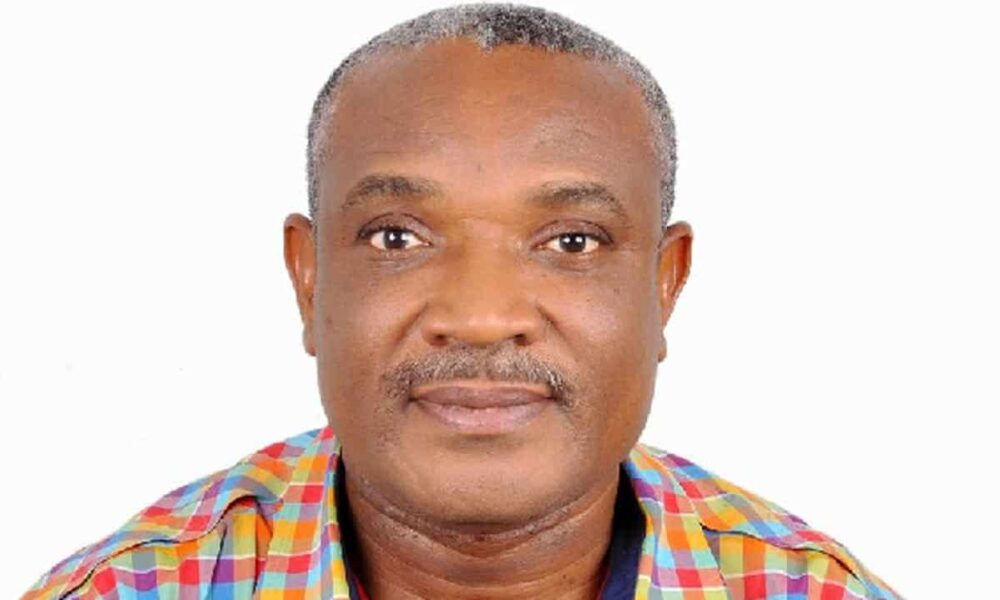
…Nafiu plans factional ADC convention for April 21 …As party fragments into three notable factions
As crisis engulfs the ADC after a disputed convention, credible sources reveal how David Mark, Atiku Abubakar and Peter Obi are quietly exploring alliances with smaller parties, signalling a dramatic opposition realignment ahead of 2027, JIBRIN NDANUSA writes.
A deepening leadership crisis within the African Democratic Congress, ADC, is forcing some of Nigerias leading opposition figures – including Senator David Mark, Atiku Abubakar and Peter Obi – to quietly explore alternative political platforms ahead of the 2027 general elections, amid mounting uncertainty over the partys legal status and organisational cohesion.
Multiple impeccable sources within the opposition coalition confirmed to AljazirahNigeria Newspapers that contingency consultations are already under way around fallback plans to move to parties such as the Peoples Redemption, PRP, and the Allied Peoples Party, APP, in case the lingering crisis within the ADC proves irreconcilable in the months ahead.
The development underscores growing anxiety within the opposition bloc that the party once projected as the central coalition vehicle for a united challenge in 2027 may be drifting into a prolonged legal and structural stalemate.
The ADC emerged as a rallying platform in 2025 after several influential opposition actors adopted the party as a strategic coalition vehicle ahead of the next presidential cycle. At the time, Senator David Mark assumed leadership of the partys interim structure, with several prominent political figures aligning behind the arrangement in what appeared to be the most serious attempt in years to consolidate opposition forces nationally. However, that fragile consensus has since fractured.
Today, the party is split into at least three rival tendencies – one aligned with Marks National Working Committee, another loyal to Nafiu Bala, and a third bloc associated with the partys 2023 presidential candidate, Dumebi Kachikwu – each claiming legitimacy over the partys structure and direction.
Recall that the faction led by David Mark had during the week, announced the expulsion of several prominent members over alleged anti-party activities, a move that underscores the widening internal divisions within the party. The decision, reached at the partys national convention, signals a further escalation in the prolonged power struggle that has engulfed the ADC since 2025, with rival factions laying claim to the partys leadership.
Among those affected is the factional chairman, Nafiu Bala, alongside other key figures accused of actions deemed detrimental to the partys unity and stability.
The leadership dispute has been compounded by court interventions and regulatory uncertainty, including actions by the Independent National Electoral Commission, INEC, which at various points declined recognition of competing party structures pending judicial clarification.
For a coalition seeking to present itself as a credible national alternative, the optics have been troubling.
Controversy over convention legitimacy
Tensions escalated further following the recent national convention convened by the Mark-led leadership in Abuja, an exercise rejected by rival factions as unconstitutional and allegedly conducted in defiance of court orders restraining such gatherings.
Critics within the party described the exercise as illegal, arguing that the dispute over leadership remained sub judice and that any convention conducted before judicial resolution risked deepening the crisis rather than resolving it. For instance, the faction backed by Dumebi Kachikwu, rejected the outcome of the partys recent national convention, describing its conveners as political merchants bent on destabilising the country.
Addressing journalists at a press conference in Abuja, Kachikwu insisted that the convention held in Abuja on Tuesday was conducted in defiance of a subsisting court order and therefore lacks legal standing.
He cited a Federal High Court order issued on April 14, directing all parties to maintain the status quo pending the determination of the suit filed by ADC state chairmen against former Senate President David Mark and other coalition chieftains.
He said, Yesterday, April 14, a Federal High Court in Abuja issued an order in the matter between the state chairmen of the ADC and the David Mark-led gang. The order said maintain status quo ante bellum. This means no congresses or conventions until the matter before the court is adjudicated.
Despite this order, the nation witnessed these desperate politicians hold a convention in the name of the African Democratic Congress, knowing that it had no locus before the law. Can men who continue to flout court orders mean well for the ADC or Nigeria? The simple answer is no.
He further stated that the groups actions were a deliberate act to trigger disorder through what it described as political gangsterism.
The disagreement has reinforced fears among coalition strategists that the ADC may enter the 2027 electoral season weakened by parallel structures, litigations and competing claims to authenticity.
One senior opposition source familiar with ongoing consultations told our reporter that contingency planning had therefore become unavoidable. Nobody wants to abandon the ADC project, the source said. But responsible political planning requires alternatives. If the platform becomes legally encumbered or structurally divided beyond repair, there must be another route.
Option B quietly taking shape
While no formal decision has been taken, insiders say exploratory contacts have already begun with smaller but legally stable parties capable of accommodating a broader opposition alliance should the need arise. Among the platforms under consideration are the Peoples Redemption Party, PRP, and the Action Peoples Party, APP – both seen as relatively neutral organisational spaces that could be repositioned as coalition vehicles if required.
The logic behind the consultations, sources say, is preventive rather than reactive. Opposition strategists remain mindful that electoral timelines move faster than litigation processes, and any uncertainty over party recognition could complicate candidate nominations, primaries and campaign planning.
The lesson from recent political history, another source observed, is that coalitions cannot afford to gamble everything on a platform facing unresolved structural disputes.
Nafiu faction moves toward April 21 convention
Even as reconciliation efforts continue quietly behind the scenes, the crisis appears far from resolution. The Bala-led faction is already preparing what party insiders describe as a parallel national convention scheduled for April 21, a move that could further entrench the division within the party rather than narrow it.
Observers say the proposed gathering is likely to produce another layer of competing claims to leadership legitimacy, potentially complicating efforts to present a unified opposition front ahead of crucial electoral preparations.
For coalition leaders who had hoped the ADC would serve as a stable umbrella structure, the development represents a troubling signal.
For Mark, Atiku, Obi and their allies, the central objective remains the construction of a viable national platform capable of mobilising voters across regional and ideological divides. That objective depends heavily on organisational clarity, something the ADC has struggled to provide in recent months.
Nevertheless, insiders insist that discussions around alternative platforms should not be interpreted as abandonment of the party.
Rather, they reflect what one coalition strategist described as political realism.
We are still working to stabilise the ADC, the source said. But serious coalitions prepare for every scenario.
Whether reconciliation within the party is still achievable may become clearer in the coming weeks, particularly as rival conventions, court proceedings and negotiations among stakeholders continue to unfold.
Until then, the oppositions search for unity remains tied to a platform whose future is increasingly uncertain.