
The ongoing Middle East conflict involving the United States-Israel versus Iran has significantly affected the economic wellbeing of Nigerians, triggering hardship through petrol price hikes, driving up transport costs and inflation; PAUL OKAH reports.
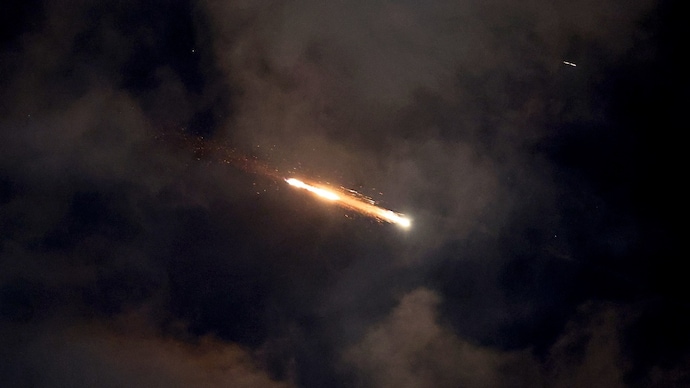
The ongoing Middle East conflict which began on February 28, 2026, is a direct military confrontation, primarily involving the United States-Israel and Iran. The conflict marks a significant escalation from decades of proxy warfare into open, large-scale combat operations.
The war was initiated by a massive joint U.S.-Israeli air campaign codenamed Operation Epic Fury by the U.S. and Operation Roaring Lion by Israel. President Donald Trump had framed the operations as a means to eliminate “imminent threats,” destroy Iran’s nuclear and missile capabilities and encourage the Iranian people to overthrow their government.
Though a cease fire of two weeks is being observed, the war is still in an active phase of air and missile exchanges. The Strait of Hormuz had been closed, causing global oil prices to surge past $100 per barrel. Iran has launched “horizontal escalation” attacks against U.S. assets and allies in Bahrain, Kuwait, Qatar, and the UAE to make the war too costly for the U.S. to sustain.
Though the Strait of Hormuz has been temporarily opened, the conflict has indeed disrupted global supply and demand chains. For a country like Nigeria whose economy is largely dependent on oil, this development placed severe strains on its households. Expectedly, the prices of petrol jerked up thereby driving up inflation.
Petrol prices jumped to around ₦1,300 and N1,370 per liter. The black market is the worst, hitting as high as N2,000 to N2,500 in remote areas, thereby causing widespread economic hardships as a result of high transportation costs, increased food prices, transportation cost and unprecedented increases in prices of goods and services.
High transport costs
A clerical staff in a private firm in Gwarinpa, Mrs. Joana Ade, said transportation has been Herculean as she spends more than N2,800 to get to work on a daily basis.
She said: “Going to work has been Herculean! My office is in Gwarinpa while I live in Mararaba. I used to spend N1,500 on transportation to get to work. However, I spend N2,800 now because of the fuel price increment. The most annoying thing is that the salary hasn’t been increased; instead, there are threats of being sacked if one complains too much.
“So, instead of saving money as a worker, I end up being in debt at the end of the month because I can’t save anything from the meager salary I get. If not that accommodation is cheaper in Mararaba, the obvious option would have been to rent a house in Gwarinpa, somewhere closer to my office. However, you can hardly get a self contained apartment in Gwarinpa where one bedroom is about N2m.”
She said further that, “I’m not the only one in this situation, many Nigerians are suffering and smiling. Nothing is the same. Almost the price of everything is dependent on transportation, which has increased because of the hike in fuel price.
“So, the Middle East war is really affecting many of us in Nigeria. We cannot but hope that the conflict is resolved soon so that we can resume our normal lives, because the situation is not funny. It’s actually encouraging poverty.”
‘FG not to blame’
Speaking tour correspondent on this development, a civil servant, Ezekiel Chukwu, said Nigerians can cope with the situation by restrategising and prioritising their movements in order to survive the temporary situation.
He said: “Indeed, the Middle East war has impacted on prices of food items and has also affected transportation costs. However, this is not a time for lamentation as the situation is temporary. It is time to strategise. We have always been known as strong people in Nigeria who can adapt to situations. Sincerely, the federal government cannot be blamed for the war, so Nigerians must devise means to survive.
“For instance, in my office, we have rescheduled the number of times to come to work as we rotate among colleagues. As a result, instead of all of us coming to work, we skip days and still get the work down. Many of us even work from home. You will hardly notice anyone’s absence as any work needed to be done in the office is still done with minimal issues or hassles.
“So, instead of having 10 people in the office, you will see only three to four people physically, while others work from home. Then another day, those who didn’t come to the office will make it to the office, while others who were in the office the previous day will work from home. That way, productivity will not be affected as we will still deliver from anywhere, especially now that we’re going digital.”
‘Prioritise your needs’
Continuing, Chukwu proposed that individuals should prioritise their needs as a strategy of coping with the current hardship occasioned by the Middle East war: “With regards to the increasing cost of food items due to the incidental hike in fuel price, the strategy I adopted, which I advise other people to do, is to prioritise.
“You must not get or own everything. You can buy items in bulk at cheap prices and cut off eating junk or extravagantly. That way, you’ll overcome it. Even if you are used to going to work alone in your car, you can now carry passengers along the way to make up for your fuel. That way, you won’t feel the impact of the fuel hike much.”
Taxi driver speaks
Also speaking with our reporter, a taxi driver in Abuja, Ibrahim Danlami, said the situation is also affecting transporters as they often have to make sacrifices for workers to get to work and losing money.
He said: “It takes more than N50,000 for me to buy enough fuel that would last me for the day. This is something that wasn’t up to N10,000 before fuel subsidy removal. Now, the Middle East conflict has escalated things. In fact, I often run at a loss trying to make ends meet. This is because the increment in transportation fare isn’t much to reflect on the increment in fuel price.
“For instance, I hitherto charged N800 for Dutse to Berger or Wuse. Now, it’s N1,000, just an addition of N200, but I will still see passengers begging me for N800 as before. What do I do? I sometimes have to carry them because I sincerely feel for them. Many of them have not even been paid their salaries and are still struggling to feed, so I help where I can. I will also advise other drivers to help commuters whenever they can. All of us are facing hardship in this country.
“The situation is not funny. The annoying thing is the war has affected the prices of even food stuff. Almost every item has an added price. I can’t even blame petroleum marketers because it’s not their fault. They sell as they buy. Even Dangote has tried his best in reducing the cost of fuel but he won’t kill himself. Hopefully, the situation will normalise in the coming weeks.”
We’re grappling with low patronage – Marketer
Speaking with Blueprint Weekend, a petroleum marketer in Abuja, Aliyu Muhammad, said oil marketers are grappling with low patronage as many commuters have parked their vehicles at home, leading to low volume sales, even as he lauded the Dangote Refinery for operating at optimal capacity.
He also said, “There is no gain-saying the fact that the Middle East conflict has strained Nigerian petroleum marketers by driving up global oil prices and increasing local petrol pump prices. This surge, driven by cargo cost volatility and high bank loan interest rates, has severely eroded profit margins and reduced consumer demand, forcing marketers to navigate supply shortages and high operating costs.
“As marketers, we are grappling with higher capital requirements for purchasing fuel, driven by surging international crude prices. With skyrocketing input costs, marketers face thinner returns and increased pressure from high-interest bank loans. Honestly, the sharp increase in pump prices, with petrol hitting over ₦1,300, has forced consumers to scale back purchases, reducing volume sales for retailers.”
He cited instances whereby “drivers who usually buy up to 20 or 30 litres a day have parked their vehicles at home. Some prefer to follow public transportation to work rather than spend much money on fuel. Before, we used to sell more than 2,000 litres per day from our five pumps, but sales have drastically reduced to a little less than 1,000 litres. You can hardly blame vehicle owners because everyone is trying to cut costs. Going out is now a matter of priority and top consideration.”
He stressed further that supply disruptions have caused “significant volatility in the local market, with many marketers struggling to meet the high costs associated with both imported fuel and rising prices of locally refined products from the Dangote Refinery.”
Muhammad however noted that the Middle East conflict has also “significantly elevated the strategic importance of the Dangote Refinery, enabling it to boost gasoline and urea exports across Africa to fill supply gaps caused by disrupted global routes. The 650,000 barrel-per-day refinery is operating at maximum capacity, supplying 12+ cargoes of petrol and rising urea exports to African countries.”