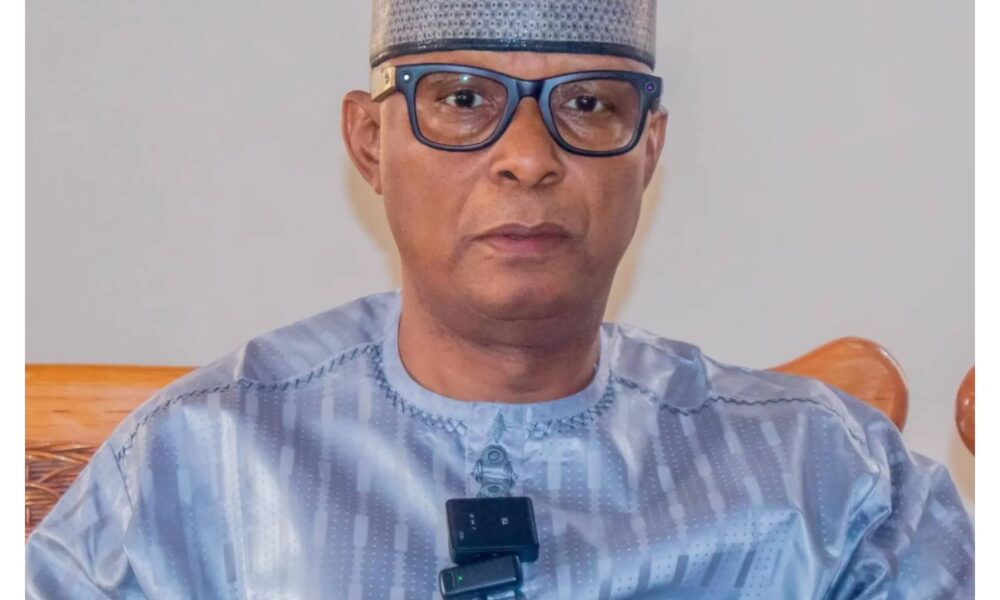
The director-general of the National Broadcasting Commission (NBC), Dr Charles Ebuebu, Thursday urged members of the Broadcasting Organisation of Nigeria (BON) to embrace an accelerated transition from analogue broadcasting to High Definition (HD), while unveiling a comprehensive framework designed to modernise Nigeria’s broadcast ecosystem and expand access to quality content nationwide.
Addressing BON members in Abuja, the NBC boss said the shift to HD broadcasting would deliver “immense benefits” for broadcasters, content producers and viewers, adding that Nigeria cannot afford to lag behind global standards where countries like Japan have already advanced to ultra hig definition formats such as 8K.
He acknowledged past setbacks in the country’s digital migration journey, revealing that over ₦60 billion had been invested in earlier Broadcast Signal Carrier (BSC) efforts with little measurable impact. According to him, the process suffered from weak data systems, limited technological focus, signal distribution challenges and poor monitoring mechanisms, which collectively stalled progress and left several states underserved.
To reset the process, the commission has now “gone back to the drawing board,” adopting a more inclusive and technology driven model. Central to the new approach is the migration of 100 television channels selected across diverse genres to the Nigerian Communications Satellite (NIGCOMSAT) platform, ensuring nationwide visibility across all geopolitical zones.
The DG stated that the new system would operate as an open, non encrypted platform, allowing free access to all 100 channels. Viewers will be required to register with basic details such as name and email, enabling accurate audience measurement, content monitoring and enforcement of broadcast standards.
As part of the rollout, six regional production studios will be established in Lagos, Abuja, Benin, Enugu, Kano and Port Harcourt to decentralise content creation and promote inclusiveness. The initiative is also expected to boost local content development, with a strong emphasis on Nigerian languages and indigenous programming.
“This platform is not just for broadcasters but for content producers across the country,” he said, adding that it would create jobs for actors, producers, technical crews, distributors and other players in the creative value chain.