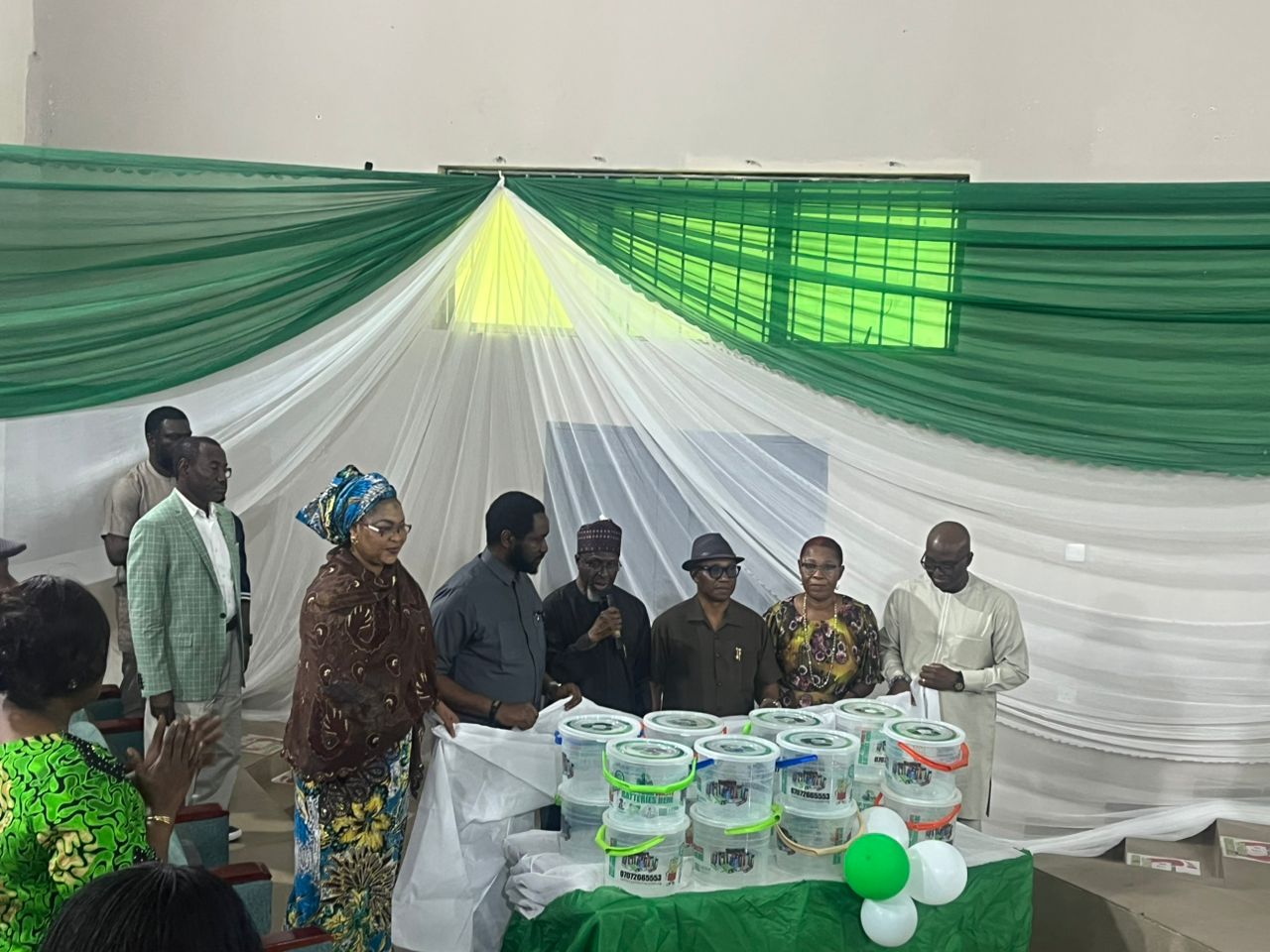
Nigeria has taken a major step toward tackling a fast-growing but often overlooked environmental threat with the launch of a national initiative to ensure the safe collection and recycling of small-sized waste batteries.
Unveiled at the Federal Ministry of Environment’s Green Building in Abuja, the programme introduces a structured system for the environmentally sound management of discarded household batteries—ranging from button cells in wristwatches to AA and AAA batteries in remote controls, as well as lithium-ion units powering mobile phones and other portable devices.
Speaking at the event, Minister of Environment, Balarabe Lawal, described the initiative as a decisive intervention to close a long-standing gap in Nigeria’s waste management system.
He noted that while large batteries such as those used in vehicles often attract recycling value, smaller batteries are routinely ignored and improperly disposed of, posing serious risks to both human health and the environment.
“These small-sized batteries are deceptively dangerous,” the minister said. “They are easily discarded, yet they contain toxic substances that can contaminate our soil, water, and food systems. This initiative is about protecting lives—especially those of women and children who are most vulnerable to the impacts of environmental pollution.”
At the core of the programme is the deployment of specially designed collection receptacles across strategic locations in the Federal Capital Territory, including markets, schools, offices, and motor parks. The goal is to make safe disposal accessible at the point of use, ensuring that hazardous battery waste does not end up in dumpsites or informal recycling channels.
The initiative is being implemented in partnership with the Alliance for Responsible Battery Recycling (ARBR), the Producer Responsibility Organisation for Nigeria’s battery sector under the Extended Producer Responsibility (EPR) framework.
Established in 2019, ARBR is tasked with coordinating the collection, transportation, and environmentally compliant recycling of battery waste nationwide.
Providing an overview of the project, ARBR representatives highlighted the growing volume of small battery waste driven by increased technology use and energy access across Nigeria. Despite their widespread use, these batteries often enter general waste streams at the end of their lifecycle, releasing hazardous materials such as cadmium, mercury, nickel, lithium, and lead into the environment.
“Collection is the foundation of environmentally sound management,” ARBR stated. “Without it, the entire value chain—from transportation and storage to treatment and recycling—breaks down. This project is designed to ensure that these batteries are captured early and directed into safe, regulated systems.”
Beyond collection, the programme establishes a coordinated downstream process involving the evacuation of collected batteries to central aggregation hubs, from where they will be transported to licensed recycling facilities, including export where necessary under national regulations. Key partners, including the Abuja Environmental Protection Board (AEPB) and the Waste Pickers Association of Nigeria (WAPAN), are expected to play critical roles in ensuring the system’s efficiency and sustainability.
The initiative is anchored on Nigeria’s National Policy on Battery Waste Management (2022) and the National Environmental (Battery Control) Regulations (2024), which mandate the responsible lifecycle management of batteries in line with global environmental standards.
In a goodwill message, the Director General of the National Environmental Standards and Regulations Enforcement Agency (NESREA), Prof. Innocent Barikor, described the launch as a strong demonstration of Nigeria’s commitment to meeting its obligations under international environmental agreements, including the Basel Convention on hazardous waste.
He emphasized that the rapid proliferation of battery-powered devices has created an escalating waste stream that demands urgent and coordinated regulatory action.
“This is not just a technical exercise,” Barikor said. “It is a declaration of intent that Nigeria is ready to protect public health and preserve its ecosystems through science-based and enforceable solutions.”
He further noted that the initiative builds on groundwork laid under the PROBAMET project, which helped map informal sector activities, identify infrastructure gaps, and raise awareness among stakeholders in the battery value chain.
Stakeholders at the event commended the Federal Ministry of Environment for its leadership, while also acknowledging the role of international development partners in providing technical and financial support for the project.
Experts say the initiative could also unlock economic opportunities by integrating informal waste collectors into formal systems and advancing Nigeria’s circular economy agenda—where waste is treated as a resource rather than a burden.
As the programme rolls out, officials are calling on Nigerians to adopt responsible disposal habits, stressing that the success of the initiative depends not only on infrastructure but also on public participation.
“Every battery properly disposed of is a life protected and an ecosystem preserved,” the minister said. “This is the beginning of a nationwide movement toward cleaner, safer environmental practices.”