By Chimezie Godfrey
The National Information Technology Development Agency (NITDA) has called for stronger collaboration between government and the private sector to tackle emerging cyber risks, with its Director-General/CEO, Kashifu Inuwa Abdullahi, warning that artificial intelligence is reshaping the cyber threat landscape in ways that require a more coordinated national response.
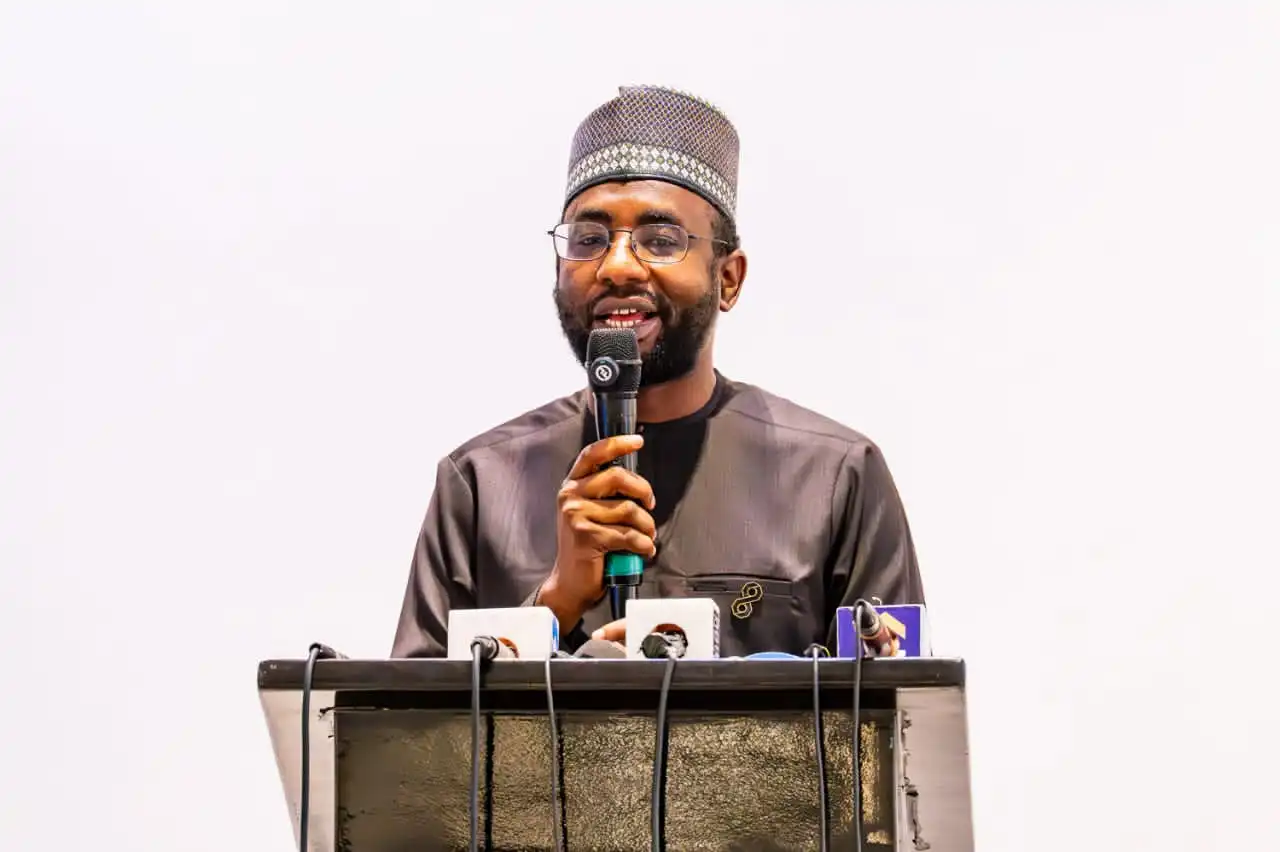
He spoke in Abuja at the inaugural stakeholder engagement on the proposed Ministerial Advisory Council for Cybersecurity Coordination. NITDA’s official website identifies him as Director-General/CEO of the agency.
Inuwa said the country is now dealing with a different class of threats because AI has changed both the speed and character of cyberattacks. He noted that while digital innovation brings growth and opportunity, it also expands the number of vulnerable points that can be exploited by criminals and hostile actors. For that reason, he said, the proposal to create a multi-stakeholder cybersecurity coordination platform could not have come at a better time.
“There will never be a more perfect time to have this council than now, because cybersecurity in the age of AI is a different animal,” he said. “AI is changing the game and elevating the threat landscape. The more we integrate AI into our lives, the more we need to change the way we look at cybersecurity.”
He explained that cyber threats today must be understood in two ways: attacks on AI systems and attacks carried out using AI. According to him, organisations are increasingly embedding AI agents into their internal processes, and any compromise of such systems could lead to substantial operational damage, especially where those tools are tied to decision-making, service delivery or sensitive institutional workflows.
“The attack today could be attack on AI or attack by AI,” he said. “Today we have AI agents doing a lot in our organizations. So imagine having a jailbreak into an AI, someone taking over the AI. The kind of damage it can cause into your organization.”
The NITDA DG said the threat environment has already become more complex. He cited zero-click phishing, AI-generated polymorphic malware and AI-automated ransomware as examples of attacks that are harder to detect and easier to scale. He warned that such tools reduce the reaction time available to institutions and make conventional defensive measures less reliable when organisations operate in isolation.
“Today we are experiencing zero-click phishing attacks. We have AI-generated malware that is becoming smarter and polymorphic, which is very difficult to even identify,” he said. “And ransomware today, we have AI-automated ransomware, AI systems that will take your system, even negotiate the ransom.”
He also drew attention to the danger posed by deepfakes and AI-enabled social engineering, saying false audio and video are now becoming powerful instruments of deception. Inuwa said this trend is especially troubling because it weakens trust in digital interactions and can be used to manipulate users, impersonate officials or compromise high-value systems through human error.
“We are also having sophisticated AI social engineering,” he said. “The deepfakes that we can hardly detect or identify, to differentiate between AI-generated audio, video and so on and the real one. We have instances where deepfakes are used even for virtual calls.”
Inuwa said the lesson from these developments is that no institution can claim to be secure on its own. He argued that Nigeria’s cyber resilience will depend on trusted collaboration, shared intelligence and stronger synergy between state institutions and private operators across the digital ecosystem.
“It’s not something we can address in isolation,” he said. “The only way is for us to work and deepen the synergy between government and private sector.” He added that, “no one will be protected in isolation. We are as strong as our weakest link.”
He stressed that the weakness of one institution can endanger others because of the interdependent nature of digital systems. “If you are protected and the next person you are exchanging information with is not, then you are no more protected,” he said. He added that recent incidents had shown how cyber compromise in one organisation could spill over into payment systems and government agencies.
The Federal Ministry of Communications, Innovation and Digital Economy has already said the proposed Cybersecurity Coordination Council is aimed at strengthening Nigeria’s collective cyber resilience in response to recent incidents affecting private institutions, public systems and service delivery.
Inuwa commended the minister, Dr Bosun Tijani, for bringing stakeholders together and said the engagement offered a timely opportunity to build a framework capable of improving preparedness and response. “This is the right time,” he said. “And we thank you Honourable Minister for the leadership for bringing all the stakeholders into the room, to work together to see how we can strengthen our cyber landscape and become more resilient.”
He further assured participants that NITDA would fully support the council. “At NITDA we are 100 per cent behind this council,” he said. “And we look forward to working with all of you to improve our cyber resilience in Nigeria.”
The statement is in line with NITDA’s recent emphasis on collaboration, digital governance and ecosystem-wide coordination as essential to Nigeria’s broader digital economy ambitions.
What do you think about this?
Drop your opinion in the comment section.
FOLLOW US & Share this with someone who needs to see this.