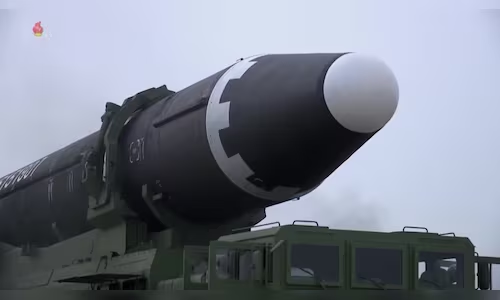
State media KCNA reported that five missiles were launched on Sunday, hitting a target area about 136 km away with “high precision.” Kim expressed “great satisfaction” with the outcome of the tests following years of development, Bloomberg reported.
“The purpose of the test-fire is to verify the characteristics and power of cluster bomb warhead and fragmentation mine warhead applied to the tactical ballistic missile,” KCNA said.
Also read: Japan auto sector hit as Middle East aluminium supply cuts trigger shortages
The latest launch marks North Korea’s second test involving cluster munitions in less than two weeks. The weapons system has also been used by Iran in recent attacks on Israel, Bloomberg reported.
The tests come amid concerns that Pyongyang may be gaining combat experience by supporting Vladimir Putin’s war in Ukraine with weapons and personnel. The Hwasong-11, also known as KN-23 or KN-24, is a short-range missile that Ukraine has said North Korea supplied to Russia for use in the conflict, according to Bloomberg.
A spokesperson for South Korea’s Unification Ministry said the launch underscores the rapid implementation of North Korea’s defence plans.
“The launch demonstrates that the new national defence development plan unveiled at the 9th Party Congress is being implemented at a rapid pace,” the official said, according to Bloomberg.
Also read: China deploys warships for Pacific drills as Japan tensions rise
The test also coincided with reports that the US is limiting intelligence sharing with South Korea after comments by Unification Minister Chung Dong-young regarding a North Korean uranium enrichment facility. US Forces Korea said it had no additional comment, adding that it continues to work with South Korea to maintain stability on the peninsula.
The developments come as US allies in Asia face pressure from Donald Trump to support operations in the Strait of Hormuz, while the conflict involving the US and Israel in the Middle East draws military focus away from the Asia-Pacific region, according to Bloomberg.