… Links Remark To Historic Political VIolence
…. Links Remark To Historic Political Violence
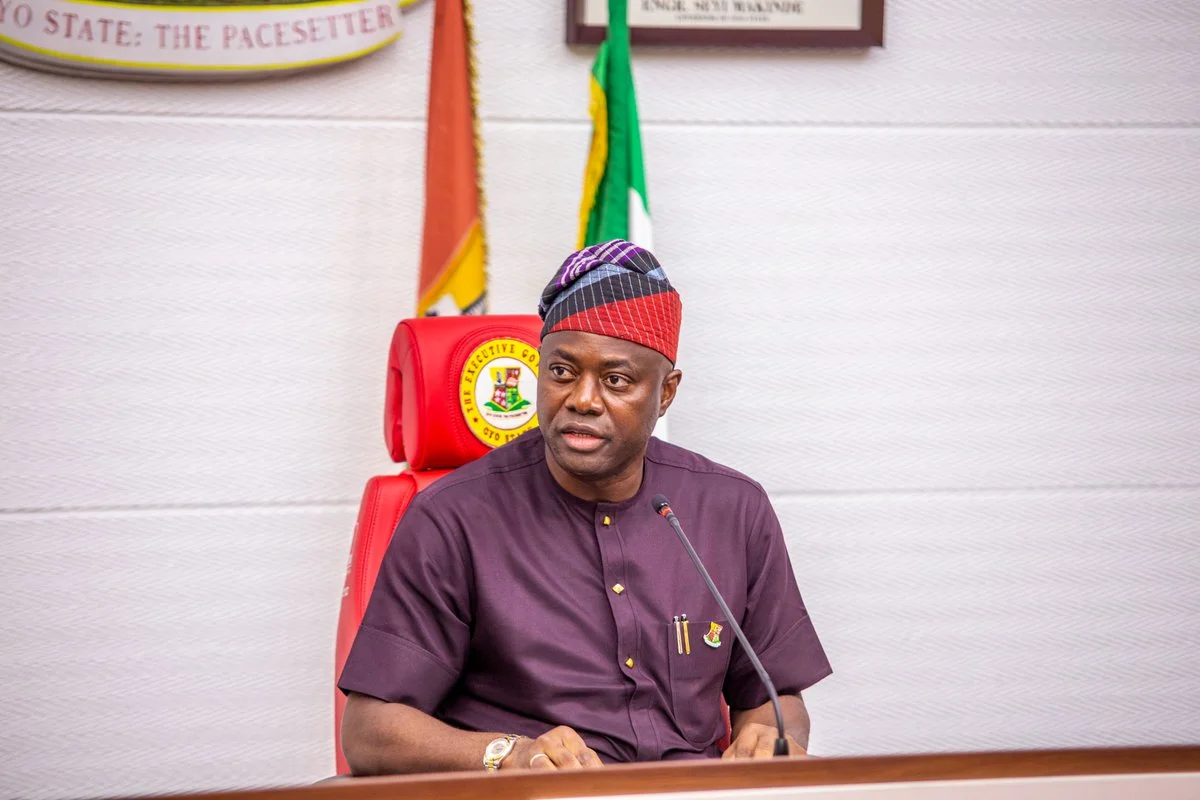
The All Progressives Congress on Sunday came down hard on Oyo State Governor, Seyi Makinde, over his controversial reference to “Operation Wetie,” accusing him of inciting violence and threatening national stability.
Makinde had made the remark on Saturday while hosting opposition leaders at a political summit in Ibadan, where he warned against what he described as Nigeria’s gradual drift towards a one-party state.
Invoking the infamous “Operation Wetie” — a violent political campaign in the Western Region in the 1960s marked by arson and attacks on political opponents — the governor cautioned that history could repeat itself.
“Those that are carrying on as if there’s no tomorrow should remember that ‘Operation Wetie’ started from here. This is the same Wild Wild West,” Makinde said.
However, the APC, in a strongly worded statement by its National Publicity Secretary, Felix Morka, described the comment as “reckless, baseless and dangerous,” warning that it constituted a direct threat to peace and national security.
The party said it was “deeply disturbing” that a sitting governor would reference a historically violent episode in a manner it interpreted as a veiled threat against the government of President Bola Tinubu and Nigerians.
“By his incitement to violence, Makinde has shown himself unworthy of the high office of governor that he occupies,” the APC said.
It warned that such rhetoric could trigger unrest and destabilise the country, urging security agencies to act proactively to safeguard lives and property.
The ruling party further stressed that constitutional immunity does not shield public office holders from accountability in matters bordering on national security.
Dismissing claims by opposition figures that Nigeria was sliding into a one-party state, the APC described such assertions as “misleading” and rooted in internal dysfunction within opposition ranks.
According to the party, crises within opposition parties stem from poor leadership, factionalisation, disregard for the rule of law and what it termed “desperate presidential ambitions.”
The APC also accused former Vice President, Atiku Abubakar, of weakening the Peoples Democratic Party through alleged violations of its zoning arrangement ahead of the 2023 elections.
It further criticised the 2023 presidential candidate of the Labour Party, Peter Obi, accusing him of political inconsistency, while describing the African Democratic Congress as an unstable coalition hijacked by opportunistic politicians.
The party insisted that Nigerians would not entrust governance to what it described as a “coalition of confusion,” alleging that opposition leaders were relying on fear-mongering and false narratives against the APC.
It also ruled out any role in resolving internal disputes within opposition parties ahead of the 2027 general elections, maintaining that its focus remained on its own preparations.
“Nigeria’s democratic space remains robust, with multiple political parties participating freely,” the statement added. “The opposition’s threats and rhetoric are nothing but an admission of failure and a prelude to rejection by voters in 2027.”
Meanwhile, opposition parties at the Ibadan summit, including the PDP, Labour Party and ADC, resolved to present a joint presidential candidate for the 2027 election in a bid to challenge the dominance of the APC.