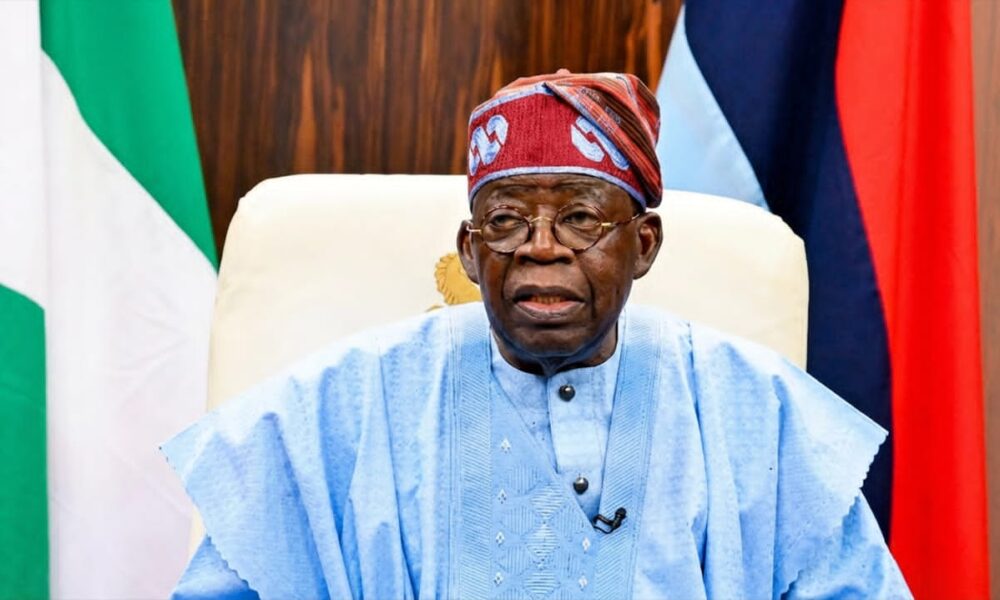
The United Niger Delta Congress has called on President Bola Tinubu to intervene in the ongoing pipeline surveillance contracts crisis in the Niger Delta and not allow the region return to the days of violence.
The association made the call in reaction to the recent vote of confidence passed on one of the major pipeline contractors in the region by the Senate and House of Reps Committees.
The association described the federal lawmakers’ action as not only misguided, but a grave overreach of legislative authority.
“The National Assembly does not possess the constitutional or statutory mandate to award, renew, or endorse such contracts,” it said IN a press statement read by Julius Malam-Obi, its President and Emaluji, Secretary General in Abuja on Tuesday.
“Even more troubling is the contradiction of the Petroleum Industry Act, PIA, a landmark legislation enacted by the same National Assembly,” the added.
“The PIA, particularly Chapter 3, Section 257, explicitly recognizes Host Communities as central stakeholders in the protection and management of oil and gas assets within their domains.
“Any attempt to concentrate pipeline surveillance responsibilities in a monopolistic structure directly violates both the letter and spirit of this law.
“What is unfolding is not governance, it is economic capture. It is domination. It is the systematic exclusion of the very ethnic nations whose land sustains the nation’s wealth. The monopolization of N2.1 trillion pipeline surveillance contracts is not merely unfair; it is a dangerous provocation and a ticking time bomb in a region with a long history of struggle for justice and inclusion,” it said.
It added that it was against the law to award the protection of pipelines and oil assets located in one ethnic nationality to an entity from another, while the indigenes become mere spectators.
“This is a recipe for crisis of monumental proportions and a direct violation of the provisions of the PIA,” the group said.
It added, “The solution is clear: oil theft will be more effectively curtailed through the decentralization of pipeline surveillance contracts. When responsibilities are devolved to host communities and ethnic nationalities, accountability improves.
“Communities will generate intelligence within their own domains and peer-review themselves and expose offenders, because they have a direct stake in protecting their resources.
“You cannot preach peace while practicing oppression. You cannot demand stability while engineering inequality. And you certainly cannot expect silence while economically strangling and asphyxiating entire ethnic nationalities.
“The Niger Delta struggle was never fought to replace external marginalization with internal domination. It has always been about justice, dignity, and equitable participation. Any attempt, by any individual or entity, to corner opportunities that rightfully belong to the collective people of the region is a betrayal of that struggle.
“We must sound a clear note of warning: no single individual or group has the mandate to appropriate the economic rights of diverse ethnic nationalities within the Niger Delta.
“Every ethnic nation in the Niger Delta has competent and capable sons and daughters fully qualified to participate in pipeline surveillance and related engagements within their territories. Denying them this right is not only unjust, it is deeply provocative.”
“Let it be clearly understood: the path to peace in the Niger Delta is justice. The foundation of stability is inclusion. Any policy or action that ignores these truths is a deliberate invitation to unrest,” it said.
“If those in authority truly seek to avoid setting the Niger Delta on fire, the solution is simple and immediate: uphold the rule of law, respect the rights of Host Communities in their respective ethnic nations, dismantle monopolies, and embrace equity.
“Anything less will be seen for what it is, a conscious decision to deepen injustice and provoke avoidable tension.
“The Niger Delta must not be pushed to the brink. However, history has shown that when injustice becomes policy and exclusion becomes systemic, resistance inevitably follows.”