 1 / 10
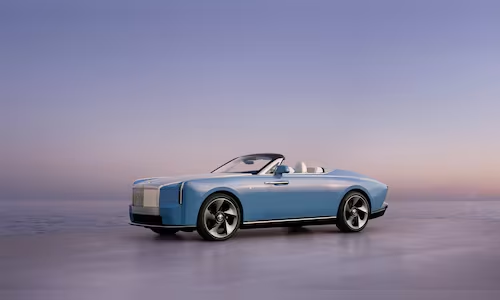
New Chapter: Rolls-Royce has unveiled Project Nightingale, an all-electric two-seat convertible concept that opens a new Coachbuild Collection. The program sits above the brand’s regular lineup and below one-off commissions, with invited clients able to commission limited-production cars shaped around their tastes. Rolls-Royce says the project is meant to counter sameness in the market and keep the motor car a statement object.
 2 / 10
Limited Run: The company plans to build 100 examples of Project Nightingale, all already allocated to selected clients. Deliveries are due to start in 2028. Rolls-Royce has not announced a price. The model is intended for buyers seeking something beyond standard series cars such as Phantom, Spectre, Ghost, and Cullinan, and it is presented as one of the brand’s most ambitious efforts.
 3 / 10
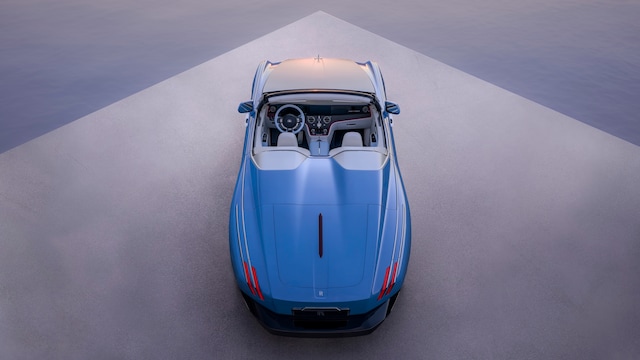
Size and Platform: Project Nightingale is 5.76 meters long, or 18.9 feet, giving it Phantom-like proportions despite its two-seat layout. It uses Rolls-Royce’s aluminium Architecture of Luxury spaceframe, the same basic platform that supports the rest of the range. The concept is fully electric, but Rolls-Royce has not yet released detailed output, battery, or range figures.
 4 / 10
Name and Heritage: The Nightingale name refers to Le Rossignol, the house used by designers near Henry Royce’s winter estate on the French Riviera. The concept also draws from Rolls-Royce’s 1920s experimental EX cars, especially 16EX and 17EX, which were built as high-speed test vehicles. The blue exterior includes red particulate to echo the red-badged EX models.
 5 / 10
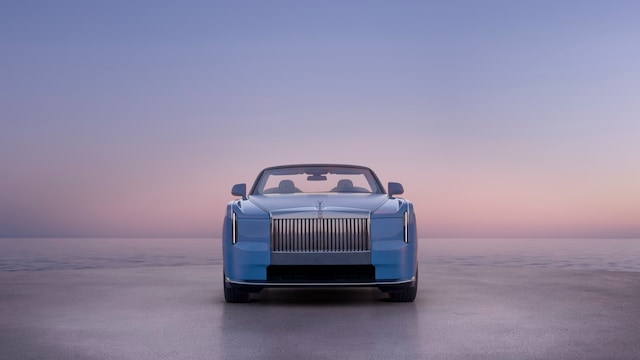
Front End: The front of Project Nightingale is built around a wide Pantheon grille, said to be the widest on any Rolls-Royce and carrying 24 slats. Vertical headlamps replace the horizontal lighting seen on many other models. A carbon-fibre apron with chrome trim sits low at the front, while the smooth surfaces reflect the packaging benefits of an electric drivetrain.
 6 / 10
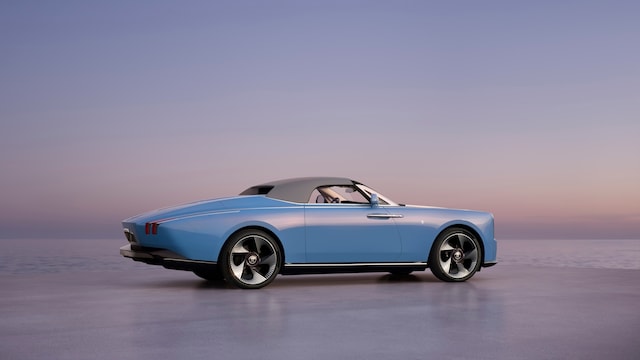
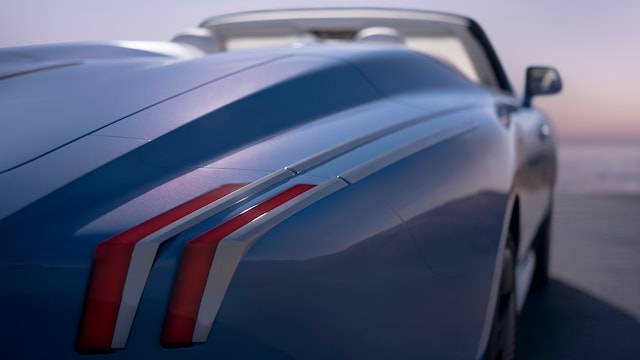
Body and Tail: A single hull line runs from front to rear, inspired by the separation between a yacht’s hull and superstructure. The long body uses stainless-steel strips to reinforce that line. At the rear, the shape tapers sharply and takes cues from nautical design. Rolls-Royce also fits a sideways-opening Piano Boot lid and a carbon-fibre Aero Afterdeck diffuser.
 7 / 10
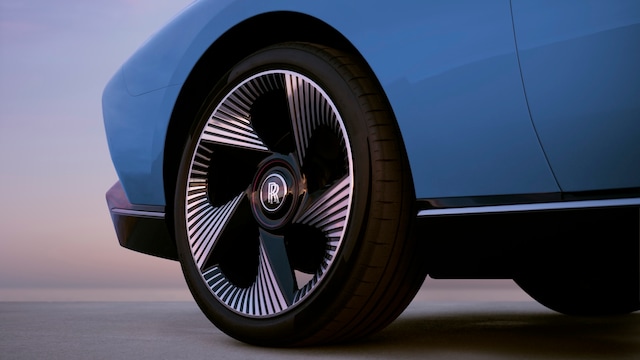
Wheel Statement: The car rides on 24-inch wheels, the largest Rolls-Royce has fitted to a production car. Their shape is inspired by yacht propellers, and machined stripes create the look of motion even when the car is still. The size adds to the car’s stance, but the design remains tied to the same calm, linear theme used across the body.
 8 / 10
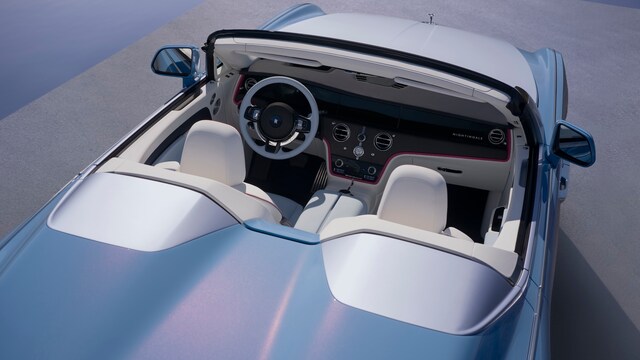
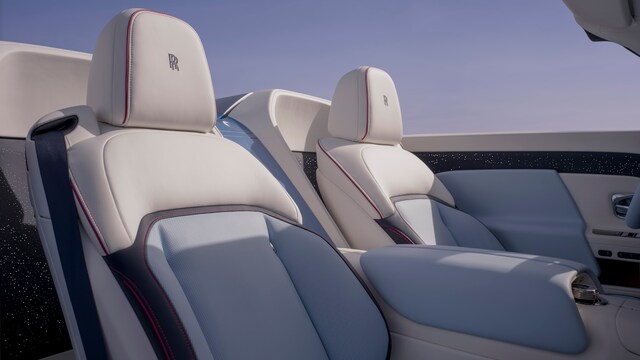
Two-Seat Cabin: Inside, Project Nightingale seats only two people. Rolls-Royce says the Starlight Breeze system was developed after listening to actual nightingale songs and translating the sound waves into light. The result is 10,500 individual lights spread through the cabin. The layout is meant to feel enclosed and formal rather than playful, with a strong focus on calm and material quality.
 9 / 10
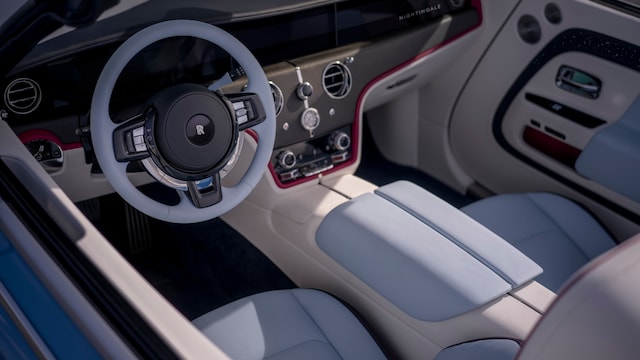
Cabin Details: A motorised centre armrest retracts to reveal a Spirit of Ecstasy rotary controller, and a further movement opens a storage compartment. Additional luggage space sits behind the seats. The cabin uses Charles Blue upholstery with Grace White, Deep Navy, and Peony Pink accents, plus open-pore Blackwood trim. The retractable soft top includes cashmere, fabric, and sound-deadening composites.
 10 / 10
Future Plans: Rolls-Royce says Project Nightingale is meant to shape future products as much as present demand. The Coachbuild Collection will also include curated travel experiences tied to each car’s theme. To support that work, the company is expanding its Goodwood site with a 430,500-square-foot building due in 2029, at a cost of more than $405 million.