4 min readApr 14, 2026 10:20 PM IST
The power struggle between Sudan’s army and parliamentary forces has escalated into a civil war. The conflict, which began on April 15, 2023, involves two leaders, General Abdel Fattah al-Burhan of the Sudanese Armed Forces (SAF) and General Mohamed Hamdan Dagalo (Hemedti) of the Rapid Support Forces (RSF).
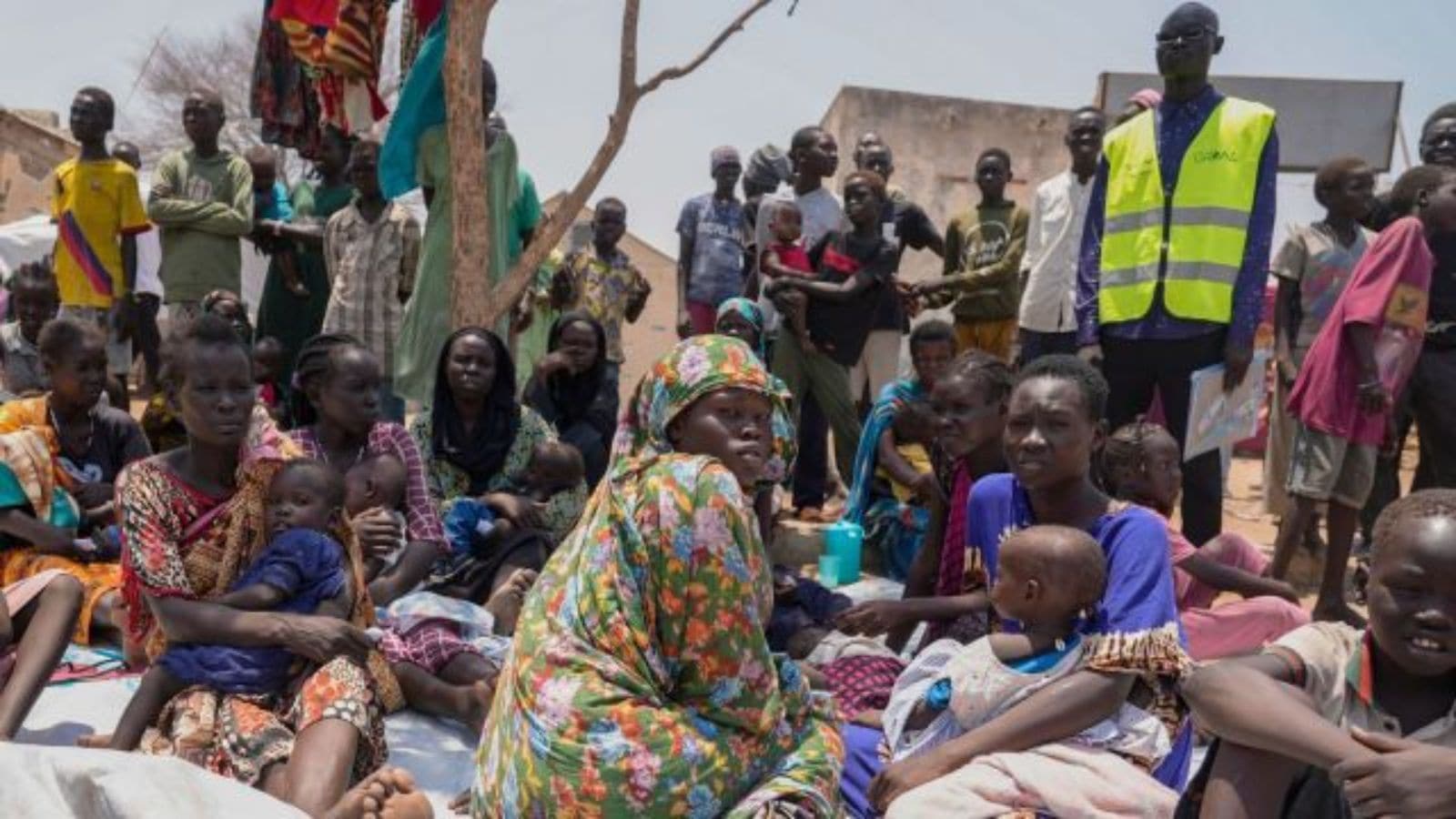
Three years into Sudan’s civil war, newborn children continue to be caught in the violence. At least three babies are being born every minute under these conditions, according to ReliefWeb, a humanitarian information service of the United Nations Office for the Coordination of Humanitarian Affairs (OCHA).
ReliefWeb stated that “at least three children on average were born into war every minute in Sudan since the conflict erupted three years ago.”
The analysis found that between April 2023 and April 2026, around 5.6 million babies were born in the country, equivalent to over 5,000 births per day on average, or at least three babies per minute.
Highest maternal mortality rates recorded in Sudan in 2025
Another issue flagged by the organisation is the rising maternal mortality rate in Sudan. Data shows that maternal mortality has increased by over 11 per cent. According to Sudan’s Health Ministry, the country recorded one of the highest maternal mortality rates globally in 2025, at 295 deaths per 100,000 live births.
The infant mortality rate in the country was estimated at 42.9 by the United Nations in 2024.
Since the conflict began in April 2023, an estimated 70 to 80 per cent of Sudanese health facilities have become non-operational. Many are facing a severe shortage of essential supplies, medicines, staff and fuel for generators.
Story continues below this ad
After the closure of the Chad-Sudan border in March 2026, the Darfur region has faced severe shortages of essential medicines, nutritional supplies, and medical equipment.
The Save the Children Director
Mohamed Abdiladif, Director of Save the Children Sudan, an international NGO, said, “Every single minute of this conflict, three babies are born into conditions no child should ever face. These children are born in overcrowded shelters, under-equipped or damaged health facilities, or while their families are on the move”
Abdiladif said that attacks on hospitals and civilian areas protected under international humanitarian law have delayed access to essential care for mothers and newborns.
He called out on all parties involved in the conflict to ensure the protection of civilians and allow humanitarian access. “All parties involved in the conflict must ensure the protection of civilians and allow access to reach families in urgent need of assistance. Humanitarian access must be permitted and facilitated to prevent further loss of life,” he said.
Story continues below this ad
Why did the civil war break out?
Since gaining independence in 1956, Sudan has seen repeated coups and periods of military rule. The country has also endured two civil wars and continues to bear the scars of the Darfur genocide.
In October 2021, after the overthrow of a joint military-civilian government, the coup led by General Abdel Fattah al-Burhan and his deputy, RSF leader Mohamed Hamdan Dagalo Sudan’s political scenario took a turn. Tensions between the two leaders escalated over disagreements regarding the transition to civilian rule, eventually leading to the current civil war.
BBC reported that plans were made to integrate 100,000 RSF fighters into the national army, followed by a decision on who would lead the unified force. However, both generals showed no willingness to lose their positions of power.
Clashes between the two sides began on April 15, 2023. The RSF subsequently redeployed its forces around the country, which threatened the army. The RSF initially took control of Khartoum, but the army regained control of the capital in March 2025.