Let’s be honest for a second. We spend almost every waking hour trying to kill off uncertainty. We check the weather five times a day, we obsess over our retirement funds, and we follow GPS instructions like they’re holy scripture. It’s exhausting. There is a specific part of the human brain that actually misses the unknown. This is why gaming—in all its forms—is still so magnetic. It isn’t really about the money, despite what people tell you. It’s about that raw, shaky instant before the result hits. For a few seconds, you aren’t just an employee or a taxpayer; you’re an individual standing at the edge of a “maybe.” And in a world this predictable, that feeling is pure gold.
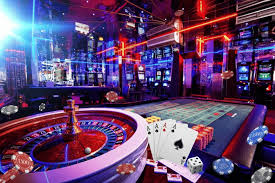
The era of the dusty, windowless casino floor is pretty much over. Nobody misses the watered-down drinks or the carpets that haven’t seen a vacuum since 1994. Today, fans want the rush without the hassle of a road trip. They want a “high-end” vibe that fits in their pocket. This shift toward quality and convenience is exactly why so many people are using their Koi Fortune login to jump into the action lately. These platforms have figured out how to bottle that “high-roller” energy and pair it with a level of tech security that makes the old-school joints look like relics. It’s a positive, vibrant way to unwind after a brutal week of work, giving you a safe space to trade your stress for a bit of genuine excitement.
If you think this is mindless, you’ve clearly never tried to keep your cool during a losing streak. It is a total head trip. You are basically wrestling with your own ego. You’ve got that loud, primal urge to “get even” screaming in one ear, and the cold logic of your bankroll whispering in the other. Staying disciplined when your heart is hammering? That’s not just a game; that’s a legitimate life skill. You’re sharpening your focus and learning how to ignore the “noise” of your own impulses. It’s a mental workout that most people don’t even get at their actual jobs.
There’s this tired myth that playing online is a solitary, sad hobby. Have you looked at a live dealer room recently? It’s a riot. You’ve got people from every time zone shouting in the chat, dealers who are actually funny, and a shared energy that’s honestly contagious. You aren’t just clicking a button on a loop; you’re joining this global subculture of people who all want that same spark of “what if.” It’s messy, it’s loud, and it’s surprisingly human. It’s a digital bridge, not a wall.
The underlying architecture of these contemporary ludic environments extends far beyond a mere iteration of binary strings; it constitutes an ontological superstructure where randomness is meticulously orchestrated through complex systemic layers. Within this ecosystem, the synergistic interplay between asymmetric cryptographic protocols and high-frequency pseudo-random number generators establishes a profound dialectic between the sovereign agency of the individual and the systemic arbitrariness of the machine. This phenomenological entanglement redefines the very parameters of “digital presence,” transforming the user interface into a vector of transcendence where uncertainty is no longer viewed as an algorithmic failure, but rather as its most sophisticated aesthetic finality. Consequently, the subject is forced into a constant re-evaluation of their own teleological drive within a space defined by non-linear probabilities and shifting mathematical horizons.
A philosophical breakdown of how we interact with recreation today discloses an internal conflict of ideas based on the domination of instrumental reason as it is used to negatively label all activities for which there exists no purpose or benefit. Through participation in a state of temporal suspension created by the game, the social actor performs a praxis (process) of self-intentional deconstruction as he withdraws temporarily from the objective of “hustle” and participates in a creative void. This catharsis operates as a homeostatic regulatory mechanism, where the direct confrontation with the unpredictable serves as a necessary antidote to the imaginative atrophy imposed by the standardization of mediated social interactions. It is within this paradox—the pursuit of absolute psychological freedom through a voluntary submission to the laws of chance—that the true resilience of the modern psyche is crystallized against the rigid structuralism of a hyper-optimized world.
We’re all living in an environment filled with the “toxic hustle culture,” in which each second must be used to add value. The result will undoubtedly be a burn out. At times, the best way to be productive about protecting your mental health is to simply waste time. Simply relax and play.