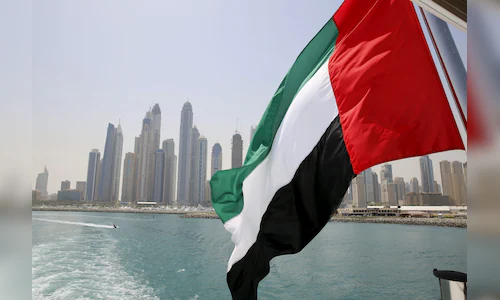
It underscored a broader shift: wealthy Indians are increasingly looking beyond domestic markets to diversify into global property hubs, with Dubai emerging as a clear favourite.
Shroff’s investment, located in Dubai Maritime City, comes at a time when Indian participation in Dubai’s property market is surging.
Industry estimates suggest Indians have consistently ranked among the top foreign buyers in the emirate over the past few years, driven by currency diversification, strong rental yields, and a relatively frictionless buying process.
For Indian investors, the appeal is partly structural. While property prices in cities like Mumbai and Delhi have seen steady appreciation, rental yields often remain modest, typically in the 2–4% range.
In contrast, Dubai continues to offer yields upwards of 6%, alongside tax advantages such as zero personal income tax — a combination that is difficult to replicate in India’s tightly regulated real estate market.
“High-net-worth Indians are increasingly treating overseas real estate as a portfolio allocation decision rather than a lifestyle indulgence,” said a wealth advisor, noting that Dubai’s regulatory transparency and ease of ownership have lowered barriers for first-time global investors.
Developers such as Danube Properties — part of the Danube Group founded by Rizwan Sajan — have also recalibrated their pitch to attract this growing base. Flexible payment structures, including low initial outlays and staggered instalments, are making overseas ownership more accessible to mid-tier investors, not just ultra-high-net-worth individuals.
The timing is notable. Outbound investments by Indians have been steadily rising, even as domestic regulators maintain caps under the Liberalised Remittance Scheme (LRS). Real estate, alongside equities and education, is emerging as a key avenue for capital outflow among affluent households seeking geographic diversification.
At the same time, Dubai’s policy ecosystem has played a critical role. Long-term residency visas linked to property ownership, coupled with aggressive infrastructure expansion and tourism growth, have helped sustain demand even amid global economic volatility.
Yet, the trend raises questions for India’s own real estate sector. While domestic demand remains robust — particularly in premium housing — the steady outflow of capital into overseas markets highlights persistent gaps in rental yields, ease of transactions, and investor confidence.
Also read: Regularisation of properties in unauthorised colonies in Delhi to begin from April 24
For now, deals like Shroff’s signal that Dubai’s real estate story continues to resonate strongly with Indian buyers. What was once seen as a luxury purchase is increasingly being viewed as a calculated financial move — one that blends lifestyle aspirations with portfolio diversification in an uncertain global economy.