4 min readUpdated: Apr 28, 2026 11:05 PM IST
Christine Dawood reflected on the Titan submersible tragedy in an interview with the Guardian, describing how she received the remains of her husband and her 19-year-old son in two small, shoebox-like containers. She recalled that the remains resembled “Slush” and were returned to her nine months after the disaster.
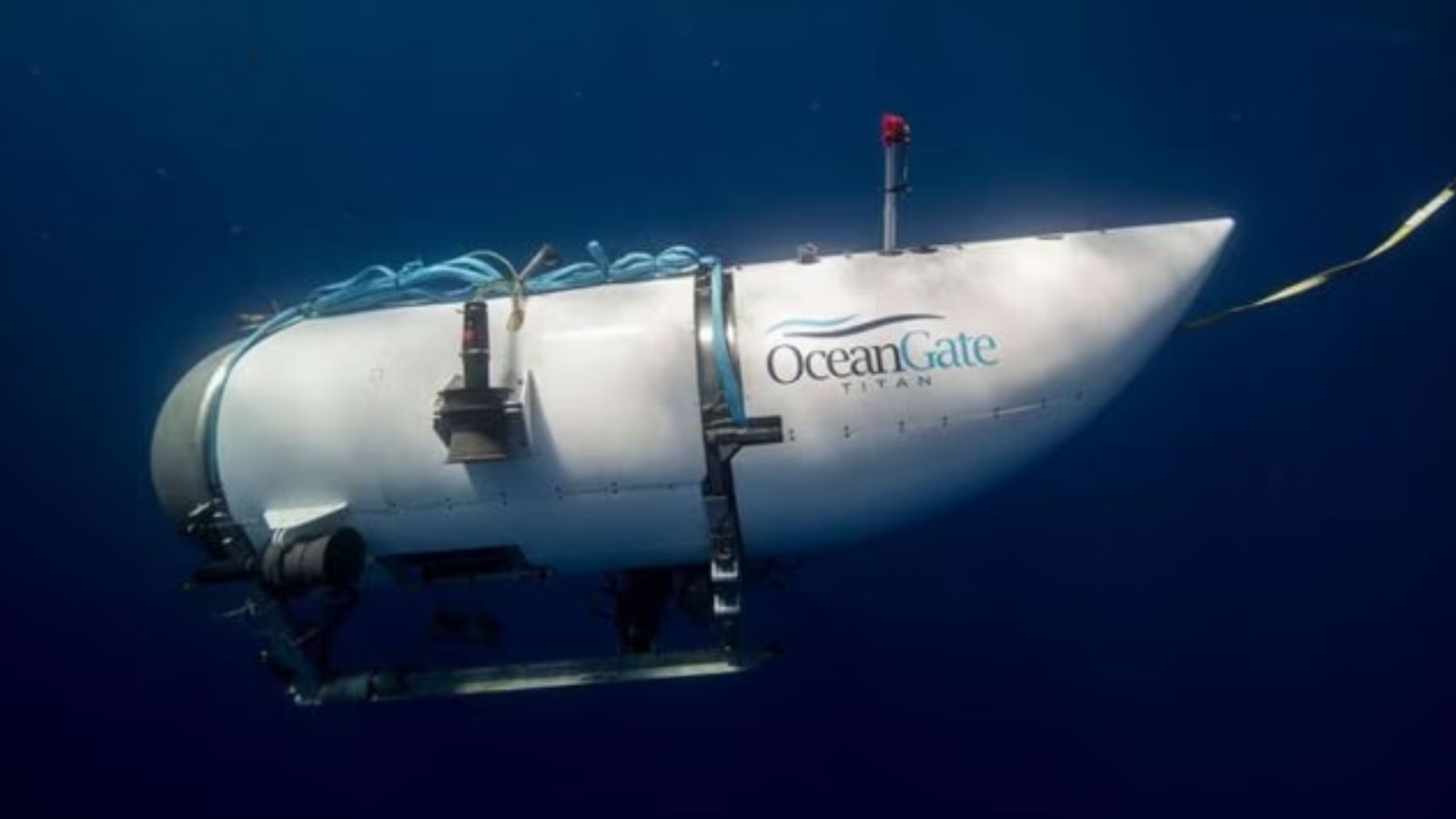
Her husband, Shahzada Dawood, and son, Suleman Dawood, were aboard the Titan submersible when it encountered problems and ultimately imploded during its descent to the wreck of the RMS Titanic.
“We didn’t get the bodies for nine months,” Dawood told the Guardian on Saturday. “Well, when I say bodies, I mean the slush that was left. They came in two small boxes, like shoeboxes.”
She added that very little could be recovered after the tragedy.
“They have a big pile they can’t separate, all mixed DNA, and they asked if I wanted some of that, too. But I said no, just what you know is Suleman and Shahzada.”
Distraction at sea
The tragedy struck the Dawood family on January 18, 2023, when the Titan submersible imploded during its descent to the Titanic wreck, killing all five people on board.
“Suleman had his Rubik’s Cube, because he was planning to get the record for solving it at the deepest depth ever,” she remembered. “And we were giggling, because Shahzada is clumsy and when he was going down the stairs, he was wobbling a bit. I waved. And that was it. They got into a dinghy and sped off. It went very fast, the goodbye.”
Story continues below this ad
She said later she overheard conversations about the loss of communication with the submersible, while crew members tried to remain calm and even organised jamming sessions to keep spirits up.
Dawood described feeling helpless and anxious, imagining her husband and son trapped in “total darkness”. She also recalled that families were engaged in activities as a distraction, partly to prevent information from leaking to the press.
The aftermath
“My first thought was, thank God,” Dawood said. “When they said catastrophic, I knew Shahzada and Suleman didn’t even know about it. One moment they were there, and the next they weren’t. Knowing they didn’t suffer has been so important. They’re gone, but the way they went does somehow make it easier.”
A subsequent investigation by the United States Coast Guard described the implosion as “preventable”. However, Dawood said she chose not to direct anger toward Stockton Rush, the CEO of OceanGate, who also died in the incident. She spoke about focusing on herself and not “giving him power” through anger.
Story continues below this ad
She also described the emotional difficulty of the immediate aftermath, including handling her family’s belongings.
“What was I going to do with their stuff?” she said. “Their bags? Shahzada’s clothes and things were in my cabin, so I packed his bags. But I didn’t pack Suleman’s. I couldn’t. Someone else did that.”
Dawood said she has tried to process her grief by revisiting memories.
“So I go into Suleman’s room. Sometimes I find the cat sleeping on his pillow and I sit on the bed and let the grief come,” she admitted. “And after a while I can put the grief away until the next time it gets too much. I’ve worked a lot on my grief for Suleman, but I’m only now starting to grieve for my husband. Publicly, they are always put together, but they are two different relationships. Two very different pains.”
Stay updated with the latest – Click here to follow us on Instagram
© IE Online Media Services Pvt Ltd