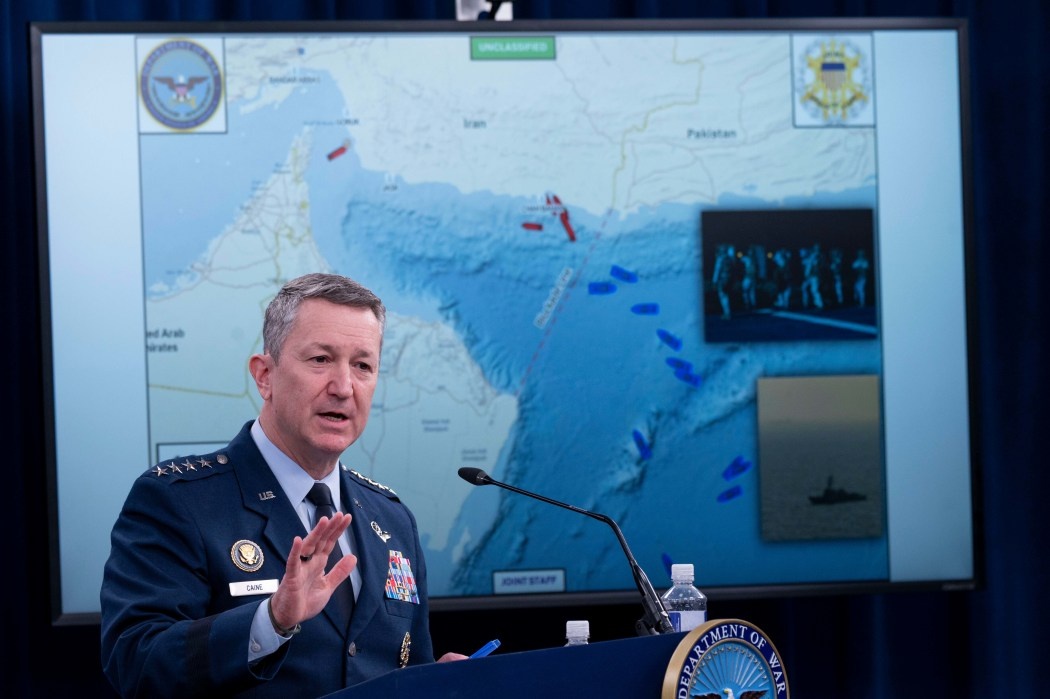
US-Israel-Iran war Day 38: The tensions between the US, Israel and Iran further escalated on the 38th day of the war. The confict showed no signs of a let-up with exchange of fire on both sides — as sounds of explosions and plumes of smoke covered the skies of both Tehran, Jerusalem and Gulf Arab neighbours — even though the US, Iran and a group of regional mediators have been discussing the terms for a potential 45-day ceasefire that could eventually lead to an end of the war.
US President Donald Trump has issued a 48-hour deadline to open the Strait of Hormuz, while Tehran refused to yield to the US pressure and remained firm on its stance.
However, in a major setback to Tehran, Majid Khademi, the head of the Revolutionary Guards’ intelligence organisation, was killed, the Iranian state media announced. Trump is scheduled to deliver an address later in the day, that would be keenly watched for further developments in the West Asia conflict.
The 45-day ceasefire proposal talks and diplomacy
On the 45-day truce talks, four US, Israeli and regional sources with knowledge of the development told Axios that the “negotiations are taking place through Pakistani, Egyptian and Turkish mediators and also through text messages sent between Trump’s envoy Steve Witkoff and Iran’s Foreign Minister Abbas Araghchi.”
According to Axios, Iranian officials have made clear to the mediators that they do not want to be caught in a situation similar to Gaza or Lebanon, where there is a truce on paper but where the US and Israel can attack again whenever they want to.
Apart from that, deputy foreign ministers and experts from Iran and Oman met to discuss proposals to ensure “smooth transit” through the strait. Egypt said that Foreign Minister Badr Abdelatty had spoken with US envoy Steve Witkoff and Iranian Foreign Minister Abbas Araghchi, as well as with Turkish and Pakistani counterparts. Russia said that Araghchi also spoke with Russian Foreign Minister Sergey Lavrov.
Iran warns of retaliation
A day after Trump dropped the “f” bomb and threatened Iran to open the Strait of Hormuz by Tuesday, saying it will be Power Plant Day and Bridge Day, all wrapped up in one, Tehran warned of retaliatory attacks. An Iranian missile struck a residential building in Israel’s Haifa, killing at least two people and injuring four others.
Story continues below this ad
Hitting back after Trump’s expletive-laden posts, Iran’s parliamentary speaker Mohammad Bagher Qalibaf termed the threats “reckless.” “You won’t gain anything through war crimes,” Qalibaf wrote on X. “The only real solution is respecting the rights of the Iranian people and ending this dangerous game.”
“Iran will defend itself, but heed this warning for your own good: This aggression began with a war crime: targeting & murdering 170 schoolchildren. Yesterday, in a desperate and vulgar outburst, Trump openly threatened further war crimes. Complicity = int’l criminal responsibility,” former Foreign Minister of Iran Javad Zarif wrote on X.
Day after Easter Sunday in Jerusalem
The day after Easter Sunday seemed turbulent in Israel with Iranian missiles hitting Haifa, Tel Aviv and other spots, but there were no immediate reports of deaths. Two people were found dead in the debris of a residential building in Haifa, according to sraeli authorities. Search operations continued as fresh Iranian missile strikes hit the northern Israeli city early Monday.
Tehran’s Sharif University of Technology hit
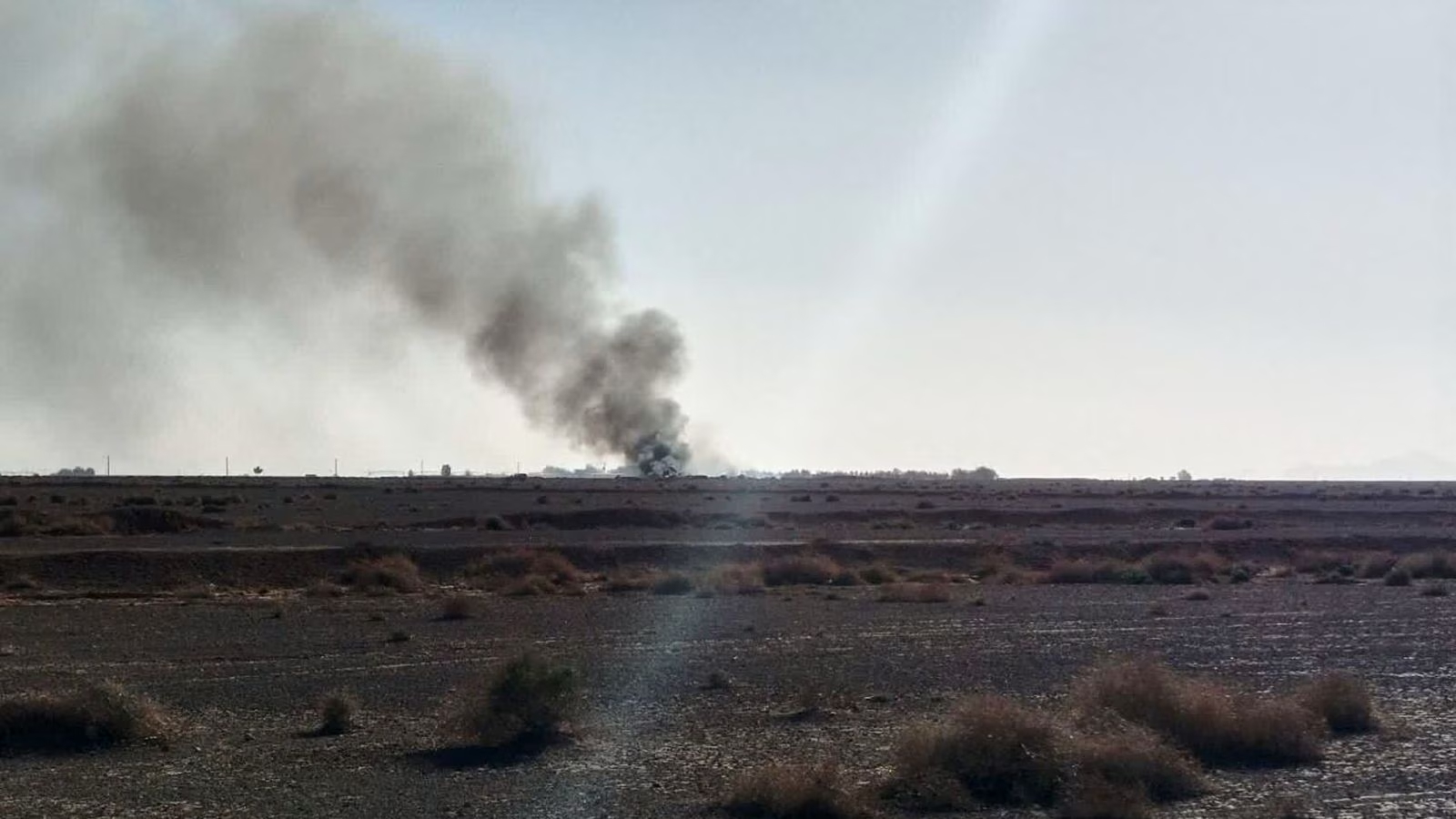
Airstrikes killed more than 25 people across Tehran following the attack on Sharif University of Technology. The strikes wreaked havoc with buildings, and a natural gas distribution site next to the campus was hit. A strike near Eslamshahr, southwest of Tehran, killed at least 13 people, the semi-official Fars news agency reported. Apart from that, five others were killed when a residential area in the city of Qom was hit, and six more were killed in strikes on other cities, reports said.
Story continues below this ad
Gulf nations continue defence system activation
As Iran retaliated against the US by targeting its allies in the Gulf Arab nations, the GCC and Kuwait kept their air defence active. With incoming Iranian missiles and drones, Kuwait and the United Arab Emirates have activated their air defence systems. Following a drone attack, authorities in Fujairah responded, and no injuries were reported. Saudi Arabia also intercepted drones in the early hours of the day.
Brent crude price spikes to $109.67
The ongoing war continued to impact the Asian markets and oil prices. Japan’s benchmark Nikkei 225 rose 0.7% to 53,514.39 in afternoon trading. South Korea’s Kospi gained 1.4% to 5,450.33. Benchmark US crude lost 42 cents to $111.12 a barrel. Brent crude, the international standard, added 64 cents to $109.67 a barrel.
Death toll so far
Since the US-Israel-Iran war began on February 28, more than 1,900 people have been killed in Iran. In Lebanon, which Israel has invaded by ground, more than 1,400 people have lost their lives and more than 1 million people have been displaced. Eleven Israeli soldiers have died there while targeting Iranian-backed Hezbollah militants. In Gulf Arab states and the occupied West Bank, more than two dozen people have died, while 19 have been reported dead in Israel and 13 U.S. service members have been killed.
With inputs from Reuters, AP, BBC