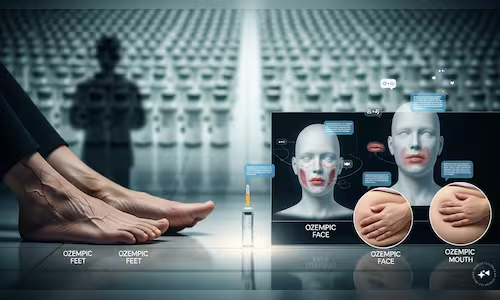
Beyond nausea, bloating and other digestive complaints, users are discussing what social media has dubbed Ozempic Face, Ozempic Feet, Ozempic Hair Loss, Ozempic Mouth and even Ozempic Personality.
Take Ozempic Face: rapid weight loss can reduce facial fat, making some people appear older, gaunter or more hollow. Doctors note that this is often linked less to the drug itself and more to the speed of weight loss.
Then there is Ozempic Mouth — a cosmetic term used online to describe wrinkles or volume loss around the mouth following significant facial fat reduction. It is not a formal diagnosis, but part of the broader conversation about changes in appearance associated with rapid weight loss.
People also refer to
Ozempic Teeth, a term sometimes used online to describe dental sensitivity, possibly linked to reduced food intake and, in turn, lower nutritional intake.
There is also Ozempic Feet, describing loose skin, more visible veins or a bonier appearance in the feet after substantial weight loss — again, likely related to fat loss.
Another frequently discussed concern is Ozempic Hair Loss. Experts say this is often associated with rapid weight loss, physical stress on the body, calorie restriction or nutritional deficiencies, rather than the medication itself.
Perhaps the most widely discussed emerging phenomenon is Ozempic Personality. Some GLP-1 users report that life feels somewhat lacklustre — a party, a slice of cake or even a holiday may bring less excitement than before. Some doctors describe accounts of emotional flattening or a dulled response not only to food but also to other sources of pleasure.
One possible explanation is that GLP-1 drugs may influence reward pathways in the brain. This could help to quiet “food noise” and even reduce cravings for alcohol, nicotine or other substances. However, in some individuals — possibly at higher doses — it may also dampen other reward responses.
Doctors in India say they have not yet observed this as a major trend, possibly because lower doses are more commonly used and it may still be early days. However, with generic versions becoming more accessible and affordable, clinicians say they will be monitoring these potential side effects — including any impact on patients’ mental health — more closely.