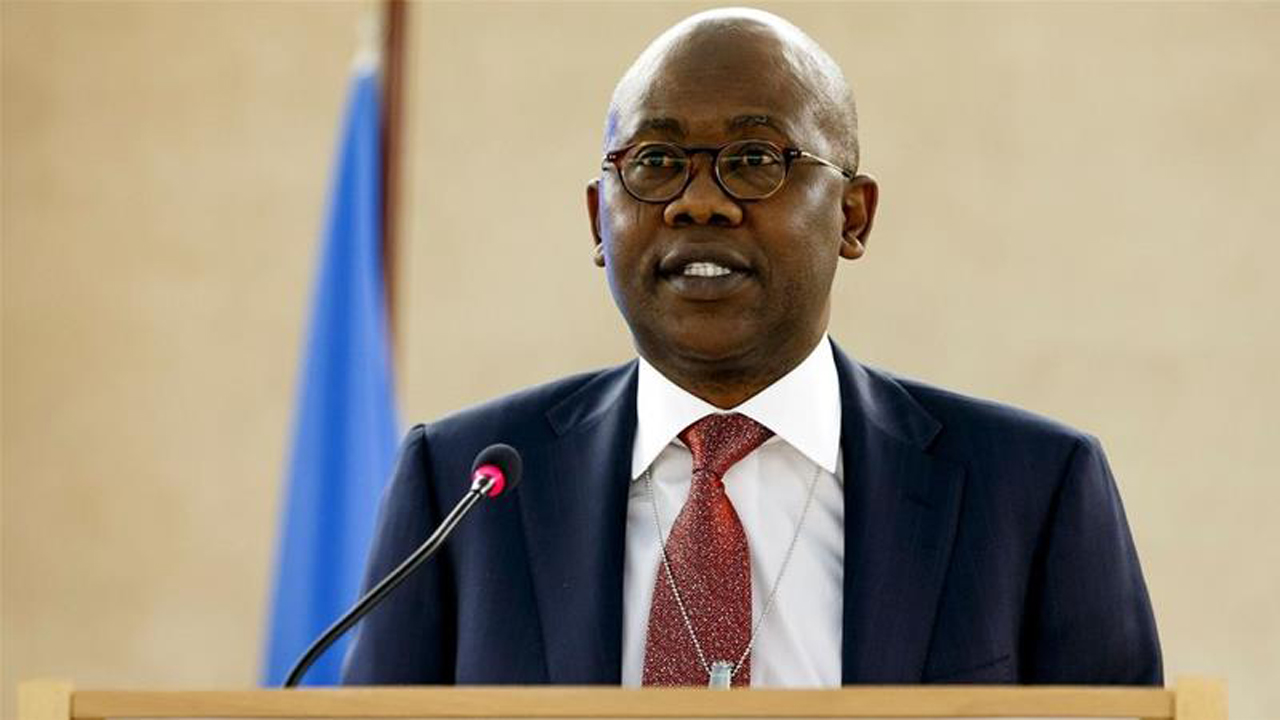
“Democracy does not collapse overnight; it erodes. Slowly. Quietly. Almost imperceptibly,” Mr Adoke said. “Until one day, participation becomes routine, but belief has already left the room
Former Attorney-General of the Federation (AGF) and Minister of Justice, Mohammed Adoke, has warned that Nigeria’s democracy faces a growing credibility crisis, saying electoral violence, vote-buying and increasing judicial involvement in political disputes are weakening public confidence in the democratic process ahead of the 2027 general elections.
Speaking on Thursday at the 2026 Annual Law Week of the Nigerian Bar Association, Abuja Branch (the Unity Bar), he spoke on the theme, “Safeguarding Nigeria’s Democratic Process: Issues and Prospects.”
The former AGF said that although Nigeria had sustained democratic rule since 1999, many citizens were losing faith in the credibility of elections and key democratic institutions.
“Nigeria stands at democracy’s precarious crossroads,” he stated.
“A democracy is not measured merely by how often it holds elections, but by how deeply its people trust the outcomes of those elections. Thus, the real question before us this morning is not whether Nigeria is democratic.
“It is far more searching: Are we safeguarding the democratic process, or merely managing its appearance? Because when the process loses credibility, democracy does not collapse overnight; it erodes. Slowly. Quietly. Almost imperceptibly. Until one day, participation becomes routine, but belief has already left the room.”
He explained that the 2023 general elections exposed serious weaknesses in the country’s electoral system, citing low voter turnout, election-related violence and controversies surrounding the transmission of results.
According to him, voter turnout during the elections dropped to 27 per cent, the lowest since Nigeria’s return to civilian rule, while dozens of deaths were recorded during the electoral process.
Mr Adoke also criticised the Independent National Electoral Commission (INEC) over its handling of electronic transmission of results, saying the commission failed to fully implement some provisions of the Electoral Act 2022 despite public expectations.
INEC has, however, repeatedly defended its conduct during the 2023 general elections and maintained that reforms are ongoing to strengthen future electoral processes.
It stated that 891 petitions out of 1,196 on the 2023 polls had been either dismissed or withdrawn.
It noted that the loss of 74.4 per cent of the petitions confirmed the credibility of the elections it conducted.
“Democracy does not collapse overnight; it erodes. Slowly. Quietly. Almost imperceptibly,” Mr Adoke said. “Until one day, participation becomes routine, but belief has already left the room.”
The senior advocate said many Nigerians were already questioning whether the 2027 elections would strengthen the country’s democracy or further damage public trust in the electoral process.
Mr Adoke identified electoral violence as one of the biggest threats to democratic participation in Nigeria, noting that elections in the Fourth Republic had repeatedly been marred by intimidation, ballot snatching and attacks on voters and electoral officials.
He cited reports by civil society organisations indicating that more than 1,200 election-related deaths were recorded between 1999 and 2023.
The former minister also condemned the growing monetisation of politics, saying the high cost of nomination forms and widespread vote-buying had turned elections into financial contests.
According to him, nomination forms for the 2027 elections range from N5 million to N100 million depending on the office being contested.
“The net effect of persistent vote-buying is that it transforms elections into economic transactions rather than democratic choices,” he said.
He further accused political parties of undermining internal democracy through the imposition of candidates and the manipulation of party primaries.
Mr Adoke also expressed concern over what he described as the growing judicialisation of politics in Nigeria.
According to him, the increasing reliance on courts to determine electoral disputes was gradually weakening the role of voters in deciding election outcomes.
“The phrase ‘go to court’ has become a silent reminder to the electorate that judges and courts determine who is actually nominated and elected,” he said.
While acknowledging that judicial review remained an important part of democracy, he warned that excessive post-election litigation could undermine electoral legitimacy.
Mr Adoke referenced recent comments by former President Goodluck Jonathan, who argued that election winners should be decided by ballots rather than court judgements.
Mr Adoke’s comments reflect growing concern within legal and political circles over the expanding role of courts in deciding electoral outcomes.
In recent months, senior lawyers and officials of the Nigerian Bar Association have repeatedly called for reforms aimed at strengthening electoral institutions, improving judicial credibility and reducing conflicting judgments in political cases.
Despite his concerns, Mr Adoke said reforms introduced in the Electoral Act 2026 could help improve transparency and participation ahead of the next general elections.
He praised provisions recognising the Bimodal Voter Accreditation System (BVAS) as the sole means of voter accreditation and retaining electronic transmission of polling unit results.
He also welcomed reforms abolishing indirect primaries, introducing digital party membership registers and increasing penalties for electoral offences.