“In March 2026, a pot of jollof rice cost an average of N30,435, up 19.4 per cent from October. The Iran war doubled fuel prices, tripled transport fares, and sent food costs spiralling. Families now swap meat for smoked fish and trek to markets to survive,” the report stated
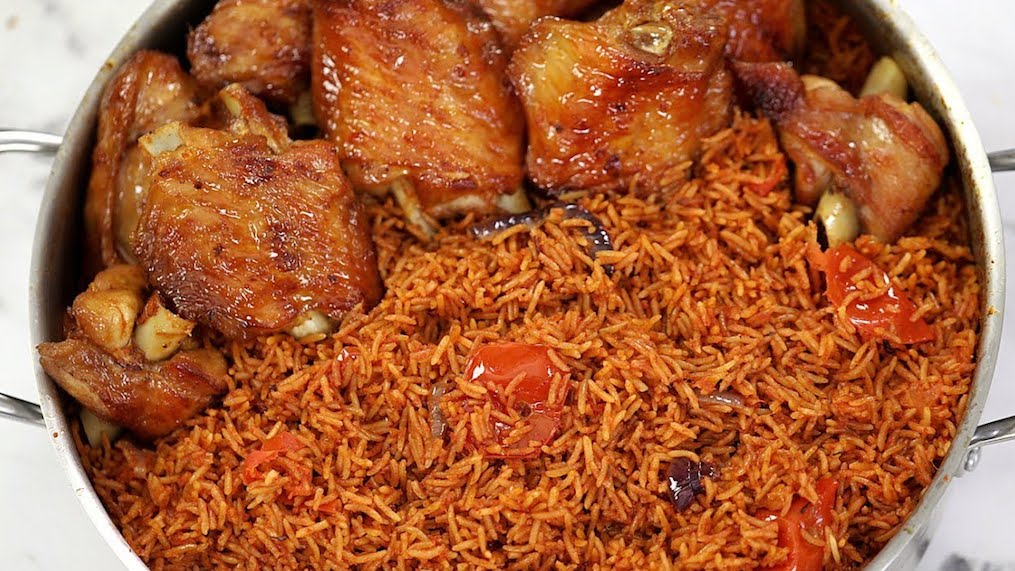
The national average cost of preparing a pot of jollof rice in a Nigerian household rose from N25,486 in October 2025 to N30,435 in March 2026, a 19.4 per cent increase according to a new survey.
The rise in the average cost of a pot of jollof rice was revealed in the SBM Jollof Index Q1 2026 report titled “From Hormuz to the Pot,” which linked the increase in prices partly to the crisis in the Middle East.
After the U.S/Israel and Iran war started on 28 February, Brent crude spiked from the low‐$70s to above $80 within days and then climbed to nearly $120 over the following month.
By mid‐March, petrol in Lagos had nearly doubled to N1,325 a litre, and Abuja stations were posting N1,367.
Subsequently, the National Bureau of Statistics (NBS) reported headline inflation of 15.38 percent in March, up from 15.06 percent in February, while month‐on‐month inflation more than doubled to 4.18 percent.
In the same trend, food inflation stood at 14.31 percent year‐on‐year, but the rural monthly rate hit 6.73 percent in the same month, a blunt measure of how transport costs ignite prices where roads are few.
The research firm found that 82.7 per cent of the surveyed vendors had already registered price increases they blamed directly on the war, fuel, and transport.
The SBM survey captured a nationwide food ingredients price survey of 220 traders in the final days of March.
The SBM Jollof Index was based on households of five, using the NBS’ average Nigerian household size, and jollof rice as a widely consumed staple across Nigeria and West Africa.
The study collected monthly price data on twelve key ingredients: rice, vegetable oil, turkey or chicken, beef, tomatoes, pepper, onions, tinned tomatoes, salt, curry, thyme, and seasoning cubes, from 13 markets across Nigeria’s six geopolitical zones.
The market includes Nyanya and Wuse II (Northcentral), Bauchi (Northeast), Kano (Northwest), Awka and Onitsha (Southeast), Port Harcourt, Calabar Municipal, and Bayside Mbakpa (South‐South), and Bodija, Dugbe, Trade Fair, and Balogun (Southwest).
“We do not collect data in December due to seasonal price spikes linked to year‐end festivities. The index is published three times a year, in April, July, and October. This edition covers the period from October 2025 to March 2026,” the report stated.
The report stated that the national average cost of cooking a pot of jollof for a family of five rose by 19.4 per cent, from N25,486 in October 2025 to N30,435 in March 2026.
This implies that a pot of jollof now costs more than 40 per cent (N28000) of the national minimum wage, N70,000.
“In March 2026, a pot of jollof rice cost an average of N30,435, up 19.4 per cent from October. The Iran war doubled fuel prices, tripled transport fares, and sent food costs spiralling. Families now swap meat for smoked fish and trek to markets to survive,” the report stated.
Abuja’s two markets remain the most expensive to buy a pot of Jollof rice for a household in the country. In March 2026, Wuse II rose to N36,750, a 14.7 per cent jump from February, while Nyanya climbed to N31,800, a 12.8 per cent increase.
This is blamed on the Federal Capital Territory, depending on road corridors from Benue, Kaduna, and Niger states, all of them already strained by the pastoral conflict and banditry.
“Trucks that used to pay N45,000 to move a tonne of grain from the north now pay N70,000 or more,” the report stated.
Lagos state markets experienced the country’s sharpest monthly acceleration in March 2026. For example, Trade Fair and Balogun both jumped by 23.1 per cent, from around N22,900 to N28,200.
A food vendor in Lagos described the household calculus, saying, “We cannot remove the rice from jollof rice, but we can make the rice go further by adding more water and fewer expensive ingredients.”
Ibadan’s Bodija and Dugbe markets rose more moderately but now exceed N28,000. The Southwest’s long‐presumed insulation from national food inflation has evaporated in a single month.
According to the survey, the narrow gap between Lagos and Ibadan is not because Ibadan caught up with Lagos in infrastructure terms, but because the cost of transporting goods from Lagos’s ports and markets to Ibadan’s wholesale hubs has risen so steeply.
Port Harcourt recorded the steepest six‐month increase of any market in the country, surging by 55.1 per cent from October 2025 to March 2026.
Its Jollof Index now stands at N31,650, matching Bauchi as the joint third‐most expensive market in Nigeria. Also, Calabar Municipal and Bayside Mbakpa also rose, though more slowly.
“The South‐South’s price explosion is a paradox of a port city starved of affordable food,” the report noted.
In the Northwest, Kano state’s Jollof Index rose by a modest 0.7 per cent in March 2026, from N29,470 to N29,670.
The report noted that the slight increase does not suggest stability, noting that Kano’s index has climbed 53.8 per cent since September 2024.
“The market has not stabilised because conditions have improved; it has stabilised because prices have reached a ceiling that consumers can barely sustain,” the report said.
In the Northeast, Bauchi state’s Jollof Index fell from a peak above N41,000 in mid‐2025 to N31,650 by March 2026.
According to the report, the market remains 35 per cent higher than a year earlier, and the downward movement owes more to a temporary harvest glut than to any structural improvement.