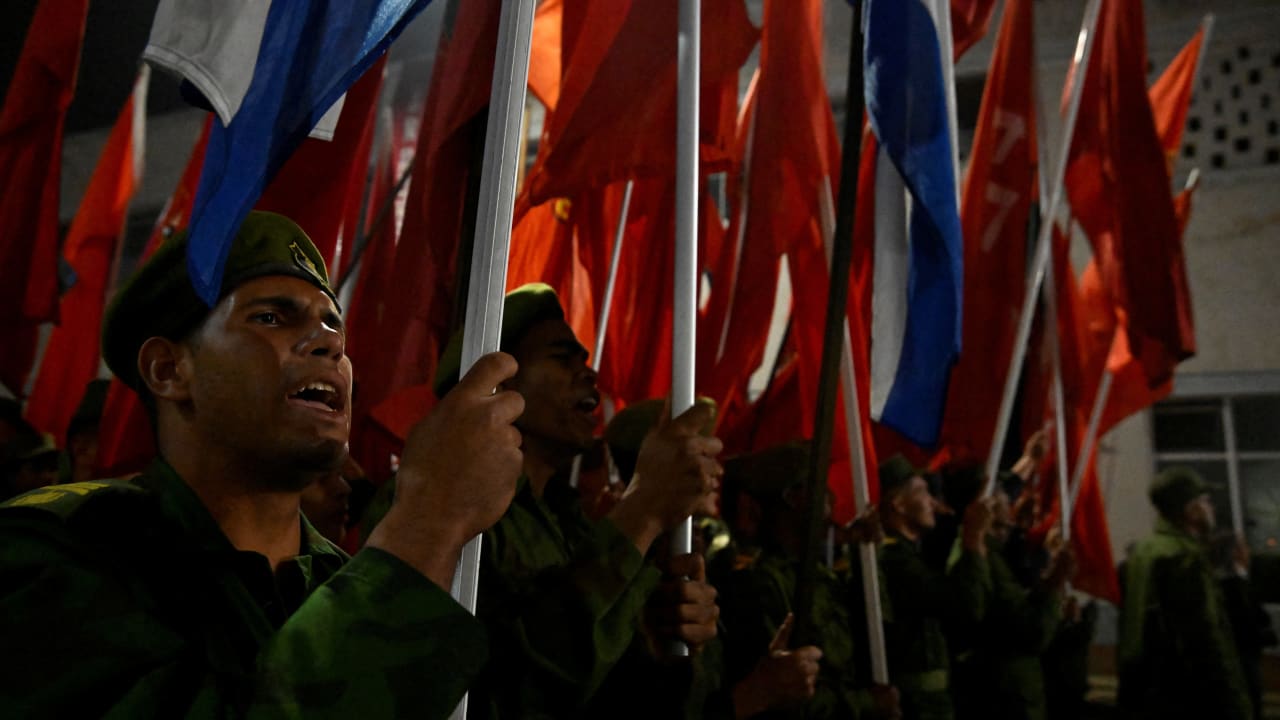
Cuba has more than 300 military drones and has discussed using them to attack the southernmost point of the US’s continental territory, the US base in Guantanamo Bay, and American ships in the Caribbean, Axios reported on Sunday, citing US intelligence.
The report also stated that Iranian military advisers were recently in Havana, though Cuba has been acquiring various attack drones from Iran and Russia since 2023. US intelligence indicates that Cuba’s intelligence officials were seeking to learn how Iran “resisted” the US during previous skirmishes, as well as Operation Epic Fury.
“When we think about those types of technologies being that close, and a range of bad actors from terror groups to drug cartels to Iranians to the Russians, it’s concerning,” one official told Axios. “It’s a growing threat.”
Russia and China both reportedly have espionage facilities on the island for collecting signals intelligence, the report added.
The report also mentioned that US officials estimate that as many as 5,000 Cuban soldiers have fought for Russia in the war in Ukraine. Some of those who fought informed Cuban leaders of the benefits of drone warfare. Moscow reportedly paid Havana about $25,000 a head for the soldiers deployed to Ukraine.
“They’re part of the Putin meat grinder. They’re learning about Iranian tactics. It’s something we have to plan for,” the senior official told Axios.
Cuba bolsters ties to Russia, Iran as Castro regime edges closer to collapse
The reports of Cuba strengthening ties to Russia and Iran come as the Castro regime comes closer than ever to falling apart.
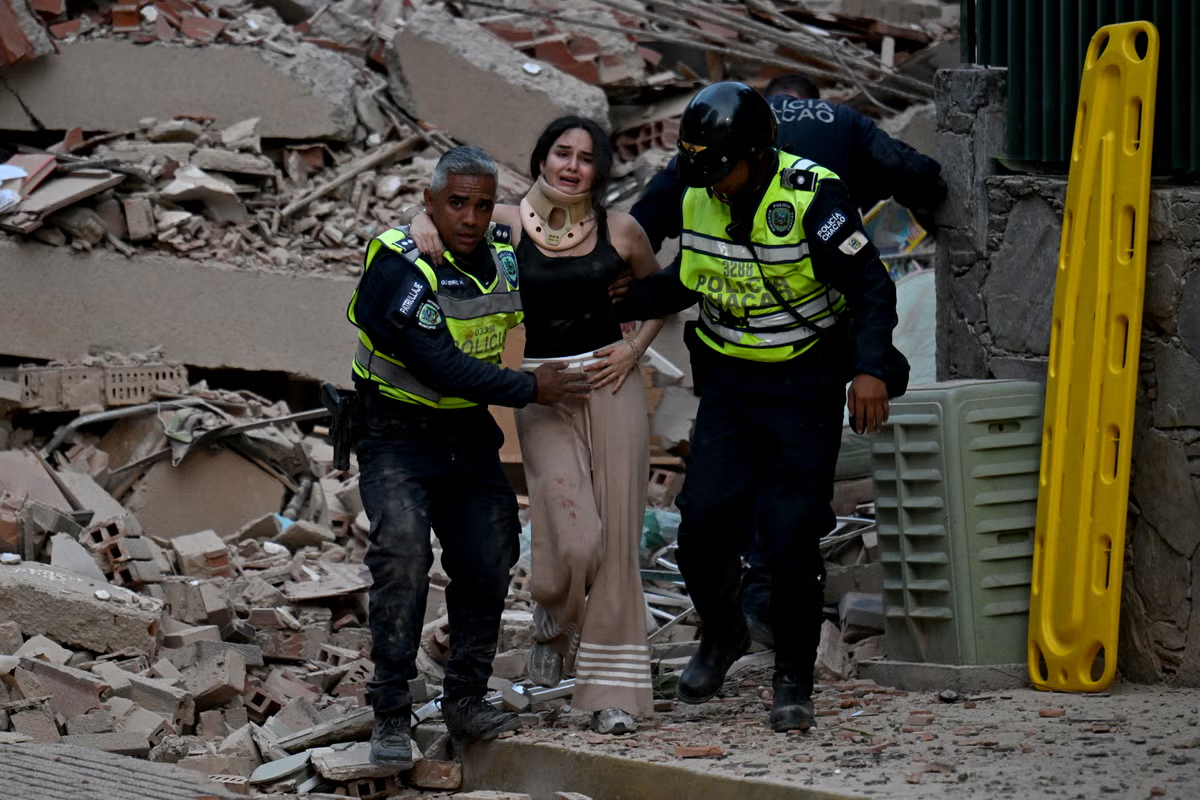
Cuba’s electrical grid suffered a partial collapse early Thursday morning, the country’s grid operator, UNE, said, cutting power across eastern Cuba and testing the patience of Cubans already exhausted by seemingly interminable blackouts amid a US fuel blockade.
The Caribbean island of nearly 10 million people has reached a tipping point this month, as summer heat sets in and the vast majority – including in the capital Havana – now suffer without electricity for 20 hours or more each day.
The blackouts dramatically worsened in January after US President Donald Trump threatened tariffs on any nation supplying the island with fuel. Venezuela and Mexico, once the country’s top suppliers of crude oil, have since cut off shipments.
Trump has predicted Cuba would “collapse” and has said he wants to oust the current communist-run government. He also previously threatened that Cuba “is next” after the fall of Nicholas Maduro in Venezuela.
What will Trump do to Cuba?
The intelligence gives insight into the Trump administration’s policy towards Cuba, given CIA Director John Ratcliffe’s recent travels to Cuba. Ratcliffe, during a rare visit to Havana on Thursday, delivered a message from Trump that the US would engage with the government on economic and security issues “only if it makes fundamental changes.”
“Director Ratcliffe made clear that Cuba can no longer serve as a platform for adversaries to advance hostile agendas in our hemisphere,” one CIA official said. “The Western Hemisphere cannot be our adversaries’ playground.”
Additionally, the Department of Justice announced plans to unseal an indictment against Raúl Castro, the country’s leader and brother of revolutionary leader Fidel Castro, for ordering a strike in 1996 on a Florida-based aid group called Brothers to the Rescue.
Additional sanctions against Cuba are also expected to be announced within the next few weeks.
While Cuba can’t close the Straits of Florida to threaten global shipping, and doesn’t possess the same military capabilities as it did during the 1962 Cuban Missile Crisis, US officials are uncomfortable with its physical proximity to the US.
“No one’s worried about fighter jets from Cuba. It’s not even clear they have one that can fly,” one senior US official said.”But it’s worth noting how close they are – 90 miles,” the official added. “It’s not a reality we are comfortable with.”