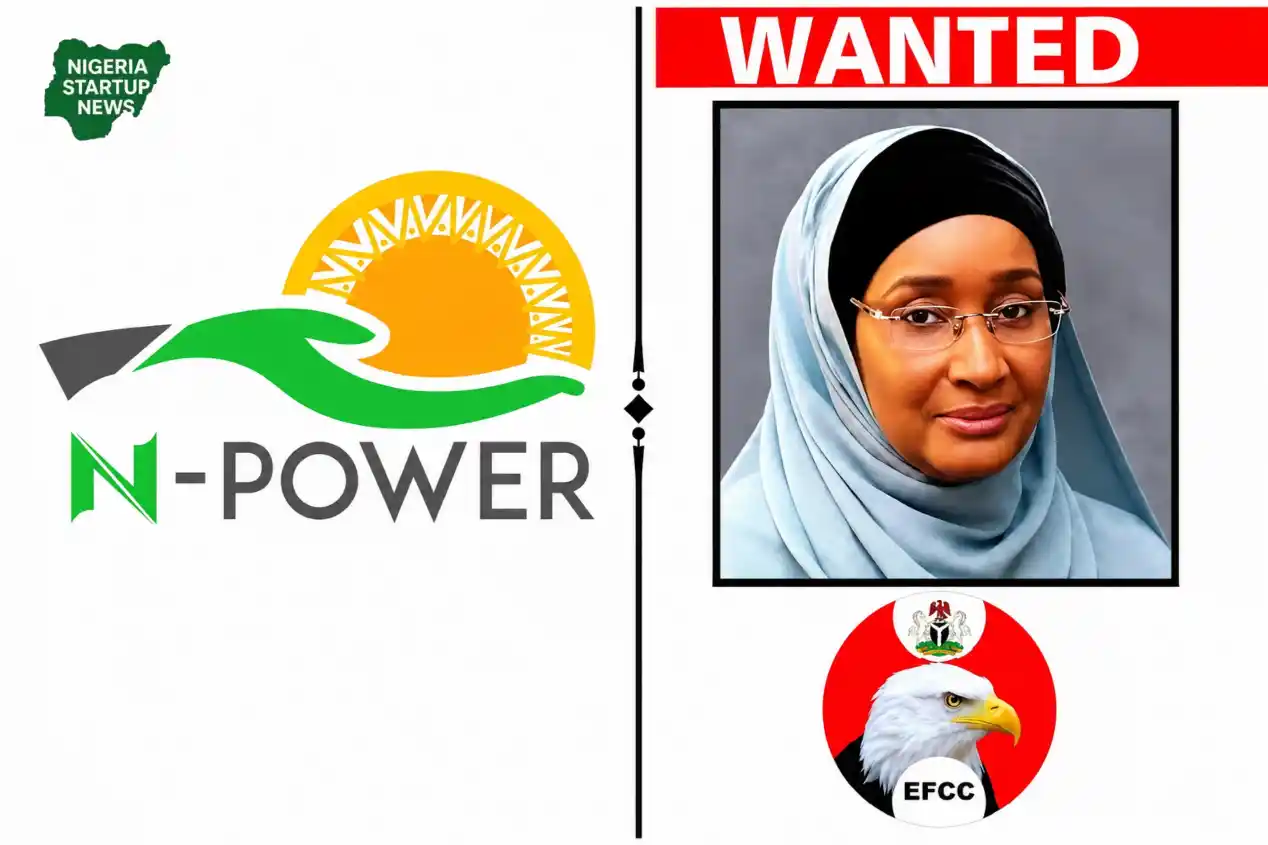
The Economic and Financial Crimes Commission (EFCC) has declared former Minister of Humanitarian Affairs, Disaster Management and Social Development, Sadiya Umar Farouq, wanted over alleged fraud linked to public funds during her time in office.
Farouq became widely known to many Nigerians through her supervision of the National Social Investment Programmes (NSIP), including N-Power, Conditional Cash Transfer, and other intervention schemes under the Buhari administration.
In a wanted notice released on Friday, the anti-graft agency said the former minister is wanted over alleged criminal conspiracy, abuse of office and diversion of public funds.
The EFCC notice stated that Farouq, 52, is from Zamfara State, with her last known address listed in Maitama, Abuja.
The commission asked anyone with useful information about her whereabouts to contact any EFCC office or the nearest security agency.
The development quickly triggered reactions online, especially from former N-Power beneficiaries, many of whom have repeatedly complained over unpaid stipends, delayed payments and unresolved programme issues during her tenure.
Some Nigerians flooded the EFCC’s Facebook comment section shortly after the notice was published.
One N-Power beneficiary wrote, “All my N-power money deh with her. Please collect her everything.”
Another beneficiary commented, “NPOWER beneficiaries are going to be excited about this.”
The reactions reflect years of frustration among some beneficiaries of the scheme, particularly those affected by payment delays and the transition process introduced under the ministry.
N-Power was launched by the Federal Government to tackle youth unemployment and improve skills among young Nigerians. The programme later became one of the country’s most talked-about social intervention schemes due to its large number of beneficiaries across states.
Nigeria Startup News reports that Farouq served as minister between 2019 and 2023 and oversaw the ministry responsible for the administration of the programme during that period.