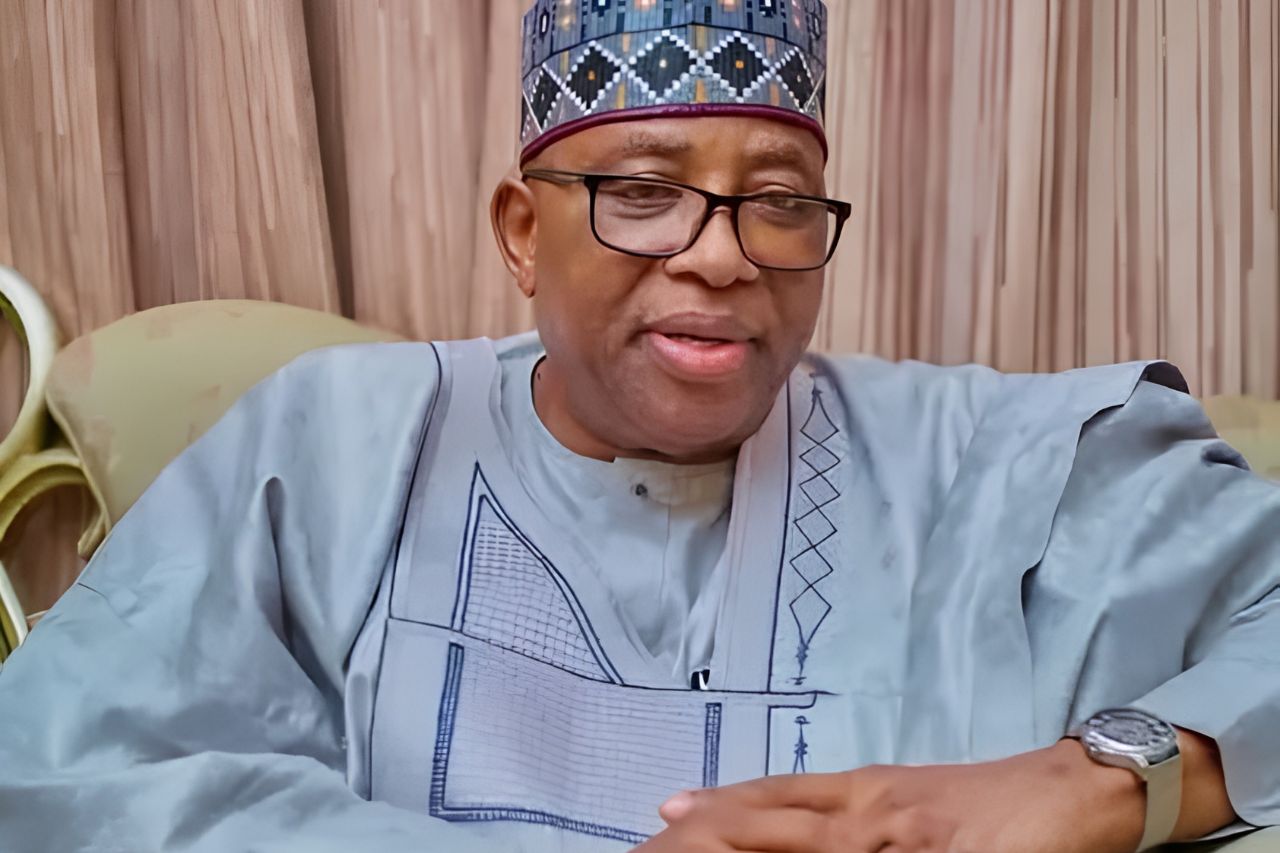
Mr Abubakar, who served as governor from 2015 to 2019, secured a landslide victory, defeating a formidable lineup of political heavyweights.
In a major political comeback that reshapes the contest for the Bauchi State Government House in 2027, former Governor Mohammed Abubakar has clinched the governorship ticket of the All Progressives Congress (APC).
Mr Abubakar, who served as governor from 2015 to 2019, secured a landslide victory, defeating a formidable lineup of political heavyweights, including the immediate-past Minister of Foreign Affairs, Yusuf Tuggar, and a former top executive of the Nigerian National Petroleum Company (NNPC) Limited, Bala Wunti.
His declaration followed hours of tense delays and high-stakes political horse-trading, culminating in an early Saturday morning announcement by the Chairman of the APC Governorship and House of Assembly Primaries Committee for Bauchi State, John Abang.
According to the official results announced by Mr Abang, the former governor secured an emphatic victory by polling 57,517 votes, leaving his closest rivals far behind.
Mr Tuggar, whose recent resignation from President Bola Tinubu’s cabinet signalled his deep gubernatorial ambitions, came second with 26,001 votes.
The breakdown of the primary results reflects a highly competitive field fractured by regional interests despite the winner’s commanding lead.
Mr Wunti secured 13,648 votes, narrowly edging Nura Manu Soro, who polled 13,638 votes. Kabir Ma’aji received 8,157 votes, Baba Suleiman scored 7,688 votes, while Yakubu Abdullahi finished with 7,181 votes.
“Mohammed Abdullahi Abubakar, having secured the highest number of votes cast with a total of 57,517, is hereby returned as the winner of the APC governorship primary election in Bauchi State,” Mr Abang declared, bringing an end to days of intense intra-party manoeuvring.
Mr Abubakar’s victory sets the stage for what political analysts describe as a “redemption campaign.” In 2019, as an incumbent, Mr Abubakar suffered a bitter defeat at the hands of Bala Mohammed of the Peoples Democratic Party (PDP). That loss marked the first time a governor in Bauchi State failed to secure a second term.
With Governor Mohammed serving out his final term, the APC is looking to reclaim the state by leveraging Mr Abubakar’s established statewide structure and name recognition.
However, much of the spotlight during the primary was fixed on Mr Tuggar. He was among the first batch of federal cabinet ministers who complied with President Bola Tinubu’s directive for political appointees seeking elective offices in the 2027 cycle to resign before 31 March.
Despite relinquishing his high-profile portfolio to pursue his long-standing governorship ambition — having previously contested for the seat in 2011 — Mr Tuggar failed to generate the grassroots momentum needed to dislodge the former governor’s entrenched political machinery.
Similarly, Mr Wunti, the widely connected former Managing Director of the Petroleum Products Marketing Company (PPMC) and former NNPC executive, failed to translate his considerable financial and corporate influence into delegate votes, finishing a distant third.
While Mr Abubakar’s camp celebrates victory, the immediate challenge for the APC leadership will be managing the post-primary fallout.
Bauchi politics is historically volatile and deeply factionalised; the APC’s electoral losses in 2019 and 2023 were largely blamed on internal sabotage and unresolved grievances among party elites.
To mount a successful challenge against a deeply entrenched PDP structure in 2027, Mr Abubakar will need to quickly reconcile with Mr Tuggar, Mr Wunti, and other defeated aspirants to avoid a repeat of the anti-party activities that previously cost the opposition party the state.