Rescue workers in Laos on Saturday safely evacuated four villagers who had been trapped in a flooded cave for 10 days, a day after the first of the group was successfully pulled out, with two of the seven men who entered the cave still missing, news agency Associated Press reported.
The five men, who had been part of an artisanal gold-prospecting party that ventured into a cave in Laos’s central Xaisomboun province, around 120 kilometres north of the capital Vientiane, on May 20, were trapped when flash flooding blocked their way out. One member of the original party of eight had escaped in time and alerted authorities to the seven left behind.
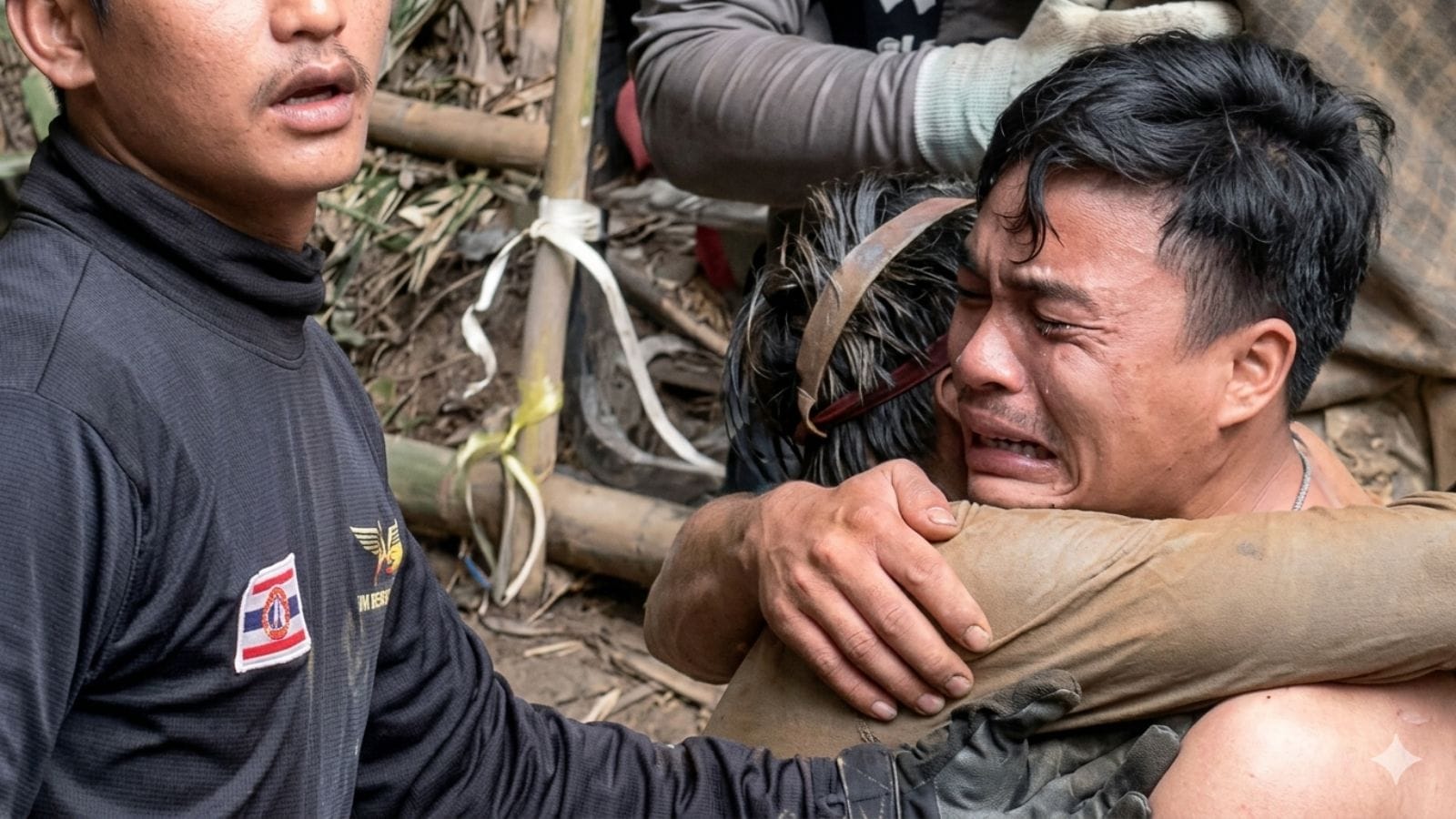
Photos and videos posted by the Lao Rescue Volunteer For People organisation and Thai rescue groups showed the four men being brought out of the cave with flashlights strapped to their heads and their clothes caked in mud, several of them crying with relief as they emerged. They were placed on stretchers, wrapped in foil blankets and given oxygen masks.
Videos show the dramatic moments as four Laos villagers emerge from the flooded cave after being trapped for more than a week. They walked and crawled out on their own as rescuers were preparing to enter the cave, according to Bounkham Luanglath of the Lao People’s Volunteer… pic.twitter.com/qBPD19copm
— CNN (@CNN) May 30, 2026
Kengkard Bongkawong, a Thai cave diver involved in the mission, confirmed in a Facebook post on Saturday that all four had been brought out safely.
‘The first one is out. Safe and sound!!!’
The first of the trapped men, identified by his first name as Mued, was evacuated late on Friday in an operation that the rescue teams said took about 30 minutes inside the cave. Video showed Mued emerging from the water alongside a diver, catching his breath before crawling unsteadily through a narrow flooded passage and rising to his feet, his hands visibly injured. Other footage showed him being walked out of the cave entrance with a lamp strapped to his forehead, supported by two rescuers, before being handed to medical teams amid a waiting crowd.
“The first one is out. Safe and sound!!!” Manat Artmongkron, a rescue technician for the Saithan Saphanboon Foundation, a Thai rescue group, posted on Facebook on Friday.
The five men were located alive deep inside the cave on Wednesday, 27 May, by a multinational team of cave divers who reached them on an elevated ledge more than 260 metres from the entrance. They were identified by their first names as Khamla, Mued, Ee, Ing and Laen. Rescuers had been supplying them with water, soft food and foil blankets, although videos shot inside the cave suggested their conditions had continued to deteriorate. One of the men, Ee, was reported to be suffering chest pain and coughing continuously.
In an earlier video, one of the trapped men had told rescuers: “If we don’t get any food, we’re out of strength. If we’re still here after another two days, we’ll be dead.”
Story continues below this ad
Laos cave rescue: 5 freed, search continues for 2 missing villagers
Rescuers in Laos said five men had been brought out of a flooded cave by Saturday after the group was trapped when flash flooding blocked the exit.
Flooded cave rescue route
CaveentranceRescuechamberSurvivors foundSearch deeper inside200m+ access30m tunnel5rescued2missing
Key facts at a glance
5
Rescued alive after one man was evacuated Friday and four more were brought out Saturday.
2
Still missing as rescue teams prepared to search deeper inside the cave.
7
Villagers trapped after entering the cave to look for valuable minerals.
10
Days trapped for some survivors before evacuation from the flooded cave.
200m+
Narrow access through twisting, flooded passages to reach a large chamber.
30m
Flooded tunnel divers had to cross from the chamber to reach the trapped men.
Why the operation is risky
Survivors had to be guided through narrow, flooded, zero-visibility sections while using diving gear.
EntranceRescue chamberSurvivors / search area
Source: Supplied AP and Reuters copy. Reported locations, figures and rescue-route details are limited to information present in the source text.
International team, with 2018 Tham Luang veterans
A team of volunteers from neighbouring Thailand joined the rescue effort last Sunday, with further reinforcements from Japan, Malaysia, Indonesia, France, Australia and Finland arriving subsequently. Among the international divers on the ground were members who had participated in the 17-day rescue of the Wild Boars football team — 12 schoolboys and their coach — from the flooded Tham Luang cave in northern Thailand in 2018, one of the most closely watched cave rescues in recent memory.
The team included Finnish diver Mikko Paasi, who told CBS News that the scuba option had been “the last option” for the rescue because it placed both the survivors and the rescue divers at “quite high risk.” Australia’s Josh Richards was among the specialists who joined later in the week.
In a video shot on Friday roughly an hour before Mued’s evacuation, Thai rescuer Kengkaj Bongkawong of the Metta Tham Rescue Kalasin team detailed the difficulty of the operation. The rescue team had set up a station in a large chamber inside the cave, accessible only by navigating more than 200 metres of twisting, narrow, flooded passages with jagged walls. From the chamber, divers had to swim a further 30-metre flooded tunnel to reach the trapped men.
“To dive in a cave, there are issues with the temperature, narrow areas, control of movement, and managing the panic of the survivor, which will be difficult, but we have to do it,” Kengkaj said. He noted the significant risk of guiding men with no diving skills through zero-visibility water.
Story continues below this ad
A separate video showed Thai diver Norrased Palasing and Mikko Paasi teaching the trapped men how to use diving gear and breathing techniques. “All the way, breathe through your mouth only. Do not ever breathe with your nose, do you understand?” Norrased was heard saying.
Two missing, weather a concern
The successful evacuations on Friday and Saturday were made possible after days of pumping water from the cave significantly lowered the levels, allowing the men to leave with divers who had been delivering food and water. The breakthrough came amid concerns that approaching rain could force rescuers to call off the operation entirely, CNN reported from the site.
Rescuers said they would continue searching for the two villagers who remain missing. Kengkaj said the team planned to explore an area 20 to 25 metres deeper inside the cave than the section where the five survivors had been found, although he cautioned that the deeper section was heavily flooded.
CNN reported that an upcoming meeting of the rescue leadership would decide whether the team should focus solely on the deeper search or split into two groups, with one continuing to evacuate the remaining men and the other pushing on for the missing.
(With inputs from AP and Reuters)