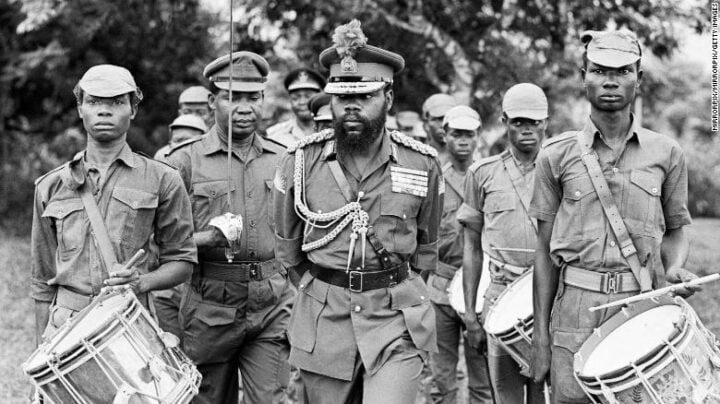
Former Head of State, Yakubu Gowon, has ignited fresh controversy over Nigeria’s First Republic politics after alleging that the late Biafran leader, Chukwuemeka Odumegwu Ojukwu, led discussions among senior military officers to engineer a political outcome that would have edged out then Prime Minister Abubakar Tafawa Balewa in favour of President Nnamdi Azikiwe during the turbulent 1964 constitutional crisis.
Gowon made the revelations in his memoir, My Life of Duty and Allegiance, where he revisited the intense power struggle that rocked the country in the years leading to the collapse of the First Republic.
He claimed that discussions among select army officers at the time went beyond professional concerns, veering into political calculations on how to resolve the deadlock between Azikiwe and Balewa — with a growing push to tilt the balance in favour of the president through military influence.
Crisis That Shook The First Republic
The 1964 general election, widely criticised for alleged irregularities, triggered a deep political standoff between the ruling Northern Peoples Congress (NPC) led government of Balewa and opposition-aligned elements associated with Azikiwe’s camp.
The situation deteriorated into a constitutional impasse, briefly leaving Nigeria without a functioning government after Azikiwe initially withheld approval for Balewa to form a new administration following the disputed polls.
Tensions escalated further when security agencies reportedly restricted the movement of the president on the orders of the prime minister, before a hurried reversal restored Balewa to office for a second term.
‘We Were Being Drawn Into Political Engineering’ – Gowon
Gowon, who at the time was a lieutenant-colonel and serving as adjutant general, said he unexpectedly walked into a meeting in Ojukwu’s office where officers, including Victor Banjo and David Ejoor, were already in deep discussion.
He said it quickly became clear that the gathering was not routine military business but part of broader deliberations on Nigeria’s political future.
According to him, the officers were considering how to intervene in the crisis, with what he described as an inclination to ensure Azikiwe assumed effective control of government authority.
Gowon added that he rejected the idea outright, insisting that the military had no constitutional role in determining political leadership.
“We were trained to remain loyal to the government of the day, not to interfere in politics,” he recalled in the memoir, warning that any such move would amount to an unconstitutional takeover masked as political stabilisation.
He further suggested that the plan, as he understood it, appeared designed to project a cross-regional consensus within the military, involving officers from different parts of the country to give the impression of national backing.
Warning Signs Before A National Collapse
Gowon said he cautioned against any action that could plunge the country deeper into crisis, stressing that military involvement in political arbitration would set a dangerous precedent.
He described the unfolding discussions as a sign of the growing instability within Nigeria’s political and military establishment at the time.
The tensions that followed the 1964 crisis eventually contributed to wider unrest across the country, culminating in the 1966 Nigerian coup d’état, which saw the assassination of key political figures, including Balewa and other top regional leaders.
From Political Crisis To Civil War
The coup, though initially successful, collapsed into further instability, ushering in military rule under Major General Johnson Aguiyi-Ironsi. His administration’s handling of the crisis deepened divisions within the armed forces, triggering the July 1966 counter-coup.