The IDF Home Front Command said Thursday that it is working under the assumption that Iran adapts its tactics after every round of fighting and will pose a more severe threat to the Israeli home front in any future war.
Officials offered no projected timeline for renewed hostilities but said planning is being driven by concern that gaps exposed during the 2026 war, particularly Iran’s ballistic missile capability, will not be addressed in the nuclear and security deal currently being negotiated between the Trump administration and Tehran.
Iran’s arsenal of large, precise and fast-flying ballistic missiles has been the single greatest danger to Israeli civilians across both recent conflicts, the command said. All indications, according to the IDF, are that any forthcoming agreement between Washington and Tehran will sidestep the ballistic missile question and focus narrowly on Iran’s nuclear program.
That assessment has placed the Home Front Command in what officials described as a prolonged stretch of strategic uncertainty. The military has not been able to determine whether to hold its posture for a possible return to combat or begin releasing more emergency reservists back to civilian life.
Home Front Command officials said US policy on the conflict has shifted unpredictably, complicating planning for the protection of civilians. President Donald Trump initially set a four-week cap on the war before extending it to six weeks, and has not publicly addressed the recurring threats of a return to fighting since the April 7 ceasefire that ended the 2026 war.
Even with those challenges, the command said the damage absorbed by Israel during the 2026 conflict was lower than during the 12-day war with Iran in June 2025. Officials attributed the improvement in part to upgraded Israeli air defenses, but also to factors outside Israel’s control, including a much heavier US military role in the 2026 war and Iran’s decision to direct a larger share of its missile fire at the United Arab Emirates and 11 other Arab and Muslim states.
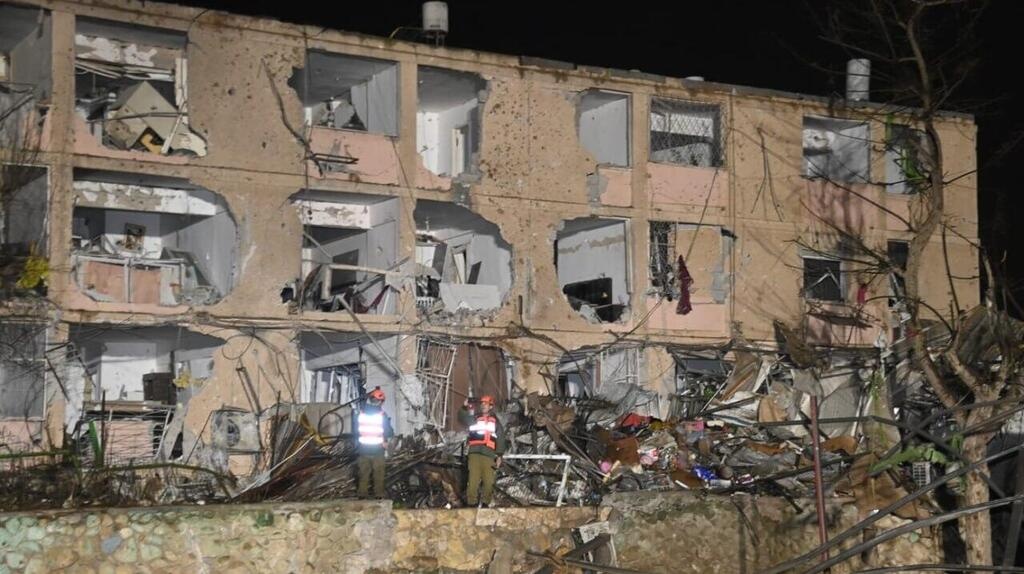
Figures released by the Home Front Command on Thursday put the civilian toll of the 2026 war at 24 killed and 683 wounded as of the ceasefire, including 22 seriously, 46 moderately and 615 lightly injured. The numbers reflect only injuries above a threshold set by the command. More than 7,500 Israelis were hospitalized over the course of the conflict.
The command also reported that 6,473 Israeli homes sustained damage severe enough to displace their residents. That figure captures only the worst cases. By the time the ceasefire took effect, Israelis had filed more than 28,000 property damage claims with the government, including claims for vehicles and other belongings.
The command said its working premise going forward is that Iran will study the 2026 war the way it studied the 2025 war and arrive at any next confrontation with new tactics aimed squarely at the Israeli home front.
(YWN World Headquarters – NYC)