Funmi Ogundare
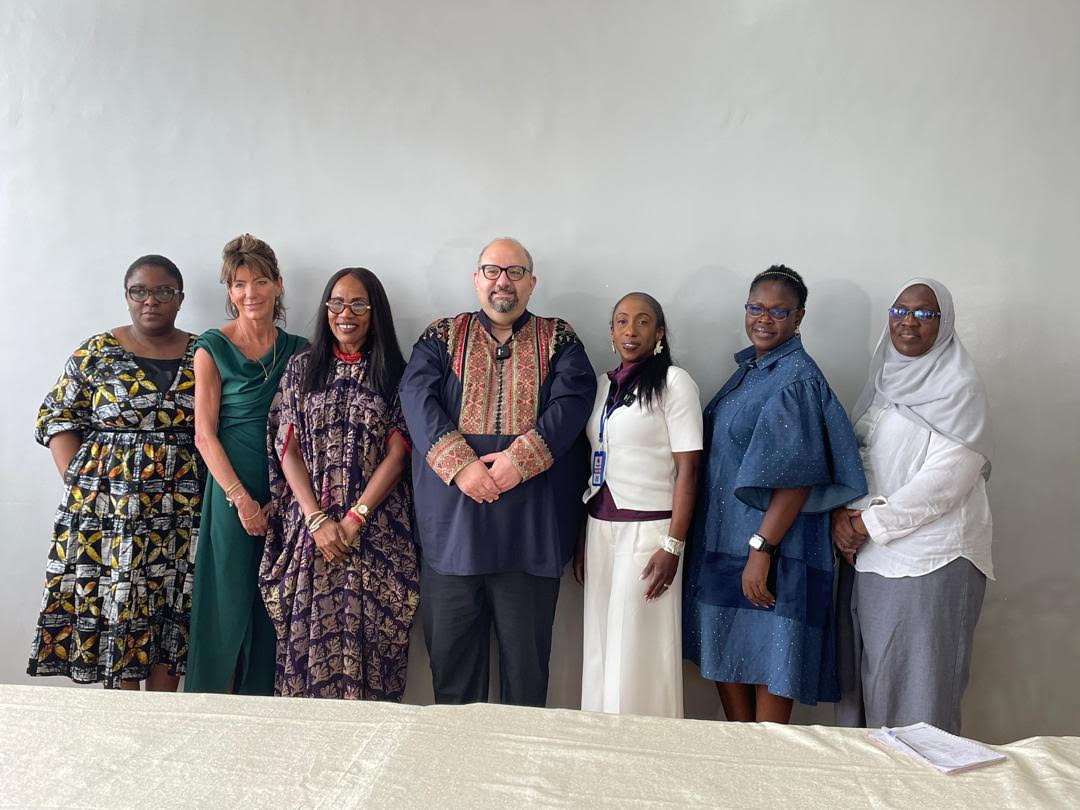
The Founder and Chair of the International Forum of Inclusion Practitioners (IFIP), Daniel Sobels, has called for a nationwide commitment to inclusive education in Nigeria, stressing that neurodiverse learners and children from disadvantaged backgrounds must no longer be left behind in classrooms.
Sobels made the call at a press conference to announce its plans to hold a national inclusion conference themed ‘Embedding Inclusive Excellence, Supporting Neurodiverse Learners in Every Class’, scheduled to hold between May 29 and 30, at the Rugby School, Atlantic City, Victoria Island, in partnership with Golden Links Educational Consultant, UK.
Sobels said the forum was aimed at promoting best practices in inclusive education and equipping educators with practical skills to support learners facing neurological, social and economic challenges.
According to him, inclusion extends beyond children with dyslexia or autism to cover learners dealing with mental health issues, poverty and even gifted students lacking opportunities to thrive.
He noted that about 20 per cent of every society consists of children who struggle to complete school successfully or contribute meaningfully to the economy because they are not adequately supported.
“The International Forum of Inclusion Practitioners is dedicated to capturing and sharing best practices in inclusion from around the world. Inclusion generally serves approximately 20 per cent of any given society, and these are the children who often do not complete school well or have opportunities to flourish,” he said.
He explained that the organisation had collaborated with bodies such as UNESCO, the G20 and ministries of education across Southeast Asia, while hosting educational events in countries including Papua, New Guinea, Uruguay, Botswana and Zambia.
Expressing delight at the organisation’s first conference in Nigeria, he said the gathering was designed not only to expose Nigerian educators to global innovations in inclusion, but also to encourage policymakers to prioritise inclusive education.
He described the conference as a celebration of the Federal Government’s ‘No Child Left Behind’ vision, adding that the forum hoped to usher in a new epoch for inclusion in Nigeria.
“We are trying to say publicly, both here and when we meet with government, that inclusion is a top priority here in Nigeria. I hope this conference is not the end of the word inclusion here in Nigeria, but actually the beginning of a new way forward,” he stated.
Speaking on the barriers confronting neurodiverse learners, Sobels recalled his own struggles as a child, revealing that he was often labelled lazy and unintelligent because of his learning difficulties.
He said many neurodiverse children grow up believing they cannot succeed because of negative attitudes from adults around them.
According to him, teachers and school leaders play a critical role in shaping the confidence and performance of learners through understanding, encouragement and classroom adaptation.
The National Executive Director of the National Inclusion Conference and Chief Executive Officer of Golden Links Educational Consultant, Angelina Ikeako, stressed the need for urgent systemic reforms in Nigeria’s education sector to ensure that neurodiverse learners are no longer excluded from quality education.
She stated that the gathering was designed to move beyond rhetoric and drive transformation, advocacy and practical support for children with learning differences and disabilities across the country.
According to her, many children in Nigerian schools are physically present in classrooms but are not truly being educated because adequate accommodations, interventions and support systems are lacking.
“The National Inclusion Conference is more than a conference for us. It is about transformation, advocacy and ensuring that every child in Nigeria is given the support, interventions and accommodations they need to succeed,” she said.
Ikeako stressed that neurodiverse learners, including children with dyslexia, autism, dyspraxia and other disabilities, continue to face exclusion despite the Federal Government’s ‘No Learner Left Behind’ vision.
Achieving meaningful inclusion, the CEO noted, requires more than isolated efforts by individual schools, insisting that Nigeria must embrace a coordinated and systemic approach involving policymakers, educators, school leaders and parents.
“We cannot afford to have only pockets of good practice. We need systemic change. This conference is calling on policymakers, educators, school leaders and parents to adopt a 360-degree approach that ensures that no Nigerian child is disadvantaged,” she stated.
The Executive Director of The Learning Place and TLP Centre, Bolanle Adewole, called for stronger government support, mandatory inclusion training and systemic reforms to prepare Nigerian schools for neurodiverse learners.
She said inclusive education should be treated as a fundamental human right and not as charity for children with disabilities or learning differences.
She added that every child has the capacity to learn if provided with the right environment, support systems and teaching methods.
“I come from the place of inclusion being a fundamental human right. Every child can learn. It is what you give to the child as an environment and as a presence that influences what the child can learn,” Adewale stated.
According to her, the conference would provide educators, parents and policymakers with practical strategies for creating inclusive systems and structures capable of supporting both neurodiverse and neurotypical learners.
She explained that inclusion benefits all children and not only those with disabilities or neurological differences.
“When inclusion thrives, everybody benefits. The neurotypical benefits as well as the neurodiverse. This conference is going to help us understand how to create systems that benefit every child,” she stated.
She expressed optimism that the conference would make a lasting impact on Nigeria’s education system by exposing stakeholders to global best practices in inclusive learning.
Speaking on the readiness of Nigerian schools to accommodate neurodiverse learners, the executive director said many schools were willing to embrace inclusion but lacked the required tools, training and financial support.
According to her, government backing remains critical to achieving meaningful progress through policy implementation, funding and teacher development.
“The government needs to believe in inclusion first. Once the government believes in it, then there will be policy support and financial support because the resources needed to train teachers and support neurodivergent children are different from those in a regular setting,” she said.
She noted that inclusive education requires specially trained teachers with knowledge of psychology, behaviour management and child development, adding that compassion and acceptance were equally important in supporting neurodiverse learners.