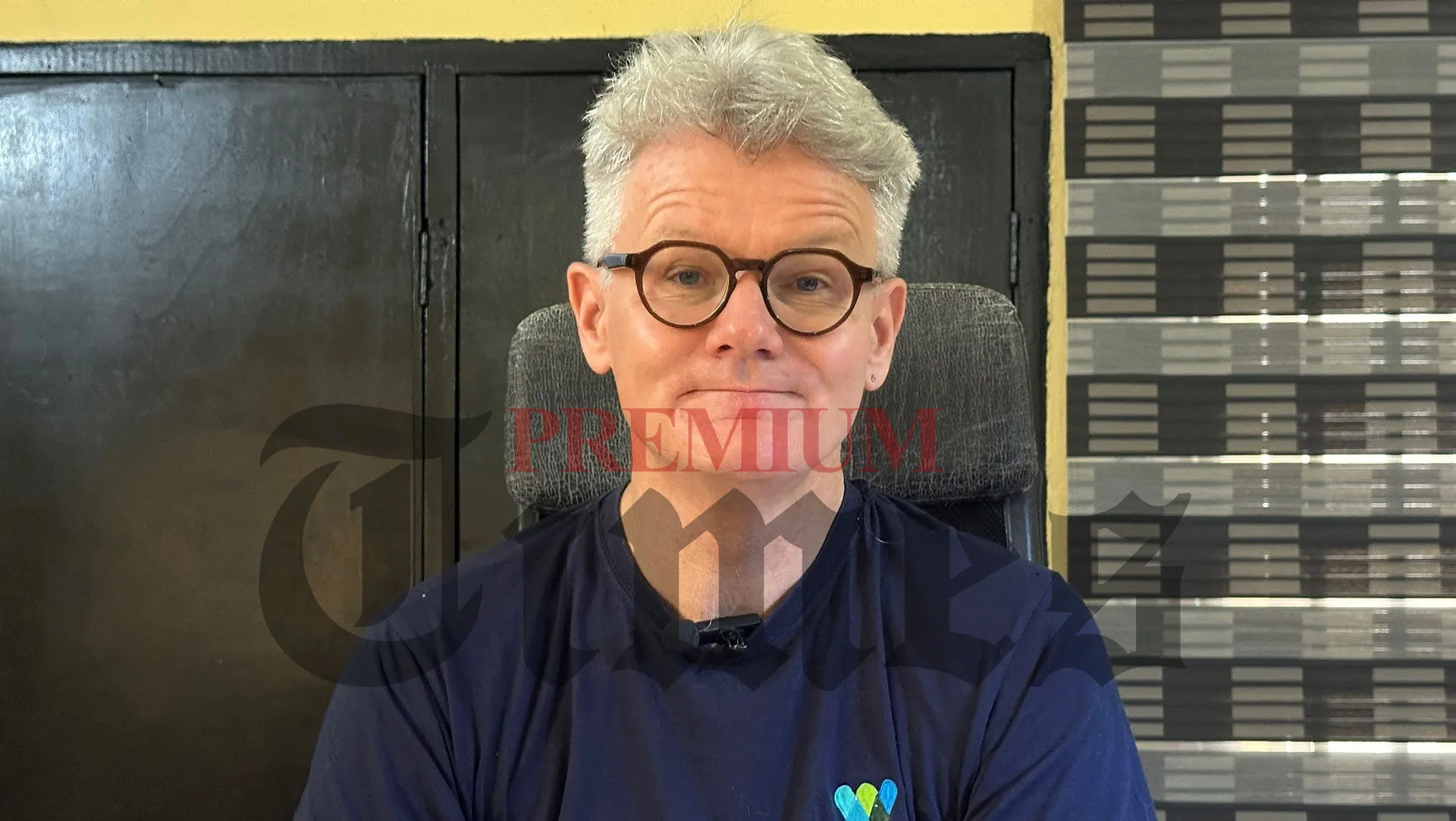
After more than three decades leading wildlife conservation efforts across Nigeria, former Wildlife Conservation Society (WCS) Country Director Andrew Dunn reflects on the country’s biodiversity, the battle to protect endangered species, and why apathy remains the greatest threat to conservation.
In this interview with PREMIUM TIMES, former Nigeria Country Director of the Wildlife Conservation Society (WCS), Andrew Dunn, reflects on his three decades of leading conservation efforts across some of Nigeria’s most important biodiversity hotspots. Much of his work was centred in Cross River State, South-south Nigeria, where he led a team of dedicated conservationists championing projects across the country’s tropical rainforests and savanna landscapes, including areas such as Yankari.
As he prepares to leave Nigeria at the end of this month and return home following his retirement from WCS, Mr Dunn shares rare insights into his journey—highlighting the proudest milestones, the toughest challenges, and his hopes for the future of wildlife conservation in Nigeria.
PT: You’ve spent more than three decades working in Nigeria. What first brought you here, and what made you decide to stay for so long?
Andrew: I first came to Nigeria as a restless young man in my 20s, a bit dissatisfied with life in the UK, and looking for adventure. It was 1992 and the national parks were just being created, I worked with the National Park Service to help establish GashakaGumti National Park which straddles the border between Adamawa and Taraba states. It was an exciting time. On the border with Cameroon, the park is one of the most remote and beautiful places in the country, I felt at home wandering through the mountains, conducting the first biological surveys of the park. Before coming to Nigeria I had been happily surveying elephants and primates in the rainforests of Liberia but was evacuated due to the escalating civil war. I found peace in the wilderness of northeastern Nigeria, and the new national park became my home.
PT: Looking at conservation efforts in Nigeria over the years, how would you assess the progress made so far? What has been most encouraging, and what challenges remain?
Andrew: The best conservation achievement in Nigeria has undoubtedly been the creation of the national park network, and without national parks we would not have very much wildlife left at all. Despite all the threats, I am encouraged that we still have gorillas and elephants in Nigeria, and I’m confident that we can bring back other species if we protect the remaining habitat. However, progress has been slower than expected, the parks are underfunded and poorly managed, many of them rely on support from NGOs. Threats due to hunting and logging are growing, new threats of mining and livestock grazing are emerging, and there is growing insecurity everywhere. The challenge is to strengthen the management of these national parks, improve their funding, and make them more relevant for surrounding communities.
PT: Of all the places you could have worked, you chose to remain deeply rooted in conservation work here. What is it about Nigeria’s biodiversity, wildlife, or people that has kept you committed?
Andrew: Nigeria’s biodiversity, the number of different birds or butterfly species for example, is as rich as anywhere else in Africa. Unfortunately, the country’s wildlife, the large mammals such as elephants and lions, has been decimated through hunting and habitat loss. I helped establish a new country programme in Nigeria for the Wildlife Conservation Society, a US-based NGO. The work to save wild species and wild lands was exciting, and I learnt how to cope with the challenges of living in Nigeria. We built a strong team of young Nigerians, they continue to inspire me, and I enjoyed identifying and mentoring future conservation leaders. Our work had real impact, and I was proud of what we were able to achieve. Conservation requires long-term commitment, and boots on the ground. That is what kept me in Nigeria.
PT: You’ve lived and worked extensively in Cross River State. How would you describe the state to someone who has never been there, and what makes it especially significant for conservation work?
Andrew: I have lived in Calabar for over 20 years. It is a safe and green city, and the people are warm and friendly. I enjoyed cycling to work each day, without fear, children called out ‘oyibo’. Cross River State is perhaps the most important state for conservation in the country; it has the largest remaining forests and the highest levels of biodiversity. But the state government doesn’t value its forests and wildlife, and outside the national park there is illegal logging and mining everywhere. This makes me sad.
PT: What aspects of working in Cross River State have been the most fascinating or rewarding for you, both professionally and personally?
Andrew: I still enjoy the atmosphere of the Calabar Carnival each year, although I’m probably the worst dancer in the whole country. The Obudu Plateau is a magical place and my favourite spot in Nigeria. The mountains are spectacular and the area has a serene calmness and tranquillity. It mends my spirit. It is still a wonderful place to visit, but it has been neglected by state government in recent years.
PT: Conservation work often comes with difficult moments. What have been some of your toughest experiences in Nigeria—whether with wildlife protection, community engagement, or policy—and how did you navigate them?
Andrew: Yes, conservation is not a day job. I have been bitten by snakes, swam across crocodile-infested rivers, and back again. I survived several encounters with chimpanzees and hippos. I think my spirit must be strong, na God. Nigerians are strong stubborn people; I think I drew inspiration from the people I met along my journey. I am stubborn also.
 PT: Over the years, have you noticed a change in how local communities perceive conservation and wildlife protection? What has driven that change?
Andrew: Yes, there is more awareness among communities in Cross River State of the importance of conservation, at least for species such as gorillas and chimpanzees. But poaching has not stopped, elephants are still being killed in Cross River State. Only small groups of forest elephants survive, and they are under siege, facing extinction. When farms encroach onto their habitat, their home, they are shot if they damage crops. The Wildlife Conservation Society (WCS) is creating a network of elephant guardians around Cross River National Park to help reduce levels of conflict between farmers and elephants, so that we can learn to live side by side.
At WCS we have learnt to balance conservation with local development. We have built boreholes in communities around Cross River National Park. We have an annual livestock vaccination campaign around Yankari Game Reserve. We help cocoa farmers to make their cocoa deforestation-free and we work with women to promote sustainable bush mango cooperatives. This is helping to change how local people view conservation and wildlife protection.
 PT: Was there a particular moment, project, or encounter with wildlife that convinced you your work in Nigeria was making a real impact?
Andrew: Yes, I think it was 2020 when our camera traps in the Mbe Mountains recorded Cross River gorillas with babies for the first time. Before that we had seen pictures of gorillas, but this was the first time we saw pictures of them with infants. We knew that if the gorillas were successfully breeding, then they must feel safe, that what we were doing must be working – and that there was hope for the future. This was a major boost to our work, and we were inspired to continue.

PT: Nigeria faces significant development pressures alongside conservation needs. How can the country better balance economic growth with protecting its natural heritage?
Andrew: Yes, this is a very important issue. If we destroy our natural heritage, then we won’t have sustainable economic growth. Without our forests we will have more floods, more disease, more climate change, and our rivers will dry up. We need to invest more in renewable energy, and energy-efficient technologies. We need to reduce pollution and focus more on recycling, reducing the need for environmental destruction. We need to create jobs by promoting eco-tourism and sustainable agriculture around our national parks. We must recognise the economic value of ecosystems, such as water purification, climate regulation, as the foundation needed for economic growth. We need to involve local communities in conservation efforts that also provide local livelihood opportunities.
PT: What role do young Nigerians have to play in the future of conservation, and what would you say to inspire more of them to join this field?
Andrew: Obviously young Nigerians are the future. They have been patient but now they are ready for change, and they deserve a better future. I’m sad when I meet talented young people and all they want to do is leave Nigeria. I hope this changes one day, that God sends us strong leaders, so that together we can build a better country. I’m encouraged and excited when I see so many young people in Nigeria involved in conservation and the environment. I see young Nigerians joining wonderful organisations as volunteers, such as SustyVibes. This was not how it was 20 years ago. To make real impact we all need to be involved, we can all use less plastic, do more recycling, plant trees, eat less bushmeat! Conservation is not a job, it’s a way of life, a passion, a commitment.
PT: In your view, what is the single biggest threat to endangered species in Nigeria today, and what urgent steps should be taken to address it?
Andrew: Apathy, and the belief that someone else will fix the planet. The belief that animals will not finish. They do! In Nigeria we have already lost rhinoceros, giraffe, wild dog, cheetah, ostrich, and lions. We need to draw a line and protect the wildlife we have left, especially our gorillas and elephants. Endangered species depend on a healthy environment in the same way that we do. The future of endangered species and our own future are intertwined. We only have one planet. The best way to save endangered species in Nigeria is through strong, well managed national parks and other protected areas.
PT: Looking back on your journey, what legacy would you like your work in Nigeria—especially in Cross River State—to leave behind?
Andrew: A journey without maps, always choosing the path least followed. I leave behind a strong WCS Programme in Nigeria, with great staff, and I know that WCS will continue to grow. I’d like to be remembered as a champion of wildlife, as someone who helped nurture several conservation leaders for the future, and as someone who was proud to be called a Nigerian man, and also as an oyibo man. I’d like to be remembered for my work in Bauchi State and Taraba State also, not just Cross River. WCS helped save Cross River gorillas from extinction and saved the last elephants in Yankari Game Reserve. I hope that is my legacy. It has been an enormous privilege living and working in Nigeria, a country I grew to love, a people I will carry forever in my heart.
PT: What will you miss the most about Nigeria when you leave?
Andrew: Nigerian smiles, Nigerian laughter.