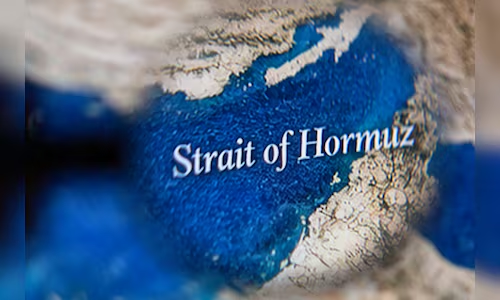
A spokesperson for the force also warned that any vessel violating Iran’s rules in the strait would be “stopped by force,” underscoring Tehran’s tightening grip over the key global oil transit route.
The warning comes amid escalating tensions with the United States, after President Donald Trump said Washington would help guide stranded ships through the strait.
Iran’s military has pushed back, cautioning US forces to stay out and asserting that safe passage must be coordinated with its armed forces.
Trump gave few details of the plan to aid ships and their crews that have been “locked up” in the vital waterway and are running low on food and other supplies for more than two months since the conflict began.
In a post on Truth Social, Trump said, “We have told these Countries that we will guide their Ships safely out of these restricted Waterways, so that they can freely and ably get on with their business.”
US Central Command said it would support the effort with 15,000 military personnel, more than 100 land and sea-based aircraft, along with warships and drones.
The unified command of Iran’s armed forces responded by warning US forces to stay out of the strait, saying it would “respond harshly” to any threat.
“We have repeatedly said the security of the Strait of Hormuz is in our hands and that the safe passage of vessels needs to be coordinated with the armed forces,” Ali Abdollahi, the head of the forces’ unified command, said in the statement.
“We warn that any foreign armed forces, especially the aggressive US army, will be attacked if they intend to approach and enter the Strait of Hormuz.”
The disruption has left hundreds of ships and thousands of seafarers stuck, while reports of vessels being fired upon and seized have raised security concerns.
With both sides hardening positions, the Strait — a vital artery for global energy flows — has emerged as a central flashpoint in the broader conflict, driving volatility in oil markets and heightening risks to international shipping.