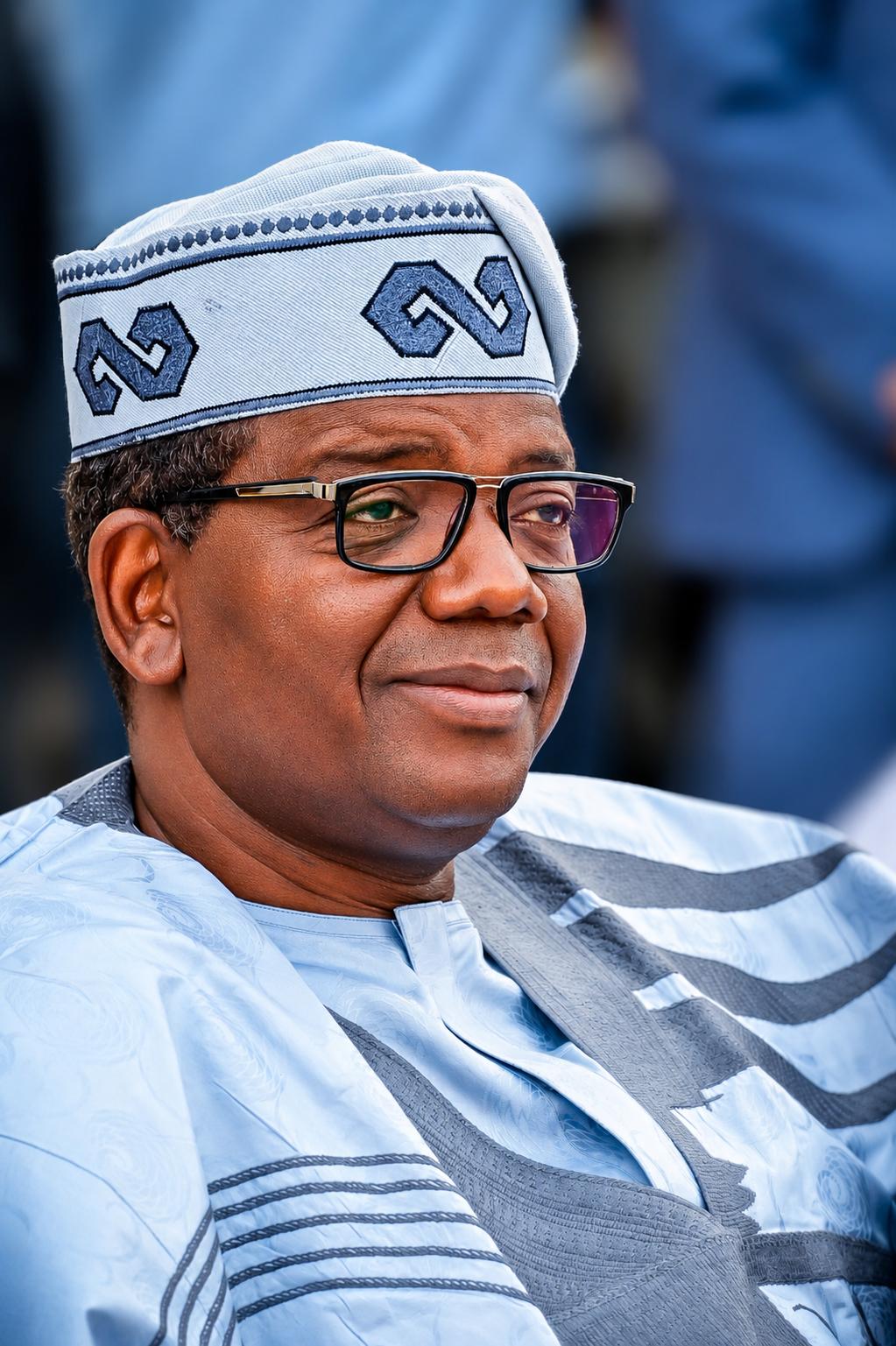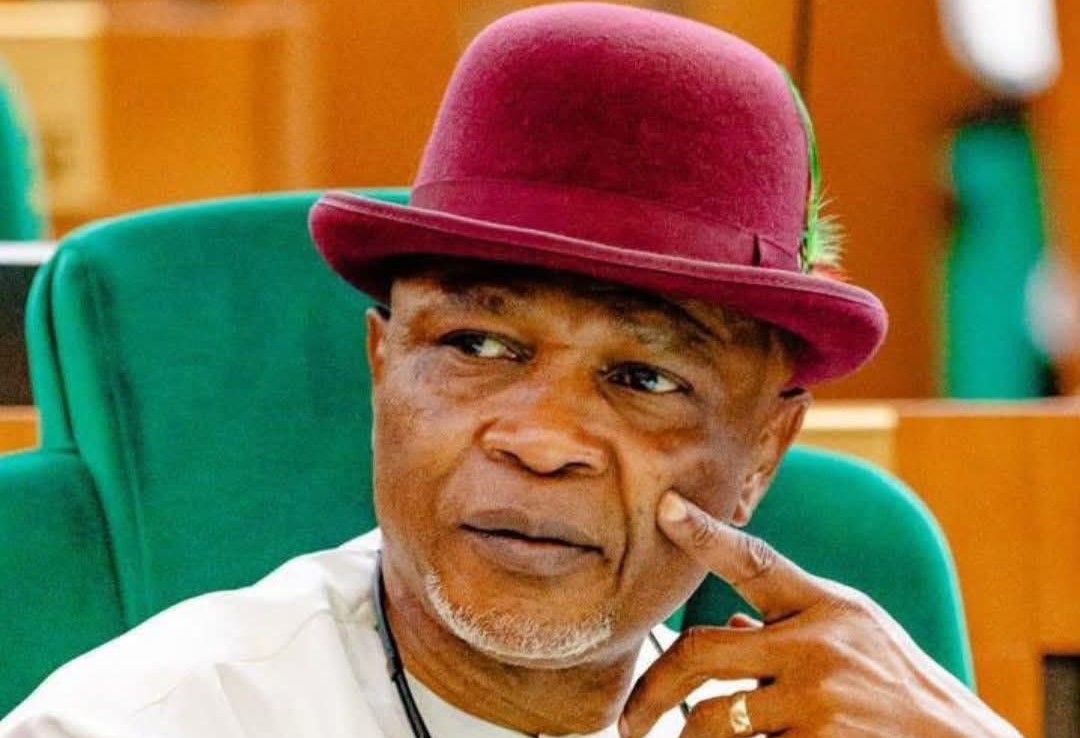
The recent emergence of House Minority Leader Kingsley Chinda as the APC governorship candidate in Rivers State caused shocking waves in the political circles.
The phenomenon of a “phantom defector” defies traditional logic. At the centre of it is Kingsley Chinda, the minority leader of the House of Representatives.
While Mr Chinda remains the official face of the opposition Peoples Democratic Party (PDP) in the Green Chamber, he has been nominated as the All Progressives Congress (APC) candidate for the 2027 Rivers State governorship race, thus blurring the lines of partisan loyalty to an unprecedented degree.
The development has raised fresh questions over dual party membership: Can a lawmaker maintain membership of one political party while actively pursuing elective office under another?
In what became a defining moment in the APC Rivers governorship primary, Mr Chinda polled 268,497 votes, standing as the sole candidate after other aspirants, including Governor Siminalayi Fubara, Tonye Cole and George Kelly, withdrew from the contest.
Their withdrawal effectively cleared the path for Mr Chinda to run unopposed. Bitrus Kwamoti, the returning officer, subsequently declared him the winner.
The episode appears to be one of the most unusual cases of partisan overlap witnessed in Nigeria’s Fourth Republic since 1999, with a sitting minority leader participating in a ruling party primary without formally declaring his exit from the opposition.
Ordinarily, the office of minority leader belongs to the largest opposition party in parliament. The holder of that office is expected to coordinate opposition strategy, criticise government policies where necessary, defend alternative viewpoints and serve as one of the strongest parliamentary counterweights against the ruling party.
For many years, Mr Chinda, who represents Obio/Akpor Federal Constituency of Rivers State in the lower chamber on the platform of the PDP, has played that role visibly. He has defended PDP positions during legislative debates, engaged the executive on controversial policies and remained one of the opposition’s most recognisable voices within the National Assembly.
That is why his appearance before the APC governorship primary screening panel in Rivers State generated immediate shock across political circles.
The matter became even more sensitive because there was no formal announcement of his defection on the floor of the House from the PDP, a move that would automatically end his role as minority leader.
This is usually a procedure commonly used in Nigeria to formally establish a legislator’s defection.
Human Rights activist Ann-kio Briggs said there must be something fundamentally wrong with the APC process for allowing Mr Chinda to run on its platform while retaining his membership of the opposition PDP.
Describing the development as unusual, Ms Brigg, an indigene of Rivers State, said it raises questions about the independence and integrity of Nigerian political parties.
“Why should Chinda, who is in PDP, now be contesting on an APC platform? Chinda bought ticket of APC. He didn’t buy it on PDP. So, if he is contending with the governor on APC, we are right to assume that there is something fundamentally and critically wrong with what APC is doing,” she told Channels TV in a recent interview.
PREMIUM TIMES made several attempts to speak with Mr Chinda on whether he has formally defected to the APC. Calls and messages sent to him were not responded to as of the time of this report.
Efforts to obtain the official position of the House leadership through the spokesperson of the House of Representatives, Akin Rotimi, were also unsuccessful, as he did not respond to calls and text messages seeking clarification on whether the House has been formally notified of Mr Chinda’s defection.
However, speaking with PREMIUM TIMES, Haruna Jungudo, the National Publicity Secretary of the PDP faction backed by the Minister of the Federal Capital Territory, Nyesom Wike, stated that Mr Chinda resigned his membership of the PDP before purchasing the APC governorship nomination form and participating in the party’s primary process.
According to him, Mr Chinda complied with the necessary political procedures before aligning with the ruling party.
“No one can contest election in another political party without first resigning his previous membership, which he did,” Mr Jungudo said.
“He could not have contested under APC and remained a member of PDP. He knows this. He could not be that stupid to be a PDP member and contest in APC.
“It is regrettable that we have lost a member to the opposition party; we are feeling sad about it.
“It is painful having seen one of your finest defecting to the APC, but it is his constitutional right to do so.”
Similarly, Aaron Chukwuemeka, the deputy national chairman of the PDP (South), also confirmed to PREMIUM TIMES that Mr Chinda is no longer a member of the party.
“He is no longer a member of our party. He duly registered with the All Progressives Congress,” he said.
According to Mr Chukwuemeka, the registration and resignation process was concluded before Mr Chinda proceeded to obtain the APC governorship form.
He also argued that there is no constitutional requirement compelling a public declaration of defection on the floor of the House of Representatives before a lawmaker can join another political party.
“It depends on the way he wants to do it. He came to the party, he told us he is going over to APC, and we accepted that he wants to run election, so there is nothing bad in it.
“The issue of calling for public announcement does not necessarily arise. It depends on the individual.”
In contrast, the spokesperson of the rival faction of the PDP, Ini Ememobong, insisted that Mr Chinda had yet to officially defect from the opposition party.
Mr Ememobong said Mr Chinda and some members of his political bloc had long shown sympathy for the APC despite maintaining formal ties with the PDP.