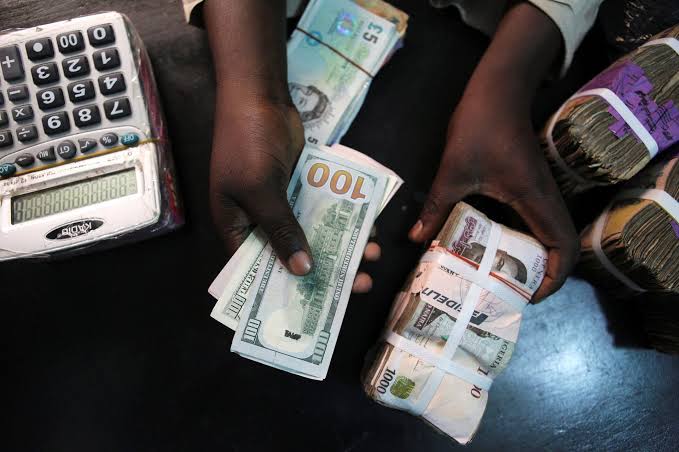
Nigeria’s foreign exchange market opened Thursday on a calm note, as the Naira recorded little movement against the United States Dollar across both official and parallel trading windows, exchanging at 1,371.25 per dollar in early trading.
Fresh figures from the Nigerian Foreign Exchange Market (NFEM) showed the local currency exchanging at 1,371.25/$ during early trading on May 21, 2026, reflecting continued stability in the country’s official forex market.
The latest rate aligns closely with trading patterns seen in recent sessions supervised by the Central Bank of Nigeria, where the Naira largely traded around the 1,373/$ range.
Market participants said the official window has continued to witness healthy liquidity levels, supported by steady interbank activity and controlled supply management.
According to traders, the market has remained within a narrow range due to effective transaction matching and regular forex interventions, which helped prevent sharp fluctuations at the start of trading.
Parallel Market Mirrors Official Trend
The informal currency market also reflected similar stability in major commercial centres including Lagos, Abuja and Kano.
Bureau De Change operators quoted the Dollar at about 1,370 Naira for buying and 1,372 Naira for selling, leaving only a slim margin between the official and street market rates.
Economic observers noted that the reduced gap between both segments signals improving confidence in the forex market, as pressure from speculative demand appears to have eased significantly in recent weeks.
Analysts linked the development to tighter monetary controls and policy adjustments aimed at supporting exchange rate stability.
They added that balanced retail demand and sustained liquidity management have contributed to the present market calm.
Monetary Policy Supports Stability
The country’s monetary environment has also remained restrictive, with the benchmark Monetary Policy Rate held at 26.5 percent.
Financial experts believe the high interest rate stance continues to support the Naira by limiting excess liquidity within the system and discouraging speculative attacks on the local currency.
For now, both official and parallel market traders expect the Naira to maintain its current range unless there is a major shift in foreign exchange inflows or monetary policy direction.