• Says suspension doesn’t equate waiver or debts forgiveness
•Airline Operators: NCAA not owed, condemn ’media regulation’ of operators outside regulatory framework
•Threaten to stop collecting passenger service charge for NCAA from June 1, 2026
Kasim Sumaina in Abuja and Chinedu Eze in Lagos
The Nigeria Civil Aviation Authority (NCAA) Monday announced the temporary suspension of its planned enforcement of the “no pay, no service” directive against airlines with outstanding statutory remittances, citing ongoing consultations and the rising cost of aviation fuel affecting airline operators across Nigeria.
In a statement issued in Abuja, NCAA clarified the suspension does not amount to a waiver, cancellation, or forgiveness of the debts owed by affected airlines, stressing that operators remain fully responsible for settling all outstanding statutory obligations.
The NCAA asserted that structured engagements would continue with individual airlines to ensure debt recovery in a manner that supports compliance while preserving operational stability within the sector.
But in a firm pushback, domestic carriers under the aegis of Airline Operators of Nigeria (AON) have insisted they do not owe any cost recovery charges to the Nigeria Civil Aviation Authority (NCAA) and advised that the agency should not function as revenue generating agency for government.
NCAA had earlier placed 11 domestic operators on “No-pay-no-service” list over alleged outstanding financial obligations, but it has since rescinded the directive.
However, AON in a statement condemned the directive, saying it portrayed member airlines as being indebted to the regulatory agency for services rendered to operators.
AON explained that airlines pay for regulatory services to NCAA before the agency offers the services but noted that what the airlines may not have paid regularly is the passenger service charge, which payment has been subjected to discussions due to Iran-US war.
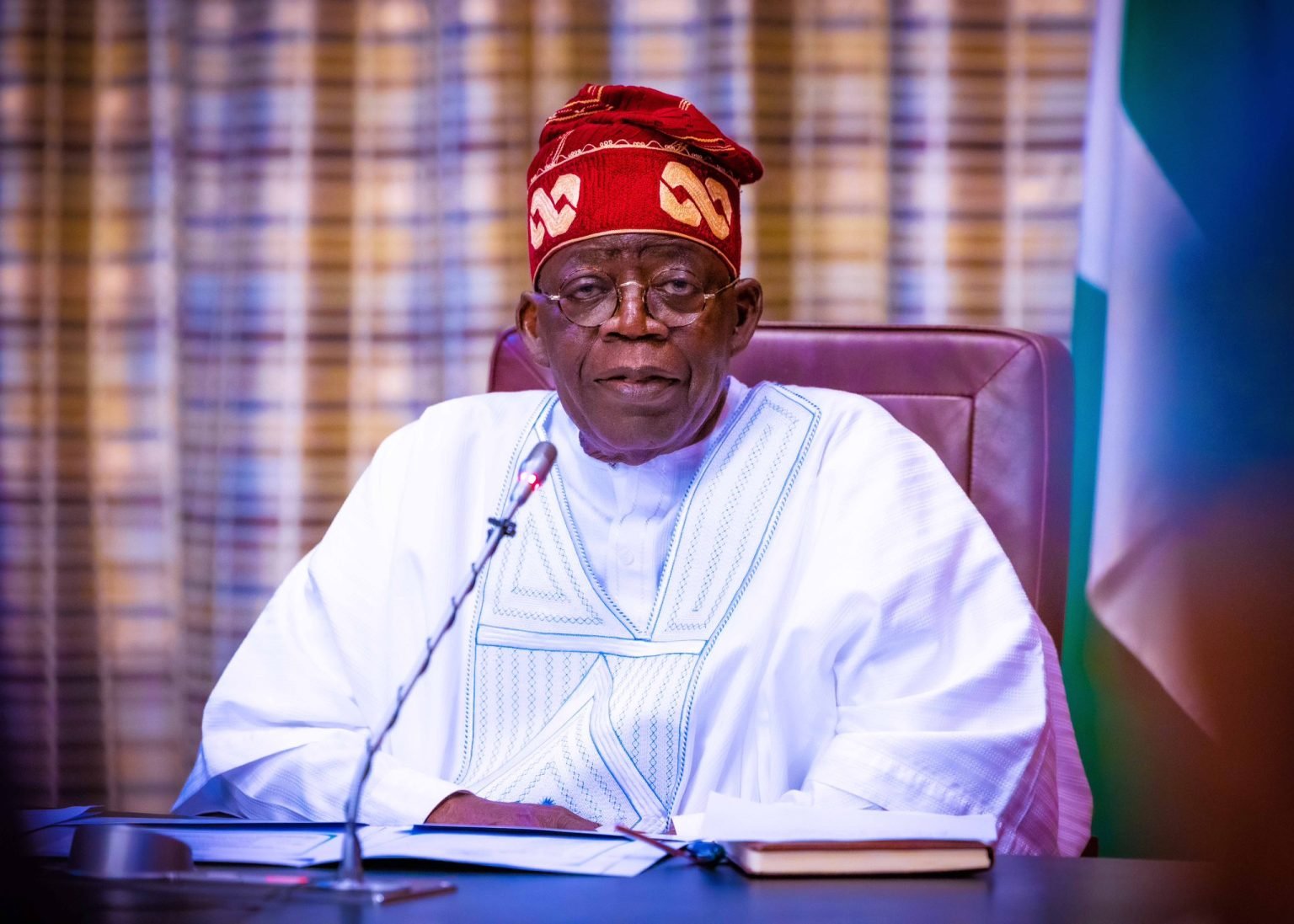
It could be recalled that President Bola Ahmed Tinubu had earlier approved a 30 per cent discount on outstanding fees owed by domestic airlines to aviation agencies, including the NCAA, as part of measures aimed at cushioning the effects of the high cost of Jet A1 fuel and stabilising the aviation sector.
It further explained that the five per cent Ticket and Cargo Sales Charge remain a statutory requirement under the Civil Aviation Act and is embedded in the cost of air travel and cargo services in Nigeria.
Noting the charge is collected by airlines at the point of ticket and cargo sales on behalf of the aviation ecosystem and is expected to be remitted accordingly, stressing that the funds do not constitute airline revenue or operating profit.
According to NCAA, “the remitted funds are shared among the regulator and other key aviation service providers responsible for maintaining safe, efficient, and internationally compliant aviation operations.”
It further explained it operates on a cost recovery basis and does not receive direct federal government funding for its routine regulatory responsibilities, making statutory charges critical for sustaining oversight functions.
The NCAA maintained the temporary suspension of the enforcement measure was carefully calibrated to avoid disruption in the aviation industry while ensuring that airlines eventually fulfil their financial obligations to the sector.
Meanwhile, AON vowed that henceforth NCAA should start collecting its passenger service charge directly from passengers, from June 1, 2026.
The airlines emphasised that the no-pay-no-service publication was not only misleading but represented “a worrisome and unacceptable attempt to use the media to regulate operators outside the established regulatory framework,” and condemned it “in the strongest possible terms”.
”The AON wishes to make it clear that all cost recovery services rendered by the NCAA to domestic airline operators are paid for fully in advance on a cash-before-service basis.
”For clarity, the NCAA issues an invoice for every regulatory service it provides, whether for the validation of crew operating licences, aircraft inspections, documentation renewals, or any other service within its regulatory mandate.
”Operators are then required to settle all such invoices in advance, and compliance is strictly observed before the NCAA renders any regulatory service,” AON said in the statement.
It further explained that in practice, no domestic airline in Nigeria receives NCAA regulatory services without first making the full payment of invoices issued to it by the NCAA, noting that this long-standing policy and procedure remain firmly in place; so, suggestions that domestic airline operators are indebted to the NCAA for regulatory services are factually inaccurate.
”What the NCAA refers to as ‘outstanding charges’ relates solely to the five percent (5%) Ticket Sales Charge (TSC), a Tax imposed by NCAA on passengers for no services rendered to passengers and not in consonance with the dictates of international aviation. This is entirely different from regulatory service fees.
”The AON also notes that several member airlines maintain dedicated accounts, from which the NCAA draws down its monthly remittances, until the force majure caused by the Iran -Isreal/USA conflict, that had put a lot of financial pressures on airlines worldwide.
“Notwithstanding this arrangement, the AON had formally appealed to the federal government through the office of Honourable Minister of Aviation and Aerospace Development, to suspend the payment of all statutory charges temporarily, as an interim measure to assist airlines in managing their cash flows during the current period of severe financial stress caused by the increase in the cost of Jet Al,” the statement explained.
AON went further to say that as an interim response, President Bola Ahmed Tinubu had graciously granted a 30% concession, while waiting for the government decision on the other aspects of the AON intervention request.
“While the AON acknowledges and appreciates this gesture, we had appealed for a meeting with Mr. President to discuss further reliefs, a request that is yet to be granted,” AON said.
It emphasised its position, saying, “the NCAA is a regulatory body, not a revenue-generating agency. The NCAA does not fund any aspect of our businesses or render any direct service to passengers. Each and every service it provides to airline operators are fully paid for in advance before such is rendered.”
”In view of the above, the AON calls on the Federal Government to urgently amend the Civil Aviation Act to empower the NCAA to collect whatever appropriate fees and charges are due it directly from passengers or whoever else, without routing such through the domestic airlines. We request this to take effect from June 1, 2026.
“This will relieve domestic airlines of the financial burden of acting as collection agents for the NCAA, since airlines currently bear banking transfer charges and other transaction costs in the process of transmitting funds to the NCAA,” it stated.
AON went down memory lane and also explained that the 5% Ticket Service Charge in question was introduced over 45 years ago under the government of General Yakubu Gowon by the then Federal Civil Aviation Authority (FCAA) and questioned its continued relevance without subjecting it to reviewed ever since.
It also noted that FCAA was at the time an arm of the Civil Aviation Department (CAD), housed in Marina under the Ministry of Transportation; as the CAD was not a ministry-level aviation unit, it had limited budgetary resources.
”The Gowon regime of the 1970s had built airports in all 12 States of the federation and these airports required maintenance and operational budgets that were not provided for in the sector’s budget hence the introduction of the 5% TSC.
“Notably, Nigeria Airways, the only domestic airline operating at the time, did NOT pay the 5% TSC. Only foreign Airline carriers were required to pay,” AON said.
It also said, “Importantly and worthy of note is the fact that the FCAA has since over time evolved into the NCAA, NAA, and NIMET. The NAA in turn evolved into the present-day FAAN and NAMA.
“Meanwhile, the aviation industry was deregulated in 1982, allowing for indigenous entrepreneurs to compete in the market, resulting in the new entrant private airlines that have remained the mainstay of the industry and the backbone of the Nigerian economic renaissance.
With the creation of each of these agencies, separate taxes, fees, charges, and levies were introduced for the Nigerian airline operators to cover their respective services,” AON added.
AON also alleged that the 5% TSC, which was originally a policy instrument was “surreptitiously introduced into the legislation by the NCAA, despite the vehement opposition from the AON and other industry stakeholders,” emphasising that domestic airlines, in addition to this 5% TSC, still pay separately and directly for services provided by the various industry agencies, including the NCAA itself.
”It is important to note that the 5% TSC is an ad valorem tax applied to an airline’s gross earnings, not profits. The global aviation industry operates at a profit margin of between 1.5% and 2.5% at best. International standard and best practice provide that aviation should be a cost-recovery sector of strategic importance. In Nigeria, however, the industry is being subjected to unsustainable financial pressures, in the guise of imposed taxes, fees, charges and levies.
”The AON uses this occasion to once again draw the attention of the federal government to the unsustainable burden of these multiple taxes, fees, charges and levies arbitrarily imposed on domestic airline operators.
”We make payments to the Nigerian Airspace Management Agency (NAMA), the Federal Airports Authority of Nigeria (FAAN), and several other service providers and statutory bodies.
“The financial impact of these taxes, fees, charges and levies is adverse, burdensome and excruciating, especially at this precarious period, when the entire world has been exposed to the exogenous shocks of the Iran-Israel/USA crisis,” the airlines asserted.