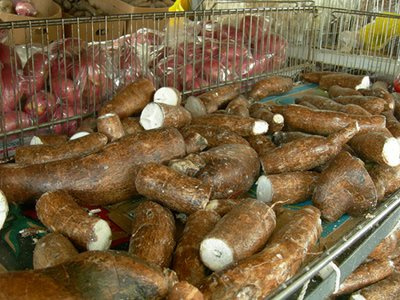
Nigeria’s demand for sweeteners is projected to reach approximately 2.15 million metric tonnes in 2026, highlighting growing opportunities for local cassava-based industrial sweetener production, according to a report by the Nigeria Cassava Investment Accelerator (NCIA).
Trade data cited in the report showed that Nigeria imported about 7,700 metric tonnes of sorbitol valued at approximately $6.1 million (over N8bn) in 2023, underscoring the country’s reliance on foreign supplies for industrial sweeteners.
The report noted that despite the country’s huge demand for sweeteners, domestic production capacity remains significantly low at about 53,000 metric tonnes, meaning local manufacturers currently meet only around 2.5 per cent of national demand, while the bulk is imported.
According to NCIA in the report titled, “NCIA Insights: Unlocking Cassava’s Industrial Value through Sorbitol Production,” an initiative of Lagos Business School Pan-Atlantic University, the import dependence is particularly severe for industrial polyols such as sorbitol, which are widely used in pharmaceuticals, oral care products, chewing gum, confectioneries, and food processing.
Sorbitol, used mainly as a sweetener and moisture-retaining agent, is commonly produced from glucose derived from corn starch.
However, the report stated that cassava’s high starch content makes it a viable alternative feedstock for sorbitol production.
“As the world’s largest cassava producer, Nigeria has a clear opportunity to produce sorbitol locally and serve demand across multiple industries,” the report stated.
NCIA identified Psaltry International Company Limited as one of the few local companies taking steps to address the supply gap through domestic production.
The company commissioned Nigeria’s first cassava-based sorbitol plant in Iseyin, Oyo State, in August 2022, with a production capacity of 25 tonnes per day.
During a recent visit to the facility, NCIA observed the end-to-end process involved in converting cassava roots into industrial-grade sorbitol and maltose products.
The production process starts with cassava intake and screening, where roots supplied by farmers are logged, weighed, and tested to determine their starch content and suitability for processing. Cassava that fails to meet the required standards is rejected.